


A Century of British Bestsellers and the Gaps They Filled

The Secret History of the British Bestseller
I have been making books for most of my working life. Designing them, commissioning them, packaging them, selling them into more than thirty-five languages. At some point, doing the research for a book about Britain told through thirty-two of its most significant titles, I found myself asking a question I had never quite asked directly before.
What is the engine?

What was the precise mechanism that drove that particular book, in that particular moment, into the hands of that particular number of people - and why, when the moment passed, it sometimes vanished entirely while others kept selling for a century.
The answer the sales figures give you, when you read them carefully, is not what the publishing industry tends to say about books. It is considerably more interesting.
A bestseller is not a successful book - It is a measurement.
What the Publishing Industry Says About Books
When two million people buy the same novel in the same decade, they are not all responding to the prose style, or the plot, or the cover. They are responding to something the book supplies that ordinary life, in that particular decade, is withholding. The sales figure is evidence of a specific collective hunger, and if you know how to read it, it tells you more about a society than most official records.
This essay reads those figures. It moves through decades of British bestsellers, from Marie Corelli in 1900 to Rebecca Yarros in 2024, and asks of each one the same question: what was missing?
The answers are, consistently, more interesting than the books.

The publishing industry presents itself as a guardian of culture and dedicated servant of the reading public. Occasionally, under pressure, in courtrooms, or simply in interviews where nobody appeared to have briefed them on what they were about to say, its senior figures have offered a rather more candid account of their priorities.
On What Children Should Read
They are the gateway drug, particularly for boys who don't read very well - this is where they get hooked. Reading is reading. Now, this is quite a long way from Dostoevsky, but it is the path to Dostoevsky.
James Daunt, CEO of Waterstones and Barnes & Noble, 2020, defending ghostwritten celebrity children's books
The logic is impeccable, if you accept the premise. Children who consume ghost written celebrity books will eventually arrive at Dostoevsky. By the same reasoning, children who eat nothing but crisps will eventually arrive at a balanced diet. What Daunt did not address was the economics: the celebrity book takes up shelf space, marketing budget, and advance money that would otherwise go to a children's author writing an actual children's book. The gateway drug theory is considerably more appealing if you are not the one whose career it is gatewaying out of existence.
On the format in which books are delivered
The ebook is a stupid product. It is exactly the same as print, except it's electronic. There is no creativity, no enhancement, no real digital experience.
Arnaud Nourry, CEO of Hachette, 2018
Technically accurate in the same way that it is accurate to say a telephone is exactly the same as a letter, except immediate. What the ebook actually is, is a book that a reader without a local bookshop can acquire in thirty seconds, that a child with dyslexia can have read aloud, that an elderly reader can enlarge to a legible font size. These are not enhancements in Nourry's sense. They are access,Hachette continued to publish ebooks throughout this period and has not stopped since.
On whether any of it matters anyway
Everything is random in publishing. Success is random. Bestsellers are random. So that is why we are the Random House.
Markus Dohle, CEO of Penguin Random House, under oath, 2022 DOJ antitrust trial
Dohle also described publishing as "the Silicon Valley of media" and his editors as "angel investors in authors and their dreams." This was offered in defence of a merger that would have united the first and fourth largest publishers in the United States. The argument was random in that since success is entirely random, consolidating a large random fraction of the industry under one roof could not harm authors' prospects, because prospects are not meaningful - they are random.
The DOJ declined to accept and this merger was blocked, Dohle departed at the end of 2022. Authors on modest advances noted that publishing's randomness appeared, in their experience, considerably less random when a large advance and substantial publicity budget were involved. PRH's own internal presentation confirmed that the top 4% of titles drive 60% of the industry's profitability, a figure suggesting rather less randomness than its CEO had implied under oath.
A Special Note on the Academic Contribution
It would be unfair to omit academia entirely, in 2015, Adam Swift, professor of political philosophy at the University of Warwick, suggested that parents reading bedtime stories to their children should occasionally reflect that they are "unfairly disadvantaging other people's children." His evidence: "the difference between those who get bedtime stories and those who don't — the difference in their life chances — is bigger than the difference between those who get elite private schooling and those that don't." A genuinely interesting finding. The policy conclusion — intermittent parental guilt — is perhaps the most striking recommendation to emerge from the literacy debate in recent decades.
Let's revisit Professor Swift's point that reading bedtime stories to children is one of the most effective ways to cultivate readers. Even before children grasp phonics or grammar, they link the physical book with the warmth of a carer or parent's voice, dedicated attention, and a secure environment. This emotional groundwork turns reading from a school task into a preferred source of enjoyment.
Swift had also considered abolishing the family as a solution to educational inequality, before conceding that implementation might prove difficult.
And yet, through all of it, the gateway drugs, the stupid products, the random angels, the guilty bedtime stories, people keep reading, the hunger persists, indifferent to the industry's opinion of itself.
On the Importance of Children Reading, from Someone
Who Was In Charge Of It.
Reading for pleasure from an early age can help develop children's literacy
and, she added, books open up
potential futures
by expanding what literature exposes children to
Nicola Sturgeon, First Minister of Scotland, launching the First Minister's Reading Challenge, 2016
This is, taken on its own terms, an entirely unimpeachable statement. Nobody has ever successfully argued that reading for pleasure from an early age impedes children's literacy. Sturgeon said the right things about books with some consistency throughout her tenure, she launched the Reading Challenge in 2016, challenged Scottish primary school children to work through a curated list of 100 titles, expanded the programme to secondary schools and community groups, and declared Sunset Song her favourite novel with sufficient conviction to write its introduction.
She also stated publicly that falling reading and writing standards among Scottish pupils were "not good enough" and that she was "utterly determined" to fix them. This determination produced standardised assessments, targeted attainment funding, and a succession of policy initiatives aimed at closing the gap between children from deprived backgrounds and their more advantaged peers.
What it did not reliably produce was measurable improvement, by the time Sturgeon stepped down as First Minister in March 2023, opposition parties and education critics were pointing out that the attainment gap she had famously invited the public to judge her on had, in several measures, widened. The First Minister's Reading Challenge was quietly retired by her successors and rebranded.
Sunset Song was removed from the Higher English syllabus in 2024 following a survey of teachers and pupils, which is the kind of posthumous editorial judgement that even the most enthusiastic champion of a novel cannot entirely prevent.
The irony is not that Sturgeon was wrong about reading, she was right about reading. The irony is that being right about reading, and being photographed at Bookbug events, and launching challenges and initiatives and targeted funding streams, produced, as this essay has been arguing throughout, precisely the results that literacy campaigns characteristically produce: a great deal of activity, considerable sincerity, and outcomes that decline to cooperate.
A Personal Footnote, in Two Parts.
On a train from King's Cross to Dundee I once shared a journey with Colin and Chris Weir, winners of £161 million on the EuroMillions and donors of £3.5 million to the SNP, the largest single political donation in Scottish history. Also on the same train, by one of those coincidences the East Coast Main Line specialises in, was Chris's former employer. Colin was not well when we met; he died in 2019. The money that funded the party that produced the First Minister who launched the Reading Challenge came, in substantial part, from a lottery win. Random, one might say. Or: exactly as random as publishing, which is to say, not entirely.
The other part is quieter, Lewis Grassic Gibbon, who wrote Sunset Song - the novel Sturgeon championed, introduced, and watched removed from the Higher English syllabus the year after she left office - lived for a time in a cottage on a farm in Aberdeenshire belonging to a second cousin of mine. In the novel, Chris Guthrie's mother dies after giving birth to twins. My great-grandmother in Aberdeenshire, Isabella Douglas Moir, died twenty-seven days after giving birth to twins.
The lottery is random. The SNP donation is random, the coincidence on the train is random. The connection between a novel about the land and grief and a woman who died in Aberdeenshire before anyone in my family had read the book that would one day carry her echo, that is not random. That is what books do, when campaigns and challenges and curated lists of 100 titles are not looking.
History suggests an awkward truth, people do not read books because reading is good for them, they read because they want something.
I wanted statistics on bestsellers for a book .The Story of Britain in 32 Books: Print, Power and the Making of Modern Britain, so I was doing some research into what makes a bestseller.
This is going to be my first book that's not for children.
Why Thirty-Two Books?
First of all a book:
It is like a body.
It has a spine, skin (a cover). chapters like organs that work together or fail, It can be damaged, repaired, misused, or preserved.
And like a body, it carries history in it, its scars, well that's what I think, and as to the idea of thirty-two, why thirty-two books ?
This is based on the printer’s logic, a whole press sheet folded five times gives thirty-two pages: the smallest independent unit of a bound book. This mirrors that physical integrity, each chapter a page in the national signature.
Thematic Completeness Four gatherings of eight trace the evolution from sacred manuscript to global franchise, each signature representing an era of technology, belief, and design.
Symbolic Cohesion Thirty-two is both practical (the traditional press count) and symbolic:
4 × 8 (four “gospels” of the book: faith, reason, revolution, imagination).
2⁵ - the mathematical heart of printing’s fold.The structure itself is part of the story.
Thirty-two books, then - not the best, not the greatest, but the ones that together form a working jaw of British culture. Books that bite into power, grind against orthodoxy, and articulate ideas that could not previously be spoken aloud.
The Format Followed
Each chapter takes a single book and treats it as an organism rather than an artefact, of course it can't it grow, reproduce, take in nutrients, process energy, and respond to its environment but we can ask. Where did it start? What made it? What were the problems and what changed once it entered the world?
Some of these books caused immediate shockwaves, others worked slowly, altering habits of thought across generations.
I have approached them not as sacred objects, but as interventions - things made by people who decided that writing, printing, and distributing an idea was worth the risk...and so to what I found out about bestsellers...
... a century ago reader's wanted adventure, certainty, escape, revenge and belonging. Sometimes reader's wanted romance, justice, sometimes they simply wanted a world that made more sense than the one outside the window.
What the Sales Figures Actually Tell You
The Bestseller List
This bestseller list is not a record of literary merit, it is a record of collective longing.
If you want to understand why particular books conquered their age, it helps to ask a different question. What was missing from people's lives when those books appeared?
The answers are surprisingly revealing as are the numbers, where we can find them, confirm the argument with considerable force.
A Century of British Bestsellers
1900
Marie Corelli - The Sorrows of Satan
1895 · Methuen
25,000 copies in one week 50,000 across eight editions in seven weeks. By 1906, a Corelli novel sold 100,000 copies a year, outselling Conan Doyle, H.G. Wells, and Rudyard Kipling combined.
Nobody reads Marie Corelli now. In 1900, almost everybody did.
Her novel is a Faustian melodrama in which the Devil arrives in London society, finds it already thoroughly corrupt, and is almost sympathetic by comparison. The aristocracy is spiritually bankrupt. The church no longer believes in God. The literary world is venal and the New Woman is undermining everything decent. Lucio, Prince of Darkness, sets his sights on a starving novelist who has just inherited a fortune, and guides him, gently, to ruin.
The critics despised it, they called it sensationalist, moralistic, prosaic. Queen Victoria loved it. So did Oscar Wilde. So did the reading public in numbers that had no precedent in the history of British publishing.
The explanation is not complicated. The Edwardian reader, particularly the female reader was starved of two things simultaneously: spiritual meaning and moral drama. Science was eroding religious certainty. Empire was delivering prosperity to the middle classes, but very little interiority. The three-volume novel, which had maintained a particular kind of literary decorum for fifty years, had just collapsed. Cheap single-volume editions had arrived.
Corelli understood the market before the market understood itself. What she sold was not fiction in the literary sense. It was the only fiction that took her readers' predicament seriously. The 25,000 copies sold in a single week are not a sales anomaly. They are a measurement of how badly those readers needed what she was offering.
1915
John Buchan - The Thirty-Nine Steps
1915 · William Blackwood and Sons
25,000 copies in three months One million copies sold before Buchan's death in 1940. Never out of print in over a century.
Buchan wrote it while, as he later recorded, "pinned to my bed during the first months of war and compelled to keep my mind off too tragic realities." The result was a slim thriller about a man on the run across Scotland, hunted by German agents, improvising his way towards an improbable salvation.
The 25,000 copies sold in three months sounds modest until you remember that paper was rationed, book distribution was severely disrupted, and a significant fraction of the male reading public was in the trenches. The soldiers read it there. It was passed from hand to hand. By 1940, a million copies had been sold, before mass paperback distribution, before television, before any of the promotional apparatus that modern publishing considers essential.
The novel invented a template of the innocent man on the run. The amateur outpacing the professionals. The landscape as adversary. The improbable escape, repeatedly enacted. It offered the war generation something the war itself flatly refused to provide: an individual who could act decisively, move freely, and win.
That was precisely what a soldier stuck in a trench could not do. The fantasy was not of heroism in the abstract. It was of competence, agency, and the open road. Fleming, le Carré, and Forsyth would all later inherit this template. Buchan built it in 1915, out of his own immobility.
1925
Warwick Deeping - Sorrell and Son
1925 · Cassell
41 editions · 13 languages · 2 films One of the best-selling authors of the 1920s and 1930s, with seven novels on the bestseller list. Precise UK unit sales were not formally recorded — 41 exhausted editions across the interwar period are a meaningful proxy.
Nobody reads Warwick Deeping now either. In 1925, he was the most commercially successful novelist in Britain.
The premise is the premise of his decade. Captain Sorrell is a decorated officer reduced by the post-war economy to working as a hotel porter. His wife has left him. He sacrifices everything, his career, his dignity, his private grief, to fund his son's medical education and advancement. The son, Kit, succeeds, Sorrell asks for nothing in return.
The novel achieved what Ross McKibbin calls 'a talismanic status' for its admirers, effectively engaging anxieties widespread among the growing middle classes between the wars about the direction of social change, particularly the shifting constructions of class and gender. Mary Grover, The Ordeal of Warwick Deeping, 2009
Middle-class readers who had watched the old certainties dissolve wanted fiction that affirmed sacrifice, filial loyalty, and the possibility of maintaining respectability through personal virtue even when the social structure had shifted beneath your feet. The old world was gone. The new one was uncertain and threatening. Deeping told them that individual moral courage could still carry you through.
Forty-one editions tell you how many of them believed it, and how badly they needed to.
1939
Richard Llewellyn - How Green Was My Valley
1939 · Michael Joseph
50,000 copies in four months Nearly 200,000 copies in the United States in 1940 alone. Over two million copies sold in Britain in total. The debut novel of an unknown author, published three weeks after Britain declared war on Germany.
These are the figures that demand explanation, an unknown writer, a novel about Welsh mining families told in retrospect by a man who has left and cannot return. Published on the eve of the Second World War. Two million copies in Britain alone.
The book is an elegy describing a world of community, belonging, physical labour, and moral clarity that has been destroyed by industrialisation and time. Its narrator looks back on a valley that no longer exists. What he mourns is not simply a place but an entire order of life, the chapel, the pit, the family table, the shared language, the sense that individuals were held by something larger than themselves.
Readers facing a second catastrophic war in a generation reached for this novel because it offered them a vision of what had already been lost — and thereby suggested that it had existed, that it had been real, that it was worth remembering. The pastoral elegy as mass-market phenomenon is born here. Two million copies is not a sales figure. It is a record of collective grief.
1953
Ian Fleming - Casino Royale
1953 · Jonathan Cape
100 million+ copies Lifetime series total worldwide. Fleming's debut sold steadily in hardback through the 1950s; the mass paperback editions and the first film, Dr No (1962), transformed it into a global phenomenon.
An honest qualification: Fleming belongs in this decade not because Casino Royale outsold everything in 1953, it did not. Hammond Innes was considerably more successful in the short term. Fleming is here because no other British novel of the 1950s has had remotely comparable long-term impact. The case for his inclusion rests on consequence, not immediate sales.
Britain in 1953 was in the process of discovering something it had not yet articulated: that it had lost an empire and had not found a role. The coronation of the young Queen offered pageantry, the economy offered austerity. The Cold War offered anxiety of a kind that no previous generation had experienced, the possibility of extinction, by degrees or all at once.
Bond offered a compensatory fantasy that was also, at a darker level, an honest acknowledgement. Britain could no longer dominate the world through imperial force or institutional authority. But a lone Englishman with nerve, taste, and a particular kind of amateur professionalism could still matter. He could still be the most dangerous man in the room. He could still, against considerable odds and with considerable style, win.
The hundred million copies confirm that a very large number of people wanted that story told to them, repeatedly, for the next seven decades.
1971
Frederick Forsyth - The Day of the Jackal
1971 · Hutchinson
2.5 million copies by 1975Four years after publication, before most readers had seen the 1973 film. Forsyth's career total: over 75 million copies across more than 25 books. The novel was written in 35 days and rejected by multiple publishers.
The publication story is part of the cultural argument. Forsyth wrote the novel in thirty-five days after falling on hard times. It was rejected by several publishers who worried that the plot was fundamentally flawed, the President of France had not, after all, been assassinated. When Hutchinson finally published it, it sold 2.5 million copies in four years, before any film, driven entirely by word of mouth among adult readers.
The Day of the Jackal inaugurated procedural realism as a British mass-market genre. The reader is given operational detail, how a professional assassin acquires a false identity, has a custom rifle built to unusual specifications, crosses international borders without detection, with the cool precision of a technical manual. The craft is the point. The Jackal is not a hero. He is a professional. He knows exactly what he is doing, and through Forsyth's meticulous journalism-trained research, so does the reader.
This arrived at the precise moment when readers had decisively lost faith in institutions. Governments had lied about Suez, about Profumo, about the economy. The unions were fighting the government. The government was fighting itself. Nobody in authority appeared to know what they were doing.
Competence, in an era of visible institutional failure, was its own form of fantasy. Two and a half million copies in four years — without a children's audience, without a school curriculum, without any platform other than one man's ability to make a plot feel real.
1979
Jeffrey Archer - Kane and Abel
1979 · Hodder & Stoughton
No. 1 New York Times bestsellerTotal sales comparable to To Kill a Mockingbird and Gone with the Wind — approximately 40–45 million copies worldwide. Archer began writing to avoid personal bankruptcy.
Jeffrey Archer began writing to avoid personal bankruptcy, this is perhaps the most Archer fact about Archer. He then proceeded to write one of the best-selling novels of the twentieth century.
Kane and Abel appeared in the same year Margaret Thatcher was elected. The coincidence is instructive. The novel's engine is self-making: two men born with nothing, one in Boston and one in a Polish village, building everything from ambition alone, across the full sweep of the twentieth century. Neither has inherited anything. Both acquire everything through will, intelligence, and an almost inhuman refusal to accept defeat.
Its readers were not primarily the professional classes. They were aspiring ones — people for whom the Thatcherite promise of individual economic agency felt, in 1979, newly credible and newly exciting. The bestseller list does not merely reflect culture. Sometimes it anticipates it.
Forty-odd million copies. Comparable to Harper Lee. That is the measure of how many people, at the end of the 1970s, needed to believe that the story of Kane and Abel was possible.
1997

J.K. Rowling - Harry Potter and the Philosopher's Stone
1997 · Bloomsbury
500 copies to 500 millionInitial hardback print run: 500 copies. First book alone: 120 million copies worldwide. Series total: over 500 million in 80 languages — one in every fifteen people on earth owns a Harry Potter book.
The arithmetic of the Harry Potter publication is, by now, part of publishing legend. But it is worth stating plainly, because no comparable trajectory exists in the history of the book trade. The first hardback edition was printed in a run of 500 copies, of which 300 went to libraries. Within two years, the book had sold 300,000 copies in the United Kingdom alone. The first book has since sold 120 million copies worldwide. The series: over 500 million, in 80 languages. One in every fifteen people on earth owns a copy.
From 500 to 500 million. This requires explanation beyond the familiar one — that the books are good, or entertaining, or that children love magic. All of those things are true, and none of them is sufficient.
The mid-1990s were the moment when children's lives began the long process of digitisation and managed over-scheduling. The free afternoon was becoming a managed afternoon. The unstructured summer was becoming a structured summer. Childhood was becoming, in various ways, more surveilled and more anxious.
Harry Potter offered radical individual agency - a child who matters enormously, who escapes a loveless domestic prison and discovers he belongs somewhere extraordinary — at precisely the moment when belonging, and agency, and the freedom to be extraordinary, were beginning to feel less available. The boarding school fantasy had deep Victorian roots. Rowling revived it for the age of the anxious, digitised child.
The books succeeded not because they were wholesomely improving, their readers knew perfectly well they were not. They were wanted. The 500 million copies prove it, in the most unambiguous terms available.
2008–2010
Stieg Larsson - The Girl with the Dragon Tattoo
Published in Swedish 2005 · English translation (MacLehose Press) 2008
30 million copies by 2010Series total: 100 million copies. Larsson died in 2004, before any of his books were published. Every copy was sold posthumously, without the author available for interviews, festivals, or promotional tours.
Stieg Larsson delivered the manuscripts for his trilogy to his Swedish publisher in 2004 and died of a heart attack the same year, aged fifty. He never saw a single copy sold. The 100 million copies that followed belong to publishing history; the 30 million that had sold by 2010 alone, two years after the English translation appeared, belong to cultural history.
Lisbeth Salander represents a fundamental shift in what the crime novel was for. The detective story, in its classical British form, had always been structurally conservative: murder disrupts the community, the detective restores order. Christie's villages return to their former tranquillity. The world is mended.
Salander does not restore order. She is herself a product of institutional failure — the state, the family, the psychiatric system, the legal apparatus, all of which have abused her. Her response is not to seek justice through those institutions. It is to circumvent them entirely, and to exact a thoroughly personal, thoroughly extralegal revenge.
This arrived in the years immediately following the 2008 financial crash, when public trust in banks, governments, and regulatory authorities had reached a historic low. Every institution that was supposed to protect ordinary people had either failed them or actively exploited them. Salander, the hacker outside the system, the damaged woman who defeats the powerful men who damaged her, was the precise fantasy the decade required.
Thirty million copies in two years, driven by adult readers passing a translated Swedish crime novel to each other across the post-crash world. No children's market. No school curriculum. No film preceding the books. Just the word of one reader to another: read this. It says something true.
The Pattern Across 120 Years, What the numbers tell you
Across 120 years and eight titles, the pattern holds without exception.
The decade's dominant seller addresses what ordinary life withholds. Spiritual drama for the constrained Edwardian. Individual agency for the war generation. Pastoral belonging for the bombed-out citizen. Imperial compensatory fantasy for post-Suez Britain. Institutional competence for the Profumo era. Economic self-making for the Thatcher moment. Childhood freedom for the digitised 1990s child. Anti-institutional revenge for the post-crash adult.
The sales figures are not just numbers, they are the measurement of collective need. A book that sells two million copies, or thirty million, or 120 million, is not simply a successful product. It is evidence that a very large number of people experienced, at roughly the same moment, the same specific hunger — and that one writer found the precise way to feed it.
Which is what no literacy campaign has yet learned to manufacture, and what no algorithm has yet learned to predict. The books that genuinely won were never sold on the basis that reading was good for you, they were not marketed as medicine and nobody put them on a poster next to a slogan about engagement.
These books were wanted, the numbers prove it, in quantities that admit no other interpretation.
The bestseller is almost never about what it appears to be about. It is a precision instrument aimed at a specific lack - and the decades in which people read most hungrily are the decades in which that lack is most acute.
The committees and the consultants and the TikTok strategists are asking the wrong question. The question is not how to persuade people to read, the question is what, right now, are people most acutely missing - and whether anyone has yet written the book that gives it to them.
That has always been the secret of the bestseller. It was the secret in 1895. It remains the secret now.
EPILOGUE · READING THE PRESENT
Romantasy, or: What the Present Is Missing
The reverse-engineered bestseller of our own moment
We have been working backwards through the century, one decade at a time, identifying the specific hunger that made each era's dominant book impossible to resist. The method is straightforward enough, find the book, find the sales and the gap in ordinary life that the sales reveal.
Now let us try the exercise in reverse, instead of beginning with a single title, begin with a genre, the genre that is, at this precise moment, eating the rest of publishing alive — and ask what it tells us about the age that produced it.
The Genre is called Romantasy
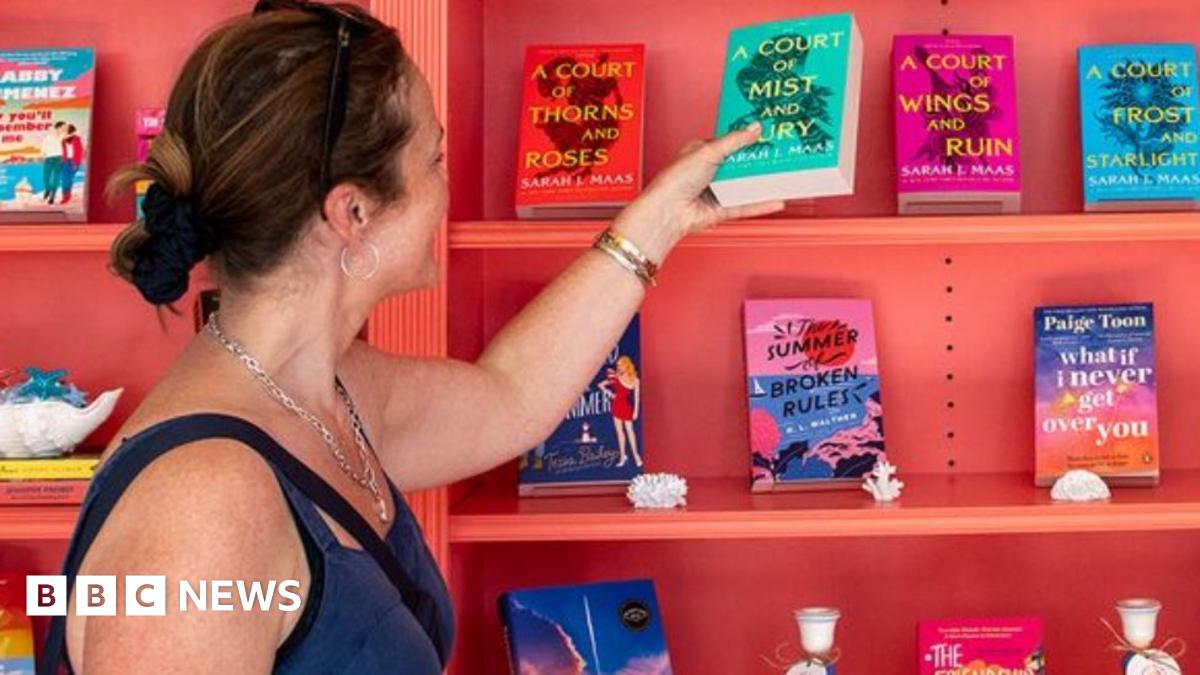
Romantasy, sometimes called "fairy porn" or "faerie porn", is really the old spine of commercial romance hitched to wings of dragons, curses, fairy courts and suspiciously well-trodden ancient prophecies. It is Mills & Boon after a weekend in the misty borders of Welsh mythology: the heroine is not merely choosing between men, but between kingdoms, bloodlines and immortal beings with enviable codpieces. The fantasy provides scale, danger and decoration; the romance provides the underbelly. The dangerous man: cad, prince, warrior, fae lord, emotionally unavailable thundercloud, may wander, brood in a Byronic way, betray or glower from a battlement, but the essential promise remains the same: however far he strays into darkness, destiny, or leather trousers, he must come back to her.
Pride and Prejudice and Zombies did it with Austen and horror in 2009. Queer retellings have done it with classic literature and changing ideas of love, identity and desire. The dime-novel Western did it with adventure fiction and the American frontier myth. A mash-up works when the combination supplies something the parent genres, on their own, were failing to provide.
Romantasy's particular trick is that it updates the core of old romance books without admitting that the core was ever old. Mills & Boon has always understood that the ideal man changes with the decade: the masterful patriarch of the 1950s gives way to the sensitive professional who changes nappies, who gives way to the billionaire, the surgeon, the sheikh, the wolf, the vampire, the morally grey lord with a palace problem and troubling wings. Mills & Boon sells millions of copies globally each year, with its vast library of titles translating to roughly 35 million books sold worldwide annually. In the UK, their highly accessible and prolific release schedule means a new Mills & Boon romance is sold approximately every 10 seconds
I remember a conversation, on a long car journey to the Taj Mahal from Delhi. I was travelling with the new head of Mills & Boon when they started in India, and their research there had uncovered a wonderfully durable romantic recipe. Readers in India liked the idea of a man who was an absolute cad, who wandered, but who always came back, the wandering mattered, the return was essential.
The Happily Ever After is not Optional, it is Contractual.
What the numbers say
In 2024 the Romantasy genre generated $610 million in global sales, up 34% on the previous year. UK science fiction and fantasy sales jumped 41%, driven almost entirely by romantasy. Five of the top ten US bestsellers of 2024 were romantasy titles. In January 2025, Rebecca Yarros's Onyx Storm sold 2.7 million copies in its first week, the fastest-selling adult title in the twenty-year history of BookScan. These are the largest figures in English-language publishing since Harry Potter, and unlike Harry Potter, the readership is not children.
Sixty-six per cent of romantasy titles purchased in the UK in 2024 were bought by readers aged thirteen to thirty-four.
The market just keeps on rolling, publishing trends, such [as the] Fifty Shades of Grey soft porn explosion in the mid Noughties or the adult colouring in phenomena, tend to only last a couple of years. But Romantasy feels almost more like a market shift than a trend.
Philip Jone The Bookseller
The question is not whether the prose deserves its sales, that conversation is happening at considerable volume and misses the point entirely. The question is what is missing from the lives of those readers that this genre, in these numbers, is supplying.
What Romantasy is Supplying
The readers driving this boom are living through conditions the previous generation did not experience at the same age: housing is unaffordable, the work market is uncertain, climate anxiety is not a news story for this generation; it is a permanent feature of the atmosphere they breathe. Above all of it sits the digital world, relentless, algorithmically optimised, specifically designed to prevent them from looking away.
Into this arrives a genre that takes place in none of those conditions, and promises, contractually, to end well.
The Romantasy Heroine
The heroine begins powerless and discovers she is extraordinary, a fantasy about competence being recognised rather than suppressed, which is a rather different thing from magic. The love interest is not found on an app. He is fated, cosmically designated, constitutionally incapable of ghosting her because the magic itself prevents him from leaving, the precise opposite of romantic life conducted through platforms where attention is always conditional and commitment always deniable.
And the reading is not solitary. The hashtag #fourthwing has more than a billion TikTok views. BookTok drove a 2015 novel to the number two US sales position in 2024. A generation that has grown up lonely in the way that digital life produces loneliness — surrounded by connections that carry no weight — is using a fantasy genre to find something that functions like genuine community. The tears over a plot twist are real tears. The friendship formed over a fictional love interest's redemption arc is a real friendship.
What it Tells Us
The bestseller is almost never about what it appears to be about. Corelli appeared to be about the Devil. Buchan appeared to be about German spies. Llewellyn appeared to be about Welsh miners. None of them were about those things, they were about what was missing.
The Secret Has Not Changed
Romantasy appears to be about dragons, it is not about dragons either.
The genre changes, the hunger does not, the writers who find the next wave will be the ones who ask, honestly, what is missing from the lives of the people they are writing for — and who then write, with sufficient conviction, a book that gives it to them.
That has been the secret since 1895, it remains the secret now, even if the secret currently involves wings.
David Salariya founded The Salariya Book Company in Brighton in 1989, having trained as an illustrator and designer at Duncan of Jordanstone College of Art and Design in Dundee. Over thirty-three years he built a distinctive independent children's publishers house, creating more than sixty series and selling books into more than thirty-five languages across the world.
Among the series he created is You Wouldn't Want to Be…, launched in 1999, which has sold over six million copies in thirty-five languages and remains one of the most successful children's non-fiction series. He won the IPG Children's Publisher of the Year award and three TES Information Book Awards, and is a Fellow of the Royal Society of Arts.
The Salariya Book Company closed in 2022, is titles and intellectual property were subsequently purchased by Bonnier Books UK and are now published under their Hatch imprint, books that David Salariya created, designed, edited, and brought to market now appearing in new editions under a different name. He continues to work independently as a writer, illustrator, and blogger, and is currently completing The Story of Britain in 32 Books: Print, Power and the Making of Modern Britain - his first book for adults.
This essay began as research for that book, and became something else along the way.


Comments