


Children's Publishing · The Bologna Book Fair, Italy

"I'll know it when I see it"
The Bologna Children’s Book Fair - what it is, why it matters, and why even war has not emptied the halls
A headline in The Bookseller, four words and a date, the kind of thing you scroll past without thinking.
Except I didn't, I read it, and then I read it again, and then I realised I couldn't quite remember when the Bologna Children's Book Fair had stopped feeling like the centre of my year.
It used to be, our son came to his first Bologna Book Fair when he was two years old - which says something about how completely the book fair once ran through my working and family life, we'd go south afterwards: Rome, Sorrento or Taormina.

London in the 1980s
London in the 1980s. Filofaxes, Sony-Walkmans, ghetto blasters, shoulder pads, giant hair. Cameras that were actual cameras, credit-card machines that used carbon paper, click-clack. Music from The Police, Queen, Bowie and Simple Minds. Everyone smoking fags: Benson & Hedges, Silk Cut, inside, all the time. Offices noisy, phones ringing, people talking, photocopiers, Xerox machines... later fax machines. Everyone had voted Conservative: Rolexes, Ralph Lauren, Range Rovers - the theatre of new money, the roar of Thatcherite confidence, yuppies, Sloanrangers...
...and then you got on a plane to Bologna
Bologna, early 1980s. Medieval towers leaning into the sky, miles of porticoes keeping the rain off since the 12th century. Markets where the mortadella is cut thick and the Parmigiano is broken, never sliced. Pasta made by hand, every morning. Ragù that has nothing to do with what the British named bolognese. Restaurants serving the same dishes for four hundred years and seeing no reason to stop. A university older than England's parliament. Recipes - tortellini, tagliatelle, lasagne - registered at the Chamber of Commerce as if they were laws, because here, they are. Everyone eating, seriously, slowly, without apology. Red buildings the colour of dried blood and autumn. Everyone had voted Communist, and had been voting Communist since 1945. La Rossa. The Red. It wasn't just the buildings. No ghetto blasters, no shoulder pads, no theatre of new money. Just food, stone, and nine hundred years of being entirely sure of itself.
Shirley and I first came here with Giovanni Caselli. Giovanni was working on a series for Macdonald Young Books - fictionalised history, the Everyday Lives - and Bologna was where that world gathered every spring: the Children's Book Fair, the only place where deals got done, because there was no other way to do them.
The Bologna Book Fair
The 63rd Bologna Children’s Book Fair ran from 13 to 16 April 2026. In the end, 32,652 professional visitors came through the halls: slightly fewer than the previous year, but hardly an empty room. War, tension and difficult travel may have dented the numbers, but they did not stop the children’s book world from turning up.
33,000 people, ninety-five countries, the same exhibition centre in the same March or April city - and it is doing so while the world outside its walls is in a fairly grim place. Two wars, tariffs, Trump, and of course, AI. An industry that talks about data and strategy and market trends, but which still, at its core, runs on something closer to instinct and hope.
Most people working in children's publishing get up in the morning and think: perhaps what I'm doing is going to make a difference to some child somewhere. As motivations go, it cannot be the worst one.
The Bologna Children's Book Fair
There is a particular line I heard at the Bologna Children's Book Fair a long, long time ago that has stayed with me longer than any rights deal, any trend forecast, any panel discussion about the future of children's books. Ask an editor, quite plainly, what they are looking for. They smile - pleasant, unguarded, almost relieved to be asked - and say:
“I don’t know. But I’ll know it when I see it.”
The problem is not that editors don't know what they're looking for. It's whether, when they finally see it, they still have the courage to say yes.
What is Bologna?
Since 1963, Bologna has been the place where the global children's publishing industry gathers each spring. Now held over four days (it used to be much longer) at the Bologna Exhibition Centre in northern Italy, it is the world's leading trade fair dedicated to children's and young people's publishing - the engine room where rights deals are struck that determine which books get translated, licensed, and placed into classrooms and homes across the world.
It is now effectively three events running simultaneously: the Bologna Children's Book Fair (BCBF) for children's publishing; BolognaBookPlus (BBPlus), an extension for general trade publishing; and the Bologna Licensing Trade Fair for Kids, covering subsidiary rights in brands, animation, and film. Together they have made Bologna a hub not just for books, but for the entire creative ecosystem surrounding stories for young readers - from illustrated picture books to TV adaptations to licensed merchandise.
The awards presented at Bologna carry real weight: The Bologna Ragazzi Awards honour the year's finest illustrated children's books across fiction, non-fiction, comics, and debut work. The Hans Christian Andersen Award - the highest international recognition in children's literature - is announced from the fair floor. For emerging illustrators, it is the one place in the world where pinning work to the entrance wall might genuinely change a career.

It certainly did for me. Chester Fisher at Franklin Watts saw my work at Bologna in 1990 - I was showing the Inside Story books, having just finished the first three titles, with new projects ready: Timelines, The X-Ray Picture Book series, and others. Franklin Watts ordered those series, and I went on to produce many more over the years, before eventually setting out as a publisher with my own imprints: Book House, Scribblers, and Scribo.
The numbers
Attendance has grown every year since the disruption of the pandemic, reaching a new high in 2025 — and 2026 is expected to match it.
2022 –––––––––––––––––––––––––––––––– 21,432
2023 –––––––––––––––––––––––––––––––––––––––––––– 28,894
2024 –––––––––––––––––––––––––––––––––––––––––––––––– 31,700
2025 –––––––––––––––––––––––––––––––––––––––––––––––––– 33,318
Exhibiting nations
95
countries & regions, 2025
Rights-trading countries
56
via BolognaBookPlus
Award submissions
4,120
titles from 73 countries, 2026
Online reach
2M+
pageviews from 180 countries
Thirteen new markets joined the 2025 fair for the first time, among them Albania, Azerbaijan, Ecuador, Georgia, Iceland, Saudi Arabia, Sri Lanka, and Thailand. BolognaBookPlus sold out for the first time in its history, with a waiting list. For the 2026 BolognaRagazzi Awards alone, publishers from Ecuador, Kazakhstan, Kyrgyzstan, and Rwanda submitted entries for the first time.

What happens in those halls
Bologna is not a fair open to the public. It is a trade fair - which means it is the end point of months, sometimes years, of work. Projects developed in isolation, refined, packaged, costed, second-guessed. Compressed, at Bologna, into a sequence of half-hour meetings, each carrying the faint, unspoken question, is this anything?
Publishers, literary agents, illustrators, authors, translators, rights directors, licensors, film scouts, and editorial directors sit across tables from one another. They are not browsing. They are deciding - which books to acquire for their markets, which illustrations to champion, which voices to carry across languages. A deal struck in Bologna can put a picture book into six or sixty countries, rejections can end a project that took years to develop, and of course there are always the companies quietly circling, picking up ideas.
Publishing prefers to describe itself in the language of strategy: lists, market gaps, trend forecasts, data, and yet in those halls, the language shifts. What is actually happening is pattern recognition under pressure - shaped by taste, fear, experience, and the faint dread of getting it wrong.
Publishing is not, and has never been, a fully rational business.
War, geopolitics, and the 2026 fair
War has not kept anyone away.
The fair's director, Elena Pasoli, has acknowledged that it will once again take place against a backdrop of geopolitical tension: Ukraine, the Middle East, shifting trade relationships, the shadow of American tariffs over international publishing. She has turned down repeated calls to create a special BolognaRagazzi Award category for books about war and peace, seemingly resistant to the idea that publishing's response to conflict should be to commodify it.
Ukraine
Ukrainian artist Maria Haiduk, 19 years old, is the youngest-ever winner of the Bologna–Fundación SM International Illustration Award. Her illustrated book, based on a Ukrainian fairy tale, is given a solo exhibition at the 2026 fair. The Illustrators Exhibition itself - marking its 60th anniversary - received submissions from 96 countries and regions.
Middle East
The fair has barred the Israeli Institute for Hebrew Literature from the 2026 event, a decision the institute described as an act of cultural boycott - a direct consequence of the conflict in Gaza making its presence felt in the halls of a children's book fair.
Among those attending this week, the mood reported is one of heightened purpose rather than dampened spirits. One agent noted that the fair “feels especially important right now, given the state of the world - it can offer a rare chance for children's book people to all come together to continue inspiring young readers to have a wide world view.”
It is a telling sentiment. The books that endure - the ones that define childhoods, shape readers, linger for decades - are rarely the ones that neatly answered a brief. They are the ones that made someone, somewhere, sit up and say: This is different. This might be trouble. Let's do it anyway.
That requires not just instinct, but nerve. And nerve is harder to maintain in a system that has become increasingly cautious, increasingly data-aware, increasingly conscious of failure. Yet here - in a city in northern Italy, in April, year after year - thirty-three thousand people still make the journey to find out if they have it.

Bologna in 2017
My last Bologna Children’s Book Fair was in 2017, Nearly four decades is a long relationship with a place.
What changed wasn't my feeling about publishing, it was a growing recognition of where I was actually useful within it, the rhythm of Bologna had always demanded the same thing: arrive with new work.
That meant spending the first months of each year generating projects - ideas developed, designed, presentation - before the fair itself consumed the next phase in meetings and pitches. For years that cycle felt right, but gradually I knew that the people who could take that work to the fair and sell it were simply better at it than I was. The work itself was the thing I could do, the selling had become something
I was doing out of habit, not out of skill.
At the same time, after years of building and running a company, the balance of the work had shifted - more time managing the machinery, less time in the creative part - the part I loved. Bologna had become a fixed point in a relentless forward motion: pitch, reject, generate, repeat, there was no natural pause built into it.
Publishing has always had room for energetic verbs: prompting, shaking, stirring, refreshing, repositioning. They are useful, sometimes, but they are not quite the same as making something that was not there before. Bologna, for me, was always about the harder, quieter verbs: draw, write, design, build, begin - the ones that happen before anyone arrives to shake the tree.

That word, “refreshing”, has followed me rather more closely than I would have liked. After the assets of The Salariya Book Company passed to Bonnier UK when I decided to liquidate the company, the books I had conceived, commissioned, designed and published began to be republished under the new imprint Bonnier Hatch Press, briskly renewed for another life. There is nothing unusual in that - books are always being repackaged, retitled, resized, made to look as if they have just stepped of the drawing board - but it is curious to see decades of invention treated, however politely, as something in need of a tidy-up.

I had tried to sell the company years earlier, but the accumulated business of publishing - staff, sales, contracts, Brexit, the pandemic, shipping, legal dispute with Monster Energy Drinks, the Orca/IPG warehouse not fulfilling orders - who wants a Christmas book in March of the following year?. The whole administrative swamp - had begun to consume my creative energy, that was the energy that had built it, liquidation was not a failure of imagination, it was the moment I admitted that the structure had become too heavy for one
person to carry.

By 2018, I had continued going skiing late in the season - exactly the weeks I would once have been in Bologna. It wasn't escape so much as rethinking priorities, a deliberate step back from the endless demand for the next thing, and towards work that was slower, more considered, and entirely my own: writing, drawing and painting. I had grown less interested in the performance of publishing activity and more interested in origin: where books begin, why they begin, and what remains of them after everyone else has finished rearranging the type.
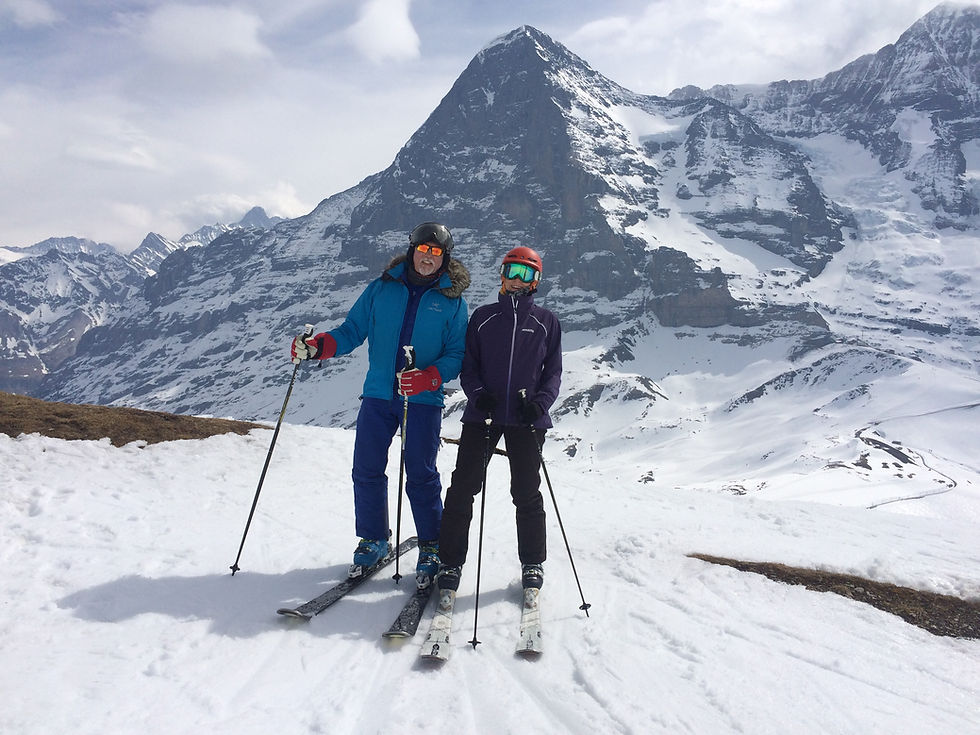
Which raises an obvious question. If I stopped going in 2017, why am
I writing about it in 2026?
Bologna still interests me, even after I stopped going. it remains a barometer: of publishing confidence, political pressure, commercial appetite and the strange, persistent belief that a children’s book can travel where adults have failed. These notes are becoming something - a loose account of a life in books behind the books, assembled out of sequence, the way memory actually works, Bologna keeps appearing in it because Bologna was always a kind of reckoning: a place where you found out, once a year, whether what you'd made was anything that anyone would be interested in.
And partly, if I'm honest, because you don't entirely leave the things
that shaped you, you just stop showing up.
Norway was the 2026 Guest of Honour. In 2027, the fair returns to Bologna from 5 to 8 April, with Poland as Guest of Honour.
David Salariya has spent his working life in children’s publishing, which is another way of saying he has spent decades turning unlikely ideas into books and then wondering whether anyone else would recognise them as such.
He began as an illustrator, then became a creator and designer of mostly non-fiction books for young readers, developing series including Inside Story / The Spectacular Visual Guides, Timelines, The X-Ray Picture Book and You Wouldn’t Want To Be..., before going on to found and run his own publishing imprints: Book House, Scribblers and Scribo. His work has taken him repeatedly to the Bologna Children’s Book Fair, that annual test of nerve, taste and optimism where the children’s book world gathers to decide what might matter next.
Some of those books have since had a second life republished by Bonnier UK's Hatch Press: acquired, repackaged, refreshed, and sent back into the world with the brisk confidence of things that have been tidied by people who were not there at the beginning. Beginnings are, after all, the difficult part.
Over the years he has worked as an illustrator, author, designer, packager and publisher - roles which sound separate, but in practice tend to overlap messily around the same question: is this anything? His blog looks back at a life in books, publishing, drawing, painting, history, pictures, fairs, failures, enthusiasms, instincts and the occasional good decision made for reasons that only became clear much later.


Comments