


What Happens When Your Name Is Removed?

Updated: 6 days ago
There are many ways to disappear in publishing, some are dramatic, contracts are cancelled, books pulped, reputations unstitched, but the quieter method, the one most favoured by institutions that pride themselves on civility, is smoother. A name just slips, a sentence is removed, then a paragraph, then a presence and then of course you can just be deleted instantly.
Some might call it editing. some might even call it progress,
after all, publishing is very good at deciding what belongs on the page - it's less comfortable admitting what has been taken off it.
The phrase “after careful consideration” tends to appear at precisely this moment, when something has already been decided, tidied, and filed away. It arrives not as explanation, but as conclusion. The reader is invited to accept that a process has occurred, though not to inspect it, so the cabinet is closed and the record, if it existed is no longer visible.
Let's look at what happens next...

...not the scandal - publishing has always had those, and will again, but the pattern that follows. The curious consistency with which people, contexts, and contributions are eased out of view while the machinery carries on, newly polished, faintly amnesiac.
What happens when a name is removed is not simply a question of credit, it is a question of narrative control - of who is permitted to remain visible in the story of a book - and who is quietly edited out of it.
You may find no smoking gun in what follows, no grand confession - that is the point.
Instead, what we see - case by case, phrase by phrase, is something subtler and more durable: a system that prefers disappearance to explanation, and silence to memory.
Read on, not for outrage, but for recognition,
the pattern, once seen, has a habit of repeating and repeating.
After Careful Consideration
When a phrase like "after careful consideration" is deployed, readers are meant to hear thoughtfulness, balance and moral gravity.
Here we have the gap between what publishing says it is doing, and what, with remarkable consistency, it actually does. It is not about guilt or innocence, it is about vanishing acts, how people, problems, and explanations are quietly removed from view, while institutions glide forward, freshly laundered...refreshed.
A revealing week in publishing - and a familiar pattern
This week has felt oddly instructive in British publishing, not because of what has been said, but because of how little has been explained, within days, several long-circulating issues resurfaced or crystallised:
The Telegraph's investigation into David Walliams and allegations of inappropriate behaviour towards junior women at HarperCollins
The Observer's renewed scrutiny of The Salt Path, following claims about Raynor Winn's past, which she denies
The continuing reverberations of the Kate Clanchy affair, now re-examined in the podcast Anatomy of a Cancellation
Different people, books and alleged harms. Yet the institutional response across these cases feels strikingly consistent: careful distance, procedural language, and an eagerness to "move on".
This is not cancellation culture, it is something quieter, colder, and far more embedded: erasure culture.
What is a "quiet erasure"?
Quiet erasure is not public accountability, it's what happens when publishing resolves discomfort without explanation and removes risk without narrative,protecting institutions without memory.
It typically involves:
Internal investigations with no published findings
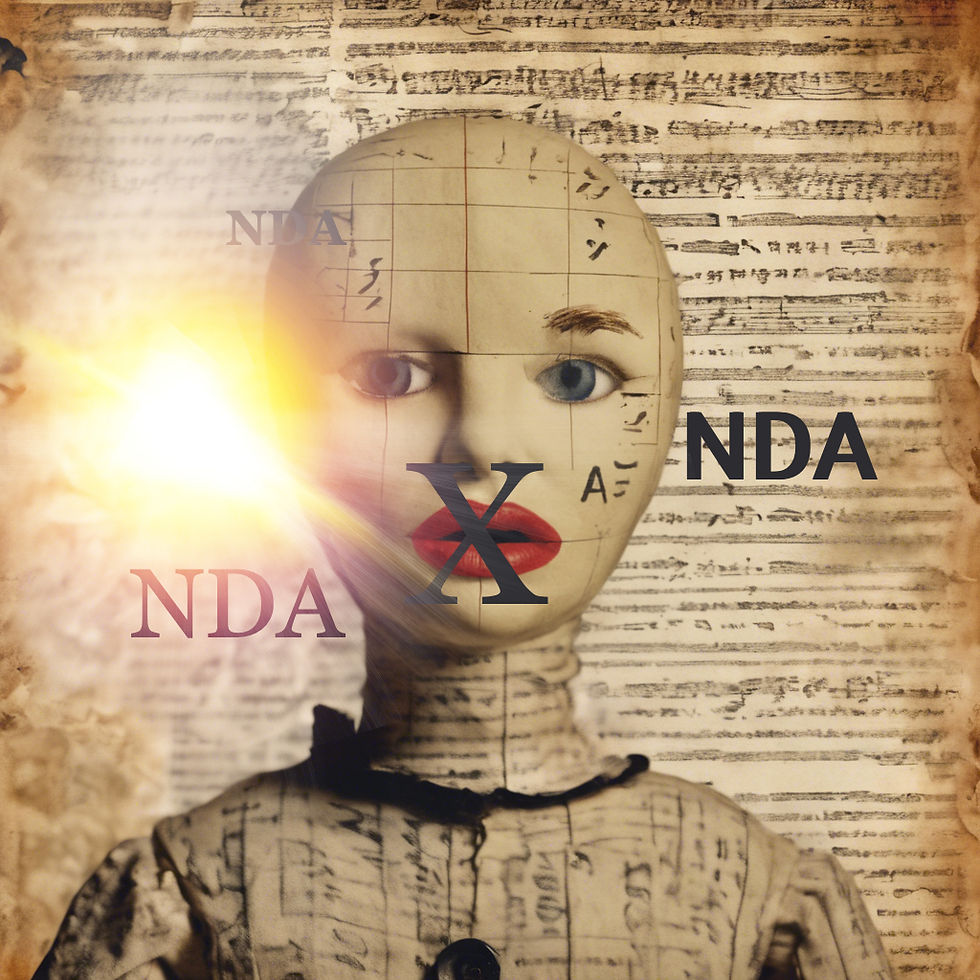
NDAs and confidential settlements
Neutral, legally cautious press statements
Authors or staff quietly sidelined
Books continuing, or disappearing without context
No shared learning, no visible structural change
The problem doesn't explode, It just fades.
David Walliams - Erasure by Delay
The most revealing aspect of the Walliams story is not the allegation itself, but the gap between knowledge and action.
According to The Telegraph: a junior employee raised concerns in 2023; HarperCollins conducted an internal investigation; the investigation concluded in 2024; staff were advised to work in pairs and avoid visiting the author's home; a junior woman received a five-figure settlement and left the company.
And yet Walliams continued to publish, tour, marketed and continued to generate revenue. Only now - following a leadership change and a steep decline in sales has the publisher decided not to publish further titles.
Since accurate records began, Walliams has become one of the most successful authors in British publishing, selling 25.7 million books through NielsenIQ BookScan for £153.3 million since he began at HarperCollins in 2008. In the BookScan era, only three other authors: JK Rowling, Julia Donaldson, and Jamie Oliver- have generated more revenue for British booksellers.
What is missing is explanation: why did the author continue to be promoted, the junior staff member leave rather than the situation being resolved structurally? Why did time, rather than principle, determine the outcome?
This is not transparency, It is containment followed by erasure.
The Salt Path - Erasure Through Ambiguity
The renewed scrutiny of The Salt Path operates differently, but the pattern is familiar. Here, the discomfort lies not in workplace behaviour but in truth, memoir, and narrative authority, a genre publishing has enthusiastically monetised while quietly avoiding its ethical limits.
Raynor Winn (Sally Ann Walker) denies the allegations made about her past, the books remain in print, the publishing response has been cautious, procedural, and restrained.
What's notable is not the presence of doubt, but the absence of dialogue. Publishing has long sold memoir as emotional authenticity while knowing that memory is selective, narrative is shaped, trauma is curated for readers, and truth is often negotiated rather than absolute.
When those tensions surface, silence is allowed to do the work.
This is another form of quiet erasure - not of a person, but of critical scrutiny itself.
One thing struck me in Chloe Hadjimatheou's recent discussion about memoir and truth: the reminder that when you change the truth in someone else's story, you take responsibility for the consequences. That line stayed with me because it names something publishing rarely acknowledges, institutions are very comfortable changing narratives - about books, authors, origins - without explaining why. But those changes are not abstract, they land on real people, real careers, real lives, silence does not make that ethical, It just makes it convenient.
The Observer’s renewed scrutiny of The Salt Path, following claims about Raynor Winn’s past, which she denies
The continuing reverberations of the Kate Clanchy affair, now re-examined in the podcast Anatomy of a Cancellation
Kate Clanchy - Erasure by Reputational Fog
The Kate Clanchy affair, revisited in the podcast Anatomy of a Cancellation, offers perhaps the clearest example of erasure masquerading as resolution.
There was no legal finding, no formal disciplinary process, no agreed definition of harm, no institutional explanation. Instead, there was a rapid withdrawal of professional support, a collapse of public confidence, prize culture retreating into silence, a narrative vacuum filled by implication rather than fact.
Clanchy was neither clearly defended nor formally condemned. She was left in reputational limbo - a state in which the work becomes suspect, the author becomes untouchable, and institutions decline to speak.
This is not accountability, it is abandonment without explanation.
A Revealing Contrast: When Publishing Acts Fast
There is an instructive counterexample - one that exposes the myth that publishing is always cautious, slow, or procedurally bound.
When Charlie Redmayne departed HarperCollins, the response was swift and decisive. Senior leadership intervened directly, with the head of the company flying in from New York. There was no prolonged period of ambiguity, no reputational fog, no years of managed distance, action was taken quickly and visibly.
The contrast is telling, this demonstrates that publishing can move at speed when it perceives risk as immediate, central, and reputationally acute, delay elsewhere, then, is not structural necessity - it is a strategic choice.
Quiet erasure is not about incapacity, It is about where power sits, and who is considered expendable while time does its work.
One Pattern, Different Speeds
Taken together, these cases reveal three distinct modes of erasure - and one revealing exception:
CASE | INSTITUTIONAL RESPONSE |
David Walliams | Delay, containment, procedural exit |
The Salt Path | Ambiguity, silence, narrative withdrawal |
Kate Clanchy | Reputational fog, institutional retreat |
Charlie Redmayne | Swift senior intervention, visible action |
The difference is not morality, it is where power and risk are perceived to sit.
The Hollow Language Around a Name
Across all these cases, the same phrases recur: "After careful consideration…" "We take wellbeing seriously…" "We do not comment on internal matters…" "The author is aware of the decision…"
These are not explanations. They are narrative dead ends, designed to close discussion rather than illuminate it. Privacy becomes a shield. Process becomes a substitute for ethics. Silence becomes policy.
Who Disappears - and Who Doesn't
In quiet erasures, consequences fall unevenly when your name is removed. They tend to land on junior staff, freelancers, authors without institutional power, and readers seeking clarity. Institutions remain intact. Leadership rotates, catalogues move on.
The lesson absorbed is a dangerous one: speak up, and you may vanish. Stay silent, and the system survives.
Why Publishing Prefers Erasure to Reckoning
Reckoning would require admitting delay, naming power imbalances, publishing findings, accepting precedent, and changing behaviour. Erasure requires only time, NDAs, and carefully worded statements. That is why it keeps happening.
When publishing erases instead of explaining, it loses trust, moral authority, institutional memory, safety for staff, and confidence from readers. Most damaging of all, it loses the ability to tell the truth about its own culture.
Archer v Walliams: A Tale of Two Men
When publishing treats finished scandals
more gently than unfinished ones.
Publishing presents itself as values-led, ethically alert, and socially responsible, yet occasionally a comparison emerges that exposes how contingent, and how expedient those values can be. The contrast between Jeffrey Archer and David Walliams, both associated with HarperCollins.
Jeffrey Archer approaches life with the ambition of a man who thinks of the top as a useful place to begin. Through the latter half of the twentieth century he rose, fell, rose again, and repeated the exercise until disgrace began to look less like a career-ending event than a minor inconvenience. His Conservative political career looked as if it ended at least twice, but Archer has a remarkable ability to find another entrance, preferably one with a red carpet.
Archer has already supplied so many competing versions of his life, anything he said about himself required independent fact-checking, preferably before the ink dried. His wife, Mary, described his “gift for inaccurate précis”, a phrase of such exquisite marital diplomacy. Other people might have reached for a shorter word, but Lady Archer once said “Life with Jeffrey is never dull.”
Archer's conviction is not disputed history, in 2001, he was found guilty of perjury and perverting the course of justice, following revelations that he had lied under oath during a 1987 libel trial. That original case, brought against a newspaper that alleged he had paid a prostitute for sex, ended with Archer winning substantial damages after presenting a false alibi supported by fabricated evidence, years later, those lies unravelled, a jury convicted him and he was sentenced to
four years in prison and served two.
These are not allegations, cultural misjudgements, or ambiguous claims, these are established facts, tested in court. Yet Archer's publishing career survived, more than that, it was rehabilitated, his imprisonment became material for The Prison Diaries. His reputation was gradually reassembled, he remains a peer, a global bestseller - and a figure treated with what amounts to valedictory warmth.
At the centre of this story, however, sits a figure too easily ignored, Monica Coghlan was the woman Archer defeated in court in 1987. Born in Rochdale in 1951, she left home at fifteen after a troubled childhood, surviving a violent sexual assault as a teenager. When the libel case reached court, she was cross-examined for thirteen hours by Robert Alexander QC. She broke down repeatedly but maintained her account, calling Archer a liar to his face. He walked away with £500,000 in damages and his reputation intact. "Jeffrey Archer took everything away from me," she later said.
I lost my home, my dignity, my self-respect, and any hope of a future.
The truth emerged only years later, when witnesses recanted and Archer was charged with perjury, but Coghlan never faced him again in court. She died in a car crash in April 2001, just weeks before the perjury trial began. Archer was convicted that July. Her vindication was posthumous, abstract, and easily absorbed into a narrative of male fall and redemption, her voice, class, gender - inconvenient - was missing from the final act.
By contrast, Walliams was dropped publicly and abruptly, just before Christmas, on the basis of allegation and reputational risk. There has been no trial, no conviction, no judicial finding, the decision was pre-emptive, highly visible, and commercially consequential.
What the contrast exposes is publishing's real ethical calculus, the decisive factor is not wrongdoing, nor even harm, but whether a story is finished. Archer's scandal is closed. Walliams' situation is live, unresolved, and algorithmically volatile. The implicit rule appears to be this: a convicted author with a completed scandal is safer than an unconvicted author with an unfinished one. That rule is never stated, but it is clearly being applied - by the same publisher, in markedly different ways.
None of this is about defending either man's behaviour. It is about consistency, proportionality, and fairness, qualities publishing claims to value. The lesson being taught today is a bleak one: conviction can be survived, but allegation, at the wrong moment may not.
Until the business of publishing learns to explain its own actions, not just curate its public image, it will keep repeating the same story: problems contained, people erased, institutions untouched - the silence will continue to speak louder than any statement.
Further Reading Castaway Truths: From Robinson Crusoe to The Salt Path
In 1719, a man was shipwrecked, alone, penniless, and entirely self-reliant. In 2018, a couple lost their home, their money, and their future - and walked the coastline to survive. Both stories were sold as true, only one of them ever needed to be.
The First Bestseller Lie
When Daniel Defoe published Robinson Crusoe, he didn't call it a novel, that word still carried a whiff of fiction. Instead, he presented the book as a memoir, a survivor's factual account. The title page alone was doing heavy lifting: Written by Himself.
Readers believed Crusoe was real - or half-believed, which was enough in an age when pamphlets, sermons, trial transcripts, and adventure narratives blurred together. Truth was not a legal category; it was a moral one. Crusoe's story mattered because it worked.
Truth Didn't Used to Be Fragile
Eighteenth-century readers were not naïve, they knew authors embroidered and knew stories travelled faster than facts. What they wanted was reassurance: that the world could be mastered, that effort would be rewarded, that chaos could be organised, that God noticed industrious men. It was a survival story for an expanding world, a handbook for people who believed the future was theirs to shape, truth, in Defoe's time, meant usefulness.
Fast Forward: The Path Instead of the Fort
Nearly 300 years later, The Salt Path arrived quietly and then spread everywhere, two people, no money, Illness, homelessness. A long walk, no building, no conquering, no island claimed, just endurance.
This was not a manual for mastery, It was a votive offering - proof that survival itself could be meaningful. Readers didn't read The Salt Path to learn how to dominate the land. They read it to learn how to keep going when the systems fail and crucially, they read it because it was sold as being true.
Why Modern Readers Care So Much
When questions were raised about the book's accuracy, the reaction was fierce, the hurt was personal. That tells us something important, nonfiction now does not trade on instruction, it trades on trust.
Today the reader is not asking: "Does this story explain the world?" They are asking: "Can I trust this person?" The author is no longer a distant guide. They are a moral proxy, a witness, sometimes a confessor. Which makes truth brittle, when that trust cracks, readers don't feel misled - they feel betrayed.
No one ever felt betrayed by Robinson Crusoe.
The comparison matters because it names something the publishing industry rarely acknowledges: it has always sold constructed truths. What has changed is not the construction — it is the intimacy of the contract between author and reader. Defoe's readers wanted instruction. Today's readers want connection. And connection, once broken, does not quietly close like a filing cabinet. It stays open.

The Russell Brand Settlement: Comedy the Bookseller Didn't Notice
The Brand story deserves attention, if only because The Bookseller - to its credit, diligent; to its occasional cost.. humourless - reported the Russell Brand settlemet entirely straight-faced, missing the operatic absurdity at its centre.
The facts as reported, a celebrity signs a £575,000 deal for two self-help books receiving over £200,000 on signing. A ghostwriter is hired to begin the actual writing and is paid £3,000 - (this is not a typo) for a partial draft of the first book.
The celebrity provides no input.
When the allegations against Brand emerge in 2023, the publisher terminates the contract and sues for £220,000. The case is settled for an undisclosed sum.
The headline, in all its gory glory: Russell Brand settles with Pan Macmillan for undisclosed sum over failure to write self-help books.
A self-help book, ghostwritten by someone paid £3,000 with no input from the named author, is its own kind of parable, the genre that instructs readers on personal responsibility, authentic living, and taking ownership of one's own choices - produced, in this instance, by a hired hand, commissioned for a celebrity, for a sum the ghostwriter might have expected to cover a fortnight's rent.
The deeply comic vein running through all of this that The Bookseller seems constitutionally unable to mine, publishing has built a profitable parallel economy on celebrity authorship - the name on the cover sells the idea of the person; the person, in many cases, sells the idea of a book they did not write, that economy functions smoothly until it doesn't, and when it doesn't, the resulting legal proceedings have a certain corrective poetry: the self-helper who couldn't be bothered to help himself to a word processor, the advance-taker who took the advance, the draft produced for a sum that wouldn't cover a new laptop.

Names on the Spine
There is another kind of disappearance now taking place in publishing,
and it begins with the name on the spine and the title page.
For much of the 20th Century, names mattered, these were not just labels: Macmillan, Dorling Kindersley, Mitchell Beazley, Franklin Watts, Walker: these names carried the influence and fingerprints of people - founders, editors, designers, temperaments, taste, a logo and name on a spine was a form of warranty, it said: someone stood behind this.
Then publishing began to change, the founders names gave way to constructed imprints - bright animals, clever nouns, abstract moods: Nosy Crow. Blink. Fat Fox. Chicken House. The shift signalled a movement away from the accountable human maker towards the portable brand, the imprint no longer had to remember a founder, it had to occupy a market position.
The irony is that, at the same moment, celebrity publishing moved in the opposite direction. There, the name became everything, not because the celebrity had necessarily written the book, but because the name could sell it.
So publishing now performs two contradictory tricks at once inflating some names beyond their labour, and removes other names from labour already done.
Until the business of publishing learns to explain its own actions - not just curate its public image - it will keep repeating the same story: problems contained, people erased, institutions untouched, the silence will continue to speak louder than any statement,
over a self-help book no one helped themselves to write.
What Happens When You Lose Your Name
There is a particular kind of shock that arrives when your name is removed from work that once anchored your identity, it is not simply professional disappointment, nor even anger, though both may follow. It is disorientation, a loosening of the thread between self and history.
For many creative people, a name is not vanity, it is continuity, it is the small line connecting years of labour, risk, imagination, obsession and sacrifice to something visible in the world.
Remove the name, and what disappears is not only credit, but orientation, the individual begins to feel strangely unreal - present, but no longer fully recognised within the story they build.
Psychologists sometimes describe this sensation through ideas such as depersonalisation or identity disturbance: the unsettling feeling of becoming detached from your own experience, of existing as an anonymous “somebody” rather than a distinct person with a history, contribution and voice. In creative industries where work is often deeply entwined with selfhood, the effect can be particularly acute.
The burden is rarely dramatic in public, it appears quietly: difficulty concentrating, compulsive revisiting of the past, an inability to move forward creatively, exhaustion, self-doubt, anger turned inward. The erased individual may begin to question not merely what happened, but whether they themselves still properly exist within the cultural record at all.
And yet this experience is more common than institutions admit, publishing, film, television, design, advertising, technology - all contain invisible architectures built by people whose names faded while the structures remained standing. Sometimes this occurs through contracts and acquisitions; sometimes through corporate rebranding; sometimes through deliberate distancing; sometimes simply because institutions prefer simplified stories with fewer inconvenient human traces attached.
What makes erasure uniquely painful is that it attacks the human need for narrative coherence, we understand ourselves through the stories we tell about our lives. When those stories are externally rewritten, denied, or stripped of attribution, the result is not merely frustration, but psychic instability - a fracture between lived reality and public reality.
That fracture carries a toll.
Not because creatives are unusually fragile but because meaning itself is fragile when memory is removed from it.
The Name, the Silence, and the Trick
In the end, the question is not whether publishing has scandals, of course it does. Every industry with money, status, vanity and locked meeting rooms has scandals. The sharper question is what publishing does with them once they become inconvenient.
Again and again, the answer appears to be: it edits.
What links Walliams, The Salt Path, Kate Clanchy, Russell Brand, Jeffrey Archer, ghostwriters, vanished founders and renamed imprints is not that they are the same story. They are not, the facts differ, degrees of harm differ and the legal positions differ. But the institutional reflex is hauntingly familiar: contain the problem, protect the asset, manage the optics, move on.
Publishing is very good at selling moral seriousness, less good at practising historical memory.
The name on a book still matters, sometimes it matters too much, when celebrity is inflated beyond the labour actually performed. Sometimes it matters too little, when the creators, designers, editors, packagers, ghostwriters and originators are quietly rubbed away, that is the double trick: some names are made enormous because they sell; others are made invisible because they complicate the sale.
And perhaps that is the real scandal beneath the scandals.
But names have a stubborn habit of returning, in catalogues, archives, metadata, memories, old title pages, contracts, invoices, photographs, conversations, and the inconvenient recollections of those who were there.
Publishing may prefer silence, the record does not.
The Theft of Attention
There is another kind of erasure taking place alongside all this, larger than publishing, and certainly more profitable.
It does not begin with books. It begins with attention itself.
Modern culture describes the crisis in reading as if children simply misplaced interest somewhere between TikTok and the school library, this is comforting nonsense, attention was not lost - it was taken.
An entire economic system now exists to interrupt thought before it properly forms, phones vibrate, feeds refresh, outrage cycles accelerate, human concentration once regarded as a prerequisite for civilisation - has been transformed into a raw material to be mined. miced and sold to advertisers human fracking, an ugly phrase.
But ugliness is sometimes the privilege of accuracy.
Reading, concentrated reading - remains one of the last technologies that trains sustained attention. It teaches patience, ambiguity, sequence, delayed understanding, a book forces the brain to remain in one place long enough for thought to deepen rather than just react.
A distracted culture, by contrast, cannot retain enough narrative continuity to ask the uncomfortable questions, Who made this? Who disappeared? What has been quietly removed?
The old totalitarian states rewrote history with censorship, fire and prison, modern systems simply drown memory in noise.
And noise, unlike censorship, feels like freedom while it is happening.
The Currency of Silence
In the creative industries, attribution is often treated as a courtesy, It should be treated as part of the historical record.
When books move between companies, credits and metadata can become strangely fragile. Names disappear from title pages. Biographies are removed. Copyright pages are compressed. Original imprints are reduced to a line in pale grey type, the public story becomes cleaner, simpler and more convenient.
Sometimes this happens through oversight, sometimes through house style, sometimes through the flattening effect of corporate systems that prefer brand continuity to messy creative history.
But whatever the cause, the result is the same, the original creator becomes less visible.
For independent creators, this matters deeply, credit is not vanity, it is evidence of how future readers, researchers, librarians, journalists, rights buyers and even AI search systems understand who made what. Remove or minimise that evidence and the public record begins to tilt.
A press release may last a day. A catalogue record may last a century.
David Salariya is an author, illustrator, designer and publisher, the founder of The Salariya Book Company and the creator of numerous internationally successful children’s book series, including You Wouldn’t Want To Be…. Over a career spanning more than four decades, he has worked across illustration, editorial design, publishing and visual storytelling, with books translated into more than 35 languages. His writing explores publishing, creativity, cultural memory, authorship and the changing nature of books in the corporate digital age.


Comments