


Is AI Scraping Creative Work Theft?

Updated: Sep 5
By David Salariya
From Dr Polidori’s Erasure to AI scraping - why creative theft keeps returning dressed as progress
The man who invented the vampire - and almost lost his name
I am working on a book about Dr John William Polidori, the young physician who travelled with Lord Byron to Switzerland during the strange, storm-darkened summer of 1816 and emerged from Byron’s shadow with one of the most influential monsters in modern literature.
It began as a short book, but Polidori has proved difficult to contain. The further I follow him through family papers, diaries, letters, medical records and the conflicting accounts left by those around him, the less he resembles the minor and rather unfortunate figure to which literary history has reduced him.
The research keeps opening new doors.
The working title is The Short, Strange Life of Dr John William Polidori: Lord Byron’s Physician and the Man Who Invented the Vampire. Whether it will remain quite so short remains to be seen.
Polidori’s misfortune was not simply that he died at twenty-five, or that he lived in the shadow of a celebrity poet with better public relations and a much larger myth. His greater misfortune was that when The Vampyre appeared in 1819, it was initially published under Byron’s name. The man who helped create the modern vampire was, in effect, drained of his own authorship.
That feels uncomfortably modern.
Polidori transformed the vampire from a folkloric horror - a corpse, a plague, a thing from the village edge - into something more dangerous: an elegant predator who could move through drawing rooms, seduce polite society and feed without ever seeming vulgar. Lord Ruthven, the vampire in Polidori’s tale, is not a monster who bursts through the door, he is already in the room, charming, titled and entitled and very plausible.
We might say he is well-networked.
And yet Polidori himself was left in the literary half-light, forever attached to Byron’s greater fame, the vampire survived, the creator almost disappeared.
That is why the current campaign by children’s authors and illustrators against the unlicensed use of creative work by AI companies is of huge interest. At first glance, it may seem a long journey from Byron’s Switzerland to the age of generative AI. But history has a habit of going in circles and repeating the same old trick.
A creator makes something, a more powerful system takes it, the public is told this is progress.
The Miserable Summer that Made Modern Monsters
The summer of 1816 has become one of the most famous bad-weather events in literary history. It was the “Year Without a Summer”, when the aftermath of a volcanic eruption on the other side of the world, Mount Tambora in Indonesia the previous year helped turn European weather strange, cold and gloomy, possibly like Dundee in July.
At the Villa Diodatti In Switzerland, Byron, Percy Shelley, Mary Godwin, Claire Clairmont and John Polidori found themselves trapped indoors, the sky splintered by lightening, rain, storms and darkness. Candles were lit during the day, the lake rose. The atmosphere was damp, feverish, theatrical and fuelled by laudanum. We can imagine Lord Byron in a mood that was a complex mix of melancholy, claustrophobic irritation, dark, apocalyptic despair - the kind of mood we've lived in since 2017.
Out of that weather came two of the great modern myths.
Mary Shelley imagined Frankenstein, the story of a young scientist who assembles life from dead matter and then recoils from the consequences of his own creation.
Polidori, drawing partly on Byron’s abandoned vampire fragment and partly on the dangerous charisma of Byron himself, created The Vampyre, the tale that helped give us the aristocratic vampire - the seductive predator, the beautiful parasite, the gentleman monster.
It is hard now not to see those two myths as startlingly contemporary,
Frankenstein is the story of artificial creation without moral responsibility.
The Vampyre is the story of a powerful figure who feeds on others while remaining socially acceptable.
Between them stands the entire modern debate about artificial intelligence.
Meanwhile, Back in Britain, the Machines were Breaking
While Byron and the Shelleys were trapped inside in Switzerland telling ghost stories, Britain was already being convulsed by a different sort of horror story: industrial change.
The Luddites have been lazily remembered as people who hated machines. That is convenient, but it is not quite true. They were skilled textile workers who saw machinery being used not simply to improve production, but to reduce wages, degrade skill and transfer power from workers to owners.
They were not, in any simple sense, anti-technology, they were anti-exploitation.
There is a difference.
A machine that helps a worker is one thing, a machine used to destroy the value of that worker’s craft is another. A machine that improves quality is one thing but a machine used to flood the market with cheaper, poorer goods while throwing skilled people into poverty is another.
Lord Byron understood this, at least for a moment, in 1812, in his maiden speech in the House of Lords, he spoke against the harsh punishment of machine-breakers. Byron was no cloth worker, and we should never mistake a poet-peer for a working-class hero, but he recognised something important: the machines were not arriving in a neutral world. They were arriving inside a system of power.
The same is true now.
AI does not arrive in a neutral world. It arrives in a world where money, data, law and distribution are already unevenly held. It arrives with the language of wonder, efficiency and inevitability, but behind the bright screen is a very old question:
Who benefits?
AI Scraping - Stop the Theft
In June 2026, a group of children’s authors and illustrators launched the “We Are Better Than This” campaign against AI. The campaign, created by Chris Haughton, Simona Ciraolo, Ged Adamson, Benji Davies and Momoko Abe, describes itself as a creative uprising. Its film is voiced by Miriam Margolyes. Its message is blunt: “Stop the theft!”
It is a useful phrase because it slices through all the soft, anaesthetic language that has gathered around AI.
“Training” sounds educational.“Text and data mining” sounds technical.“Scraping” sounds almost accidental, like removing old paint from a window frame.“Innovation” sounds bright, clean and inevitable.
But “theft” asks the blunt question.
Was permission given? Was payment made? Was credit attached? Can the creator say no?
If the answer is no, no, no and not really, then perhaps “theft” is not such an outrageous word after all.
The campaign is not, from what I can see, anti-technology, that would be too easy to dismiss. It is anti-extraction, it is against a system in which the accumulated work of artists, writers, musicians, photographers, designers and illustrators can be absorbed into machines without proper consent, then repackaged as a tool that competes with the very people whose work made it possible.
That is not a technological miracle, it is a business model.

Creative Fracking
The word “scraping” does not feel quite adequate. It sounds too light, too superficial, too much like tidying the edge of a label.
What is happening feels closer to Creative Fracking.
The work of living creators - their years of practice, their experiments, failures, style, judgement, oddities, visual memory, hand, eye and brain - is treated as a seam of raw material. The pressure is applied, the value is extracted, the wealth flows upwards and the damage is left behind.
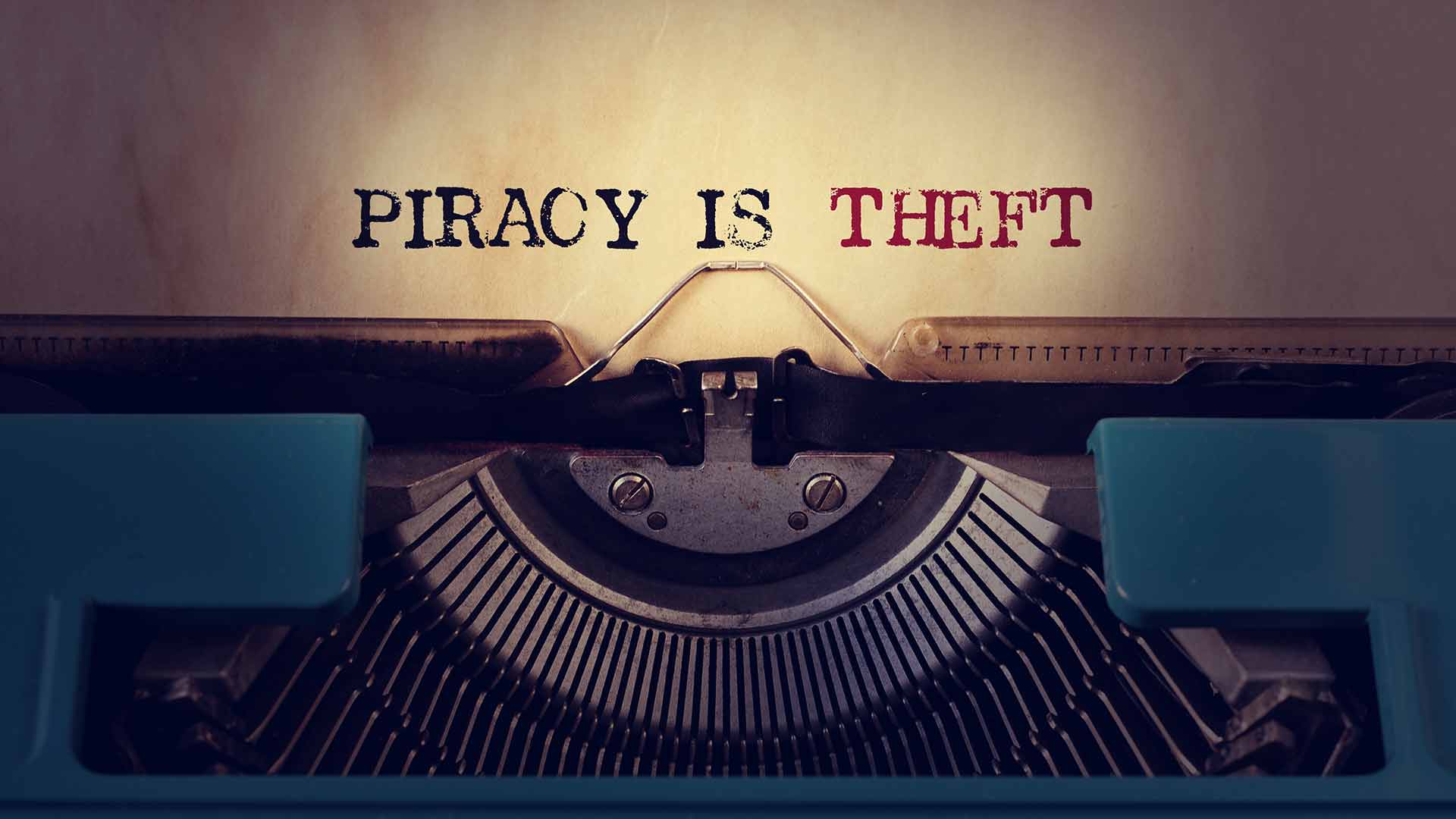
This is especially disturbing in children’s books because children’s illustration is not merely decorative content, it forms part of the emotional furniture of childhood.
A child does not remember a picture book as a dataset, a child remembers the bear, the island, the snow, the green monster, the lumpy dinosaur, the tiny mouse, the line of a face, the particular blue of a night sky, the joke hidden in the corner of the page. Children carry images with them long after they have forgotten where they first saw them.
Children’s books are acts of care, they are designed, drawn, paced, written, edited, printed, held, chewed, dropped, slept on and remembered.
To feed that into a system without permission is not just an economic act, it is a cultural one.
It says that the human origin of the work does not matter very much once the work has become useful to someone else.
Polidori might have recognised the feeling.
The Vampire has Become the Algorithm

There is an obvious comparison between AI and Frankenstein, we have created something powerful and are now arguing about responsibility. Who made it? Who controls it? What happens if it escapes? Who is liable when it harms people? Does the maker have a duty to the made - and to the world into which the made has been released?
But the Polidori comparison is, in some ways, even sharper.
The vampire is not frightening because he is ugly, he is frightening because he is attractive. He is welcomed, belongs to the room before his victim understands the danger. He feeds on life and leaves behind weakness, confusion and a strange social silence.
The vampire is extraction with good manners.
That is what makes Polidori’s Lord Ruthven such a modern figure, he is not a monster from outside society, he is a monster produced by society - by glamour, class, entitlement and appetite.
The modern equivalent does not need a cloak, it has a platform, investors, lawyers. It has a slide deck about innovation and CEO's, telling us that the future is inevitable and that resistance is sentimental - we use technology to make us more efficient, more effective.
But creators are not being sentimental when they ask not to have their work taken. They are asking for the basic conditions under which creative life can continue: permission, payment, transparency and credit.
These are not romantic luxuries. They are the plumbing of culture.
The Old Insult: “Luddite”
Whenever artists, writers or workers raise concerns about technology, the word “Luddite” is usually produced like a dead mouse from under the sofa.
The implication is clear: you are backward, frightened, foolish, nostalgic. You are standing in the way of progress and are the sort of person who would have objected to the printing press, the railway, the camera, the computer, the internet, the electric toothbrush and possibly the wheel.
But the real Luddites deserve better than this smug caricature.
They were not against machines because machines were new. They were against the use of machines to destroy skilled livelihoods while enriching those who owned the machinery. Their protest was not simply technological. It was moral and economic.
That distinction matters.
The children’s authors and illustrators behind “We Are Better Than This” are not smashing laptops in the street. They are making a film, they are crowdfunding and they are organising and speaking in public, using technology to challenge the misuse of technology.
That is not Luddism in the cartoon sense.
It is closer to what the Luddites were actually arguing: technology should not be used as a weapon against the people whose skill created the value in the first place.
Progress for Whom?
Every age has its favourite disguise for power.
In the early nineteenth century, it was improvement. The factory, the loom, the machine, the production line - all promised efficiency and modernity. Some of that promise was real, but the benefits were not evenly shared, and the costs were often paid by those with the least protection.
In our age, the disguise is innovation.
Innovation is a word with polished shoes, it walks into government meetings, smiles at conferences suggesting that anyone who questions it must be against the future.
But there is no such thing as progress in the abstract, progress for whom? At whose expense and under whose control and with whose consent?
If an AI company builds its product by absorbing the work of millions of creators without permission, that is not simply a new tool appearing in the world, it is a redistribution of value.
That is why the government’s handling of AI and copyright matters, a regime that makes it easier for companies to use creative work unless creators successfully opt out would place an impossible burden on individuals. It would ask writers and artists to police the entire internet while large companies help themselves first and negotiate later, if at all.
That is not balance, that is surrender by admin.
Polidori’s Lesson
Polidori’s story is not identical to the story of AI, of course, history never repeats itself so neatly. He was not scraped by a machine. He was overshadowed by a man, a myth, a class system and a publishing culture hungry for Byron’s name.
But that is precisely why he matters.
Creative erasure rarely looks like one thing, sometimes it is misattribution, sometimes it is unpaid labour. Sometimes it is the removal of a credit line. Sometimes it is a woman’s work published under a man’s name. Sometimes it is a famous person absorbing the oxygen around everyone else. Sometimes it is a corporation buying, flattening and rebranding a backlist. Sometimes it is a machine trained on work whose makers were never asked.
The method changes.The appetite remains.
Polidori’s vampire was born in the shadow of Byron. Today’s algorithmic vampire is born in the shadow of Big Tech. Both depend on the same old magic trick: taking from the less powerful and calling the result inevitable.
Children’s Futures should not be Built on Stolen Work
The phrase “children’s futures” in the “We Are Better Than This” campaign is important. It lifts the argument beyond professional self-interest.
This is not only about whether illustrators will be paid, though they should be and it is not only about whether writers will be credited, though they must be. It is about what kind of creative culture children inherit.
Do we want children to grow up in a world where books are made by people with something to say, or by systems that simulate the surface of saying something?
Do we want them to understand that drawing is a form of thinking, or merely a style that can be summoned by typing a prompt?
Do we want them to know that stories come from lived experience, observation, memory, research, play, boredom, failure and stubbornness - or do we want them to believe that culture is just something generated?
There is a danger here that is deeper than copyright, copyright is the legal battleground, but the larger issue is human value.
Children need human-made culture not because machines can never make anything interesting, but because children are human beings learning how to become human beings. They need the trace of a hand. They need wit, oddity, doubt, tenderness, taste, rhythm, mischief, compassion and the strange authority of another person’s imagination.
A good children’s book is not merely an output.
It is a meeting.
We Are Better Than This
The campaign’s title, “We Are Better Than This”, is clever because it does not only accuse. It appeals.
It suggests that another future is possible, one in which technology is used with consent, in which AI companies license work properly and creatives are paid when their work creates value, one in which transparency is not treated as a nuisance
and in which innovation does not require a bonfire of other people’s rights.
That is not anti-progress, it is what progress ought to mean.


This is the link to "Stop the Theft": Donate now and
help defend the future of human creativity.
The Machine is Not the Enemy
The loom was not evil because it was a loom, the problem was the system that used machinery to impoverish skilled workers. Victor Frankenstein’s creature was not born evil. The horror lay partly in the creator’s failure of responsibility. The vampire is not terrifying because he has teeth, but because he turns appetite into entitlement.
And the algorithm is not dangerous because it can imitate. It becomes dangerous when it feeds on human labour while pretending to have created itself.
Polidori, poor, proud, clever, touchy, ambitious Polidori, knew something about being trapped in another man’s shadow. His vampire survived partly because it understood power. It knew how to enter the room. It knew how to charm. It knew how to feed.
Two centuries later, the vampire has changed shape again.
It has become the algorithm.
And if we are better than this, then the answer must be simple: ask permission, give credit, pay creators, and stop calling extraction and creative fracking progress.
The machine is not the enemy.
The theft is.
David Salariya is an author, illustrator, designer and publisher. He has been chased by an elephant, stood on the edge of Victoria Falls, had books published in more than thirty-five languages, seen one series sell more than six million copies - and one book sell seventy-two.
He founded The Salariya Book Company in 1989, creating and publishing children’s books through imprints including Book House, Scribblers and Scribo. The company was named Independent Children’s Publisher of the Year by the Independent Publishers Guild. David originated, developed or published series including You Wouldn’t Want to Be…, Timelines, Spectacular Visual Guides and A Very Peculiar History and more than other sixty series.
David writes about the history of books, how they are made, sold, misjudged, rescued, redesigned, erased, remaindered, remembered - and occasionally composted. The books he created over a period of thirty years are being "refreshed" and republished by Bonnier UK's Hatch Press "where good things grow".


Comments