


Two Copyright Cultures: Why France Protects Creators and Britain Protects Markets

Updated: Jan 14

Introduction
The French government has taken a decisive step that could reshape the global debate on AI and copyright. While much of Europe is still speaking in the language of compromise, France is preparing legislation that places creators - not corporations - at the centre of the digital future. This week, the Ministry of Culture announced plans for an AI bill designed to protect copyright, guarantee remuneration for authors, and ensure that generative AI systems train only on lawful, transparent, and fairly licensed cultural material.
At the heart of the proposal lies a bold idea: that innovation and culture are not opposing forces, but partners in a “virtuous circle of value creation.” Yet after months of consultations between AI developers, publishers, and artist groups, consensus proved elusive. Developers want frictionless access to training data; creators want recognition, attribution, and enforceable rights. France’s answer may be to invoke its strongest legal tradition - the protection of the author as a moral agent - by shifting the burden of proof. Under the proposed bill, AI providers would be presumed to have used copyrighted works unless they can demonstrate otherwise.
Culture minister Rachida Dati set the tone bluntly: copyright is not merely an economic tool but the backbone of France’s cultural sovereignty. And in an age where machines can ingest a national literature in minutes, France is signalling that the author - and the nation’s identity - will not be sacrificed on the altar of “innovation” without a fight.
If you want to understand why France is preparing an AI bill that treats creators as sacred, while Britain dithers between “innovation” and “balance,” you have to travel back - not decades, but centuries. France and Britain built two completely different philosophies of authorship, and those philosophies still echo through modern policy.
This is the real story, - the story hiding between the lines of every official statement and every publishing company attitude.
If you live in France and you have written one good book, or painted one good picture, or directed one outstanding film, 50 years ago, and nothing ever since, you are still recognised as an artist and honoured accordingly ... In Hollywood - in Hollywood, you're as good as your last picture. If you didn't have one in production in the last three months, you're forgotten, no matter what you have achieved ere this. It is that terrific, unfortunately necessary, egotism in the makeup of the people who make the cinema, it is the continuous endeavor for recognition, that continuous struggle for survival and supremacy, among the newcomers, that relegates the old-timers to the ashcan.
Erich von Stroheim
1. France: Copyright Cultures as a Moral Right (Droit Moral)
The artist has a soul, and that soul cannot be sold.
France’s entire copyright culture descends from the revolutionary idea that the author is not just a producer of goods but a creator of cultural identity.
The foundation stones:
a) 1793: The Revolutionary Copyright Law
The French Revolution was a flashpoint event in world history that began in 1789 and ended in the late 1790s with the ascent of Napoleon Bonaparte. During this period, French citizens radically altered their political landscape, uprooting centuries-old institutions such as the monarchy and the feudal system.
The French Revolution demolished aristocratic privilege but elevated the artist. Creators were considered public benefactors, and copyright was framed as a natural right - an extension of a person’s self.
This is why French law still asserts:
The author’s name must remain attached to their work.
The work cannot be distorted or modified against the author’s will.
These moral rights are perpetual, inalienable, and unassignable.
You can sell the commercial rights to your book, but you remain its author, morally and legally, forever. Even your heirs inherit that dignity.
If a publisher tried to erase your name in France, they would be in court before lunchtime.
b) Romanticism and “le génie créateur”
The 19th century in France canonised the lone author - Hugo, Balzac, Sand - as a quasi-sacred figure.The state still subsidises this mythology:
funding for artists,
protection for bookshops,
fixed book prices,
cultural quotas on radio and TV.
The French government sees itself as custodian of culture, not merely regulator of markets.
This is the mentality behind Rachida Dati’s statement: Copyright is creative sovereignty.
Culture is national identity. AI may innovate - but not at the expense of the author.
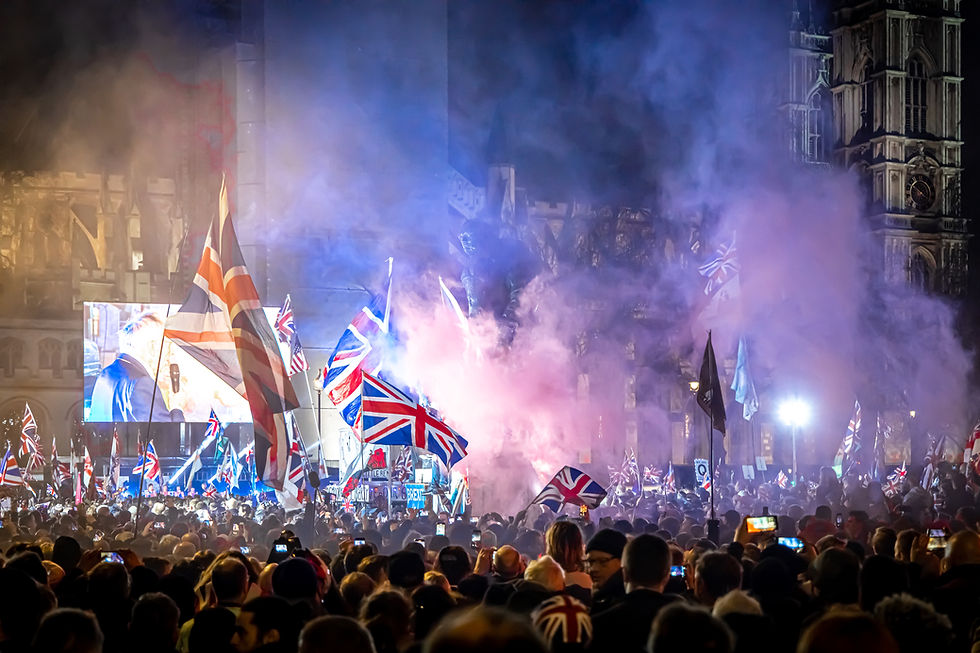
2. Britain: Copyright as a Market Transaction (Economic Right)
The author has a product, and that product can be traded.
British copyright emerges from a radically different ancestry.
a) 1709: The Statute of Anne
Often hailed as the first modern copyright law, but not for the reasons we like to imagine. It wasn’t designed to protect authors. It was designed to break the monopoly of the London Stationers’ Company.
The key assumptions were:
copyright is time-limited,
copyright is a commodity,
the author’s rights are economic, not moral,
and those rights can be assigned, sold, or surrendered entirely.
This created a “work for hire” culture long before the term existed.
A British author could sell their copyright outright, permanently - a concept the French found immoral.
b) Industrialisation and Publishing Capitalism
Victorian publishing was a shark tank. Authors sold manuscripts for flat fees, sometimes pennies. Publishers grew rich on serialised fiction, reprints, and formats, not on moral reverence for creators.
British society admired:
the entrepreneur,
the industrialist,
the printer-publisher.
The author? Important, yes - but not inviolable. A tradesman with a special skill, not a cultural priest.
This is why the British instinctively downplay the author as an individual and emphasise:
contracts,
commercial opportunity,
rights management,
content pipelines.
It’s the mindset that allows a publisher to say, with a straight face, “We don’t use biographies in books anymore,” so authors' creative identity is treated as a packaging inconvenience.
3. Copyright Cultures, Two Attitudes, Two Nations
These histories explain today’s contrasting instincts.
FRANCE: The Author Is a Citizen of the Republic
The author has dignity.
The author has moral rights that cannot be sold or erased.
Culture is a public good.
The state’s job is to protect it.
AI is welcome only if it respects these values.
France’s proposed “presumption of use” in AI training data comes from this tradition:The burden is on the machine to prove innocence, not on the artist to prove harm.
BRITAIN: The Author Is a Rights Holder within a Market
The author’s rights are contractual.
Their protections depend on what they signed.
The state generally avoids intervening in cultural production.
AI is seen through the lens of economic opportunity.
Harm must be proven - often impossible.
The British view of authorship is pragmatic, not philosophical.It’s why creators can be erased, repackaged, or anonymised.
4. How These Philosophies Shape Today’s AI Disputes
France
AI is a threat to:
moral rights
cultural sovereignty
national identity
Therefore, strict regulation is a patriotic duty.
Britain
AI is a challenge to:
economic growth
regulatory competitiveness
innovation cycles
Therefore, copyright must bend without breaking.
Thus:
France pushes presumption of use and remuneration mandates.
Britain talks about “balancing stakeholder needs.”
One protects culture.One protects the market.
5. Reading Between the Lines: What France Really Fears
France fears cultural colonisation by Big Tech. If French works are ingested, remixed, and globalised by American AI, France loses its cultural distinctiveness.
This is existential for them.
6. What Britain Really Fears
Britain fears missing out. Post-Brexit, post-industrial, the UK is desperate to be seen as innovation-friendly. Protecting creators is admirable - but never at the expense of appearing “business-unfriendly.”
Hence the constant British tone of:
“Let’s wait and see,”
“We should gather evidence,”
“Perhaps voluntary agreements will suffice.”
7. And Where Creators Fit In
I stand squarely in this historical gap between the two cultures.
My instinct is French:
Authors are individuals, not components.
Attribution matters.
Moral rights matter.
Legacy matters.
Creative identity matters.
But I worked in a British system:
where IP is traded like produce,
where your work can be rebranded,
where your creative signature can be scrubbed for corporate tidiness.
This is the story that needs telling:
The British system quietly assumes creators are replaceable.
The French system loudly insists they are irreplaceable.
And here we are - entering an age of AI, where this philosophical
divide suddenly matters more than ever.
France Protects Authors.
Britain Protects Markets.
And It Shows.
France’s new push for an AI bill that presumes tech firms used copyrighted works unless they can prove otherwise is not just policy - it’s philosophy. It springs from a centuries-old belief that the author is inseparable from their work. Droit moral is not negotiable. Attribution is identity.
Culture is sovereignty.
Britain comes from a different lineage. Our copyright law began as market regulation, not moral protection. We see rights as contractual, transferable, and - if convenient - erasable. Which brings us directly to publishers being able to remove credits and creator biographies from long-established backlist titles.
In France, such behaviour would be unthinkable.
Here, it slips through as “brand management.”
Philip Jones at The Bookseller recently urged publishing leaders to actually lead.
His point lands harder than he perhaps intended. The senior ranks of British publishing are now dominated by accountants, rights strategists and commercial operators: people trained to manage assets, not defend authorship. So when AI arrives, France reaches instinctively for cultural protection. Britain reaches for risk assessments and voluntary frameworks.
One system treats creators as the backbone of national identity. The other treats them as inputs in a supply pipeline. And if we’re honest, that is why British authors now fear erasure - algorithmic or corporate - far more than their French counterparts.
Leaders need to lead, yes. But first they must decide what they believe an author is. France still knows. Britain seems to have forgotten.
FRANCE: The Author Is a Citizen of the Republic
The author has dignity.
The author has moral rights that cannot be sold or erased.
Culture is a public good.
The state’s job is to protect it.
AI is welcome only if it respects these values.
France’s proposed “presumption of use” in AI training data comes from this tradition:the burden is on the machine to prove innocence, not on the artist to prove harm.
BRITAIN: The Author Is a Rights Holder within a Market
The author’s rights are contractual.
Their protections depend on what they signed.
The state generally avoids intervening in cultural production.
AI is seen through the lens of economic opportunity.
Harm must be proven - often impossible.
The British view of authorship is pragmatic, not philosophical. It’s why creators can be erased, repackaged, or anonymised.
Copyright Culture, The Bottom Line
If Britain wants to avoid sliding into a future where creators are erased - by corporations or by machines - it must rethink the word author itself. The French model shows that the vocabulary of cultural identity matters. It shapes law, policy, and instinct.
Perhaps it’s time the UK restored the author to the status of auteur - or, if necessary, coin a new word to force the issue.

About the Author
David Salariya is a designer, illustrator and long-time children’s publisher whose work has shaped generations of young readers. Founder of The Salariya Book Company and creator of series such as A Very Peculiar History, You Wouldn’t Want To Be…, Spectacular Visual Guides, and The Danger Zone, his books have been published in more than 35 languages and have helped define the visual language of modern children’s non-fiction. A Fellow of the Royal Society of Arts and the Society of Authors, David now writes widely on the culture, politics, and future of publishing - particularly the rights and recognition of creators in an age of automation.


Feels like stepping into an elevator and discovering, as the elevator doors close behind me, that it's only a narrow ledge over a yawning abyss. Corporate publishers can erase authorship once copyright is over? I suppose this is why there are so many versions of fairy tales. The more contemporary they get, the blander. White-out, wipe-out. Ghastly. Humans, not just authors, become the ping-pong balls in the air blast of the lottery ticket bouncy cage.