


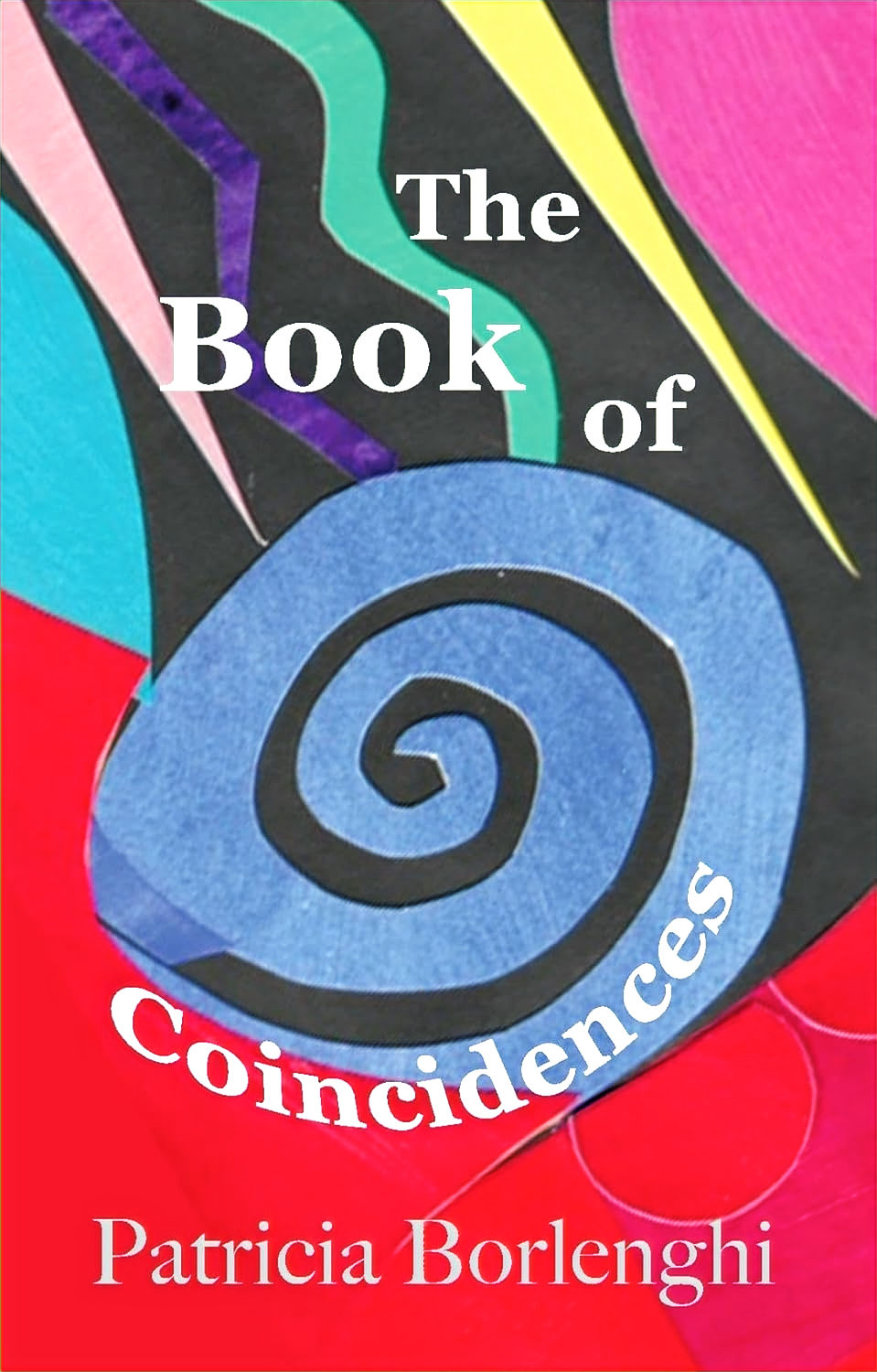
The Book of Coincidences by Patricia Borlenghi

A Q&A with the Author Patricia Borlenghi
There are memoirs that proceed like legal statements, dates aligned, facts marshalled, chronology behaving itself under supervision. Patricia Borlenghi's A Book of Coincidences, is where life refuses to move in a straight line, it loops, names recur, cities echo one another, a theatrical anecdote from the 1920s brushes unexpectedly against children's books, wartime migration, Bette Davis, Catholic Italy, and the curious business of becoming oneself while belonging fully nowhere.
Nabokov once wrote that "coincidence in fiction is vulgar manipulation, but in memoir it becomes something stranger", reality revealing an almost embarrassing flair for symbolism. Patricia's book understands this instinctively, it does not force meaning onto events so much as stand back and ask a more unsettling question: why do certain moments continue to glow in memory long after logic says they should have faded?
What emerges is not simply a publishing memoir, nor merely a family history, though it contains both. It is really a meditation on identity assembled from fragments: Italian surnames in English classrooms, stories inherited half-accurately across generations, old films, old politics, old Europe. The coincidences are almost beside the point, or rather, they become the mechanism through which memory reveals its peculiar architecture.
I should probably confess my own role in this particular web of accidents - I first met Patricia in 1989 at the Bologna Children's Book Fair, where she arrived at the stand I was sharing with Tony Potter, accompanied by Chester Fisher and David Kewley from the publishers Franklin Watts. That meeting altered the course of my professional life, Franklin Watts went on to publish many of the series I created and designed, including Timelines, X-Ray Picture Books, and New View and A Very Peculiar History. Had Patricia not wandered towards that stand on that particular day in Bologna, my own publishing history might have looked entirely different.
Which is, of course, exactly the sort of detail her book trains you to notice.
We spoke ahead of her event in Manningtree - reputedly England's smallest town, and historically associated with Matthew Hopkins, the self-appointed Witch Finder General, an oddly appropriate setting for a conversation about memory, identity, luck, and the eerie sensation that certain lives seem stitched together by invisible thread.
Or perhaps - as Patricia herself might argue - we simply notice the stitching afterwards.

What Is A Book of Coincidences is really about?
David:
Let's start with the central idea of your biography The Book of Coincidences, do you think coincidences are incidents that happen to you - or occurrences you recognise afterwards?
Patricia:
On reflection, I think I do seek them out, I want connections in the conversations I have. If people tell me something, I often interrupt and say ‘oh, that happened to me too!’ Or, ‘I know that person or I’ve been to that place.’ I should imagine people can get quite irritated by this. And then I think it might also be because I’m deaf. I can’t hear people very well so I latch onto something I have heard and elaborate on it, making it into a coincidence story. Partly because I can't hear all that they’re saying!
David:
Your book moves between Italy and England, between Catholic tradition and British children's publishing culture, do coincidences feel different depending on which world you're inhabiting - or does the experience of living between two cultures actually make you more alert to them?
Patricia:
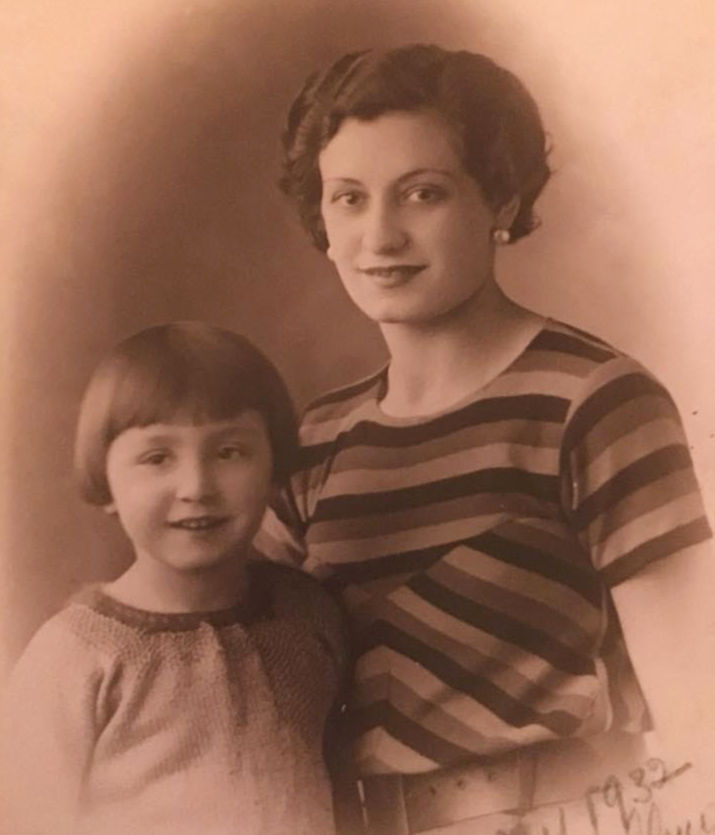
Patricia: Because I have mainly lived in England, I suppose coincidences are more likely to happen here simply because of time and familiarity. The longer you live somewhere, the more unexpected overlaps seem to appear.That said, some remarkable coincidences have happened to me in Italy too. When I lived in Bologna, I discovered that my first boyfriend’s cousin lived in the very same apartment block. I had already met him and his wife a couple of times in Piacenza, but in Bologna we unexpectedly became close friends. And Bologna itself kept returning throughout my life. After studying there, I went back two years later for the book fair, and then returned year after year for many years after that. It became one of those places where different parts of life seemed to keep reconnecting.
Memory, identity, and living between two cultures
David:
I am thinking that memory isn’t a neutral record, so are we when writing an autobiography, in a sense, editing our lives into shape? Selecting certain moments and joining them together into something that feels coherent to make sense of the past?
Patricia::
Memory is obviously very selective, an example from the 1958 film Gigi based on the Collete novel - the music written by Alan Jay Lerner and Frederick Loewe shows the flawed nature of memory.
Ah yes, I remember it well
You wore a gown of gold
I was all in blue
Am I getting old?
Oh no, not you
How strong you were
How young and gay
A prince of loveIn every way
Ah yes, I remember it well
We all remember things differently and not always the same occurrence, and I also think when we think of an event that happened in the past we remember the memory of it and each time we do this the original event get distorted over time as we remember the memories of the memory, but I haven’t deliberately tried to shape or change any event to make my life more coherent. In fact I tried to do the opposite and wanted it to be more like a stream of consciousness: individual, sometimes unrelated events, linked by quite spurious connections that have appealed to me. But yes, I guess I have been selective in choosing various memories and various coincidences.
David:
Your parents meeting and then separation, your father's previous girlfriend and an engagement ring lost gambling - knitting socks - of course fragments of information - I did wonder how your mother managed to travel across war torn Europe? Is there a tension, for you, between what you know about your family history and what you’ve had to imagine into being?
Patricia:
As mentioned, I think that my memoir is essentially based on my very selective memory and subsequently the memory of various coincidences that happened to me. Yet I am convinced our brains are able to block out very unpleasant or embarrassing memories. But I can’t remember every coincidence and some I have deliberately left out because I have fallen out with the people involved! Or I just dislike them! My mother’s journey from Italy back to England in 1940 was often discussed in our family but I don’t remember asking her many questions about it. She mentioned five countries and as has increasingly happened with family members, she is no longer alive for me to ask her for more details. Although I did ask my friend whose mother she travelled back with who said they were stuck on a train in France for a very long time.
David:
I really liked the part in your book that starts with “Five Fingered Jack”, goes to Margo Channing and then to Bette Davis - and I had better admit that I worked under the name of Margo Channing and one of my books for babies was “All About Me!” as we’re looking at coincidences.
Patricia:
My nonna must have had help from her mother. I think she married twice as my dad joked that his grandmother had married someone called Five-Fingered Jack! I always assumed Five-Fingered Jack was a gangster but again I have no details. When I googled it just now, it’s a plant! And as far as I know a second husband hasn’t cropped up in the census or family histories. All I know for certain is that they were very poor. But I do get the impression my nonna (grandmother) did lie about various things.
My dad wanted to take up his grammar school scholarship and go on to further education but as my Nonna couldn't afford it, he left school aged 14. He mainly worked in restaurants but while he was still at school he was chosen to play a small part in a play with Tallulah Bankhead. In the 1920s, she became very popular on London's theatre scene. She appeared in several plays during her eight-year stay, including 'They Knew What They Wanted' performed at The St Martin's Theatre in 1926. The cast included Wilfred E. Shine, Guy Pelham, Sam Livesey, Leonard Loan, Tallulah Bankhead AND my dad, Mario Borlenghi.The first play in which she appeared in London, and the start of her notoriety, was 'The Dancers' by Gerald du Maurier. His daughter Daphne, the writer, aged 15, met Tallulah for the first time and said she was the most beautiful girl she had ever seen.
Later, as I mention, my dad worked with Daphne du Maurier's daughter, Tessa. Tallulah is infamous, even now. In 'All About Eve' (which I've watched a few times) made before I was born in 1950, the aging Broadway star, Margo Channing, is based on Bankhead and she was in the running to play the role herself but eventually lost out to Bette Davis. She was once asked if she'd ever seen 'All About Eve', to which she retorted: "Every morning when I brush my teeth." Of Davis she added: "Dahling, just wait till I get my hands on that woman. I'll pull out every hair in her moustache," and quipped: "If they ever make a film 'All About Me', I'll play it myself."… I never knew whether my dad was joking or not as he told so many stories (as did my mother - which I believed more than his!) I don’t think my great-grandmother - as an Italian woman living in Little Italy - would have married an Englishman.
It would be difficult to translate “Five-Fingered Jack” into Italian - Giacomo Cinque Dita sounds more comic than criminal.
I researched Tallulah Bankhead because it was you who asked me what she was doing in London. And I have always been interested in that pre-war period of black and white sophisticated films, influenced by my mother and aunt who loved film stars like Bette Davis and Joan Crawford. I also enjoyed films with the Marx brothers; and Hitchcock films including Cary Grant and Ingrid Hepburn. Tallulah was less-well known to me but I have seen some of her films on television.
David:
The book spans an extraordinary sweep of cultural history - Tallulah Bankhead, Daphne du Maurier, the Bologna Book Fair, the children's publishing world. Did you ever worry that readers who didn't share those reference points might not feel the weight of a coincidence the way you do? How do you make private astonishment feel universal?

Patricia:
I do try to imply that the book will only be of interest to readers who want to know about my Italian family and my career in publishing. I certainly wouldn’t assume or expect it to be of universal appeal. I was more interested in trying to relay the fact that I felt coincidences seem to happen to me more often than not, or alternatively, as mentioned above, that I was subconsciously seeking them out. Whether that comes across to the reader, I’m not quite sure.
David:
Like you - I have a surname too that people find difficult to pronounce - I remember a receptionist at Random House in New York - when we told her who we were, Salariya and Borlenghi - she said “Sounds like an Opera Company” in a Bronx accent…
Patricia:
My surname did however cause me some ambivalence over my identity. I had an Italian surname but an English (or Irish?) first name. Yet I felt neither Italian nor English. I am a British-European. I am however very interested in my Italian heritage and simultaneously drawn to what I thought at the time was a more progressive 'British' society compared to the traditional Catholic Italian one.

Much of my experience growing up as a child were marked by these two sides, possibly conflicting with one another. I was one person at home and a different one at school. When I was older, I received reactions of surprise (even delight?) when people met me for the first time, for instance at interviews, thinking I would look like a 'bloody foreigner' instead of being white and blue-eyed. I think this is a kind of reverse racism, if I can use that expression. Because I have a fair complexion, I can experience preferential treatment in official dealings, especially in Italy. But I didn't want to be considered English. Maybe I rebelled against this branding too. I wanted to be different - not similar to anyone else - as an Italian nonconformist?…
I think I mentioned somewhere in my book that my surname seems much more accepted nowadays. People can pronounce it - like ‘spaghetti’! And they can even spell it! But I occasionally get the impression that people think it’s my married name and that I’m married to an Italian.
David:
You describe a kind of ambivalence: Italian by name, not quite Italian in feeling; British, but resisting that label too. I wonder whether that tension is actually a kind of freedom. Do you think being “in between” allowed you to construct your own identity more consciously, or did it leave you feeling that you were always being
misread by others?
Patricia:
Well I’m certainly not nationalistic. I do despise this false patriotism and flag-waving that seems so fashionable - even epidemic now. On the other hand I have been known to defend either Brits or Italians in certain circumstances… combatively using the question, who won the war then? when - defending a Brit, or defending an Italian when accused of cowardice in the last World War. Most of the Italians I have met are very proud of their partisan history. But again Italian prime minister Meloni is very nationalistic and anti-immigrant, so I don’t approve of that. Especially as so many Italians have emigrated to other countries in the past.
David:
Publishing is itself a world built on chance - the right manuscript or idea reaching the right person at the right moment. Do you think your years in publishing made you more or less likely to believe in coincidence? Did you see enough lucky breaks and near-misses to become a sceptic, or a believer?
Patricia:
I think luck has a lot to do with if a book is successful or not. I’m not sure it’s to do with coincidence, more to do with connections. More that mainstream publishers don’t like taking risks and books have become more and more formulaic with accountants in charge of promotional budgets. Unless you’re famous or have good connections then a lot of authors now have to do their own publicity. So perhaps rather than coincidence, it’s the people you know. And I would say the majority of celebrity authors get published because of who they are, not for the quality of their work. It’s all about numbers. And when you think of how many books are published each year - approximately 200,000 in the UK and probably four million worldwide - it must be a question of luck.
Coincidence in memoir versus fiction
David:
The book is structured as a memoir in essays rather than a straightforward chronological narrative. Was that a deliberate choice to mirror the way coincidences actually work - not as a linear chain but as patterns you only see when you step back?
Patricia:
I am interested in numbers (I prefer even numbers to odd numbers) and patterns in words so I deliberately structured the book into ten chapters. But this was more to do with the phases in my life rather than devising it by coincidences. When editing and looking at the word count I tried to keep the words to an even number, but I might have lost count of this by the time the text was ready to be printed and the ebook edition created…!
David:
You write your life with great honesty, the Italian surname, the English first name, the feeling of belonging fully to neither, the deafness and loss. I started our conversation with the Nabokov quote that frames the idea of your book distinguishing between coincidence in fiction and coincidence in memoir, do you think he's right that memoir earns what fiction would be criticised for?
Patricia:
I wouldn’t say I’m a non-ordinary memoirist but I am interested in the patterns of facts. I don't think my life has been exceptional by any means but I did want to describe this ongoing fascination I have had with coincidences and somehow tell the story of my life through coincidences, but generally I think I tried to do both. That is, describe the facts of my life and describe some coincidences I have experienced in equal measure, if that makes sense? And incidentally, I am hoping that my next book could be a collection of coincidence stories by other people.
David:
You have been married to Charlie for a very long time - what is the secret to a long marriage?

Patricia:
Charlie and I share a lot of the same interests, especially in art and literature. We also share the same politics. I suppose you could say we are best friends but as we grow older, we perhaps take each other more for granted. And we argue constantly - in some ways we are polar opposites. I am quite volatile in a stereotypically ‘Italian’ way while Charlie is less emotional and reserved in the ‘English’ way. But he loves my Italian connection and the experiences we have been able to share with my family, and in Italy and all aspects of Italian culture - the food, the wine, the art, the music…And I have deliberately left out all the coincidences in his own life - even the ones of people connected to me…
such as in his workplace…
David:
There's a temptation to treat coincidence as either magic or mathematics - either destiny or probability. Patricia’s memoir, like the conversation itself, sits somewhere more interesting than either. The events may be accidental, the meaning we draw from them is anything but Nabokov was right, in the hands of a memoirist who is paying attention, coincidence is not a device, It is a form of vision. We don't just live our lives, we assemble them one coincidence at a time.
Patricia Borlenghi on publishing, luck, and belonging
The Book of Coincidences is a literary memoir about memory, identity, and the strange,
serendipitous moments that shape a life, or seem to, when we look back. Blending personal history with political critique, moving from wartime London to the hills of Emilia-Romagna, from Catholic convents to the children’s book fairs of Bologna, weaving chance encounters and recurring names into a larger meditation on what it means to make sense of chaos.Structured as a memoir in essays, each chapter explores a different facet of experience, family, feminism, publishing, migration, loss, and ends with a sideways glance at the present - the messy world we live in now.
If this conversation has left you curious - about the coincidences Patricia didn't mention, about the life assembled between its lines - the book is where they live. A Book of Coincidences is available now.
Readers may also enjoy this earlier interview exploring her remarkable publishing career — from foreign rights at Usborne Publishing and years spent between Britain and Italy, to founding Patrician Press, the independent press she established to champion new writers, translated literature and literary risk-taking.

A Book of Coincidences by Patricia Borlenghi is available now
Patricia Borlenghi
Born into an Italian family in London with roots in Emilia Romagna, Patricia Borlenghi has spent much of her life moving between languages, cultures and books.
Her publishing career began at Usborne Publishing in foreign rights before expanding into writing, translation and independent publishing. As founder of Patrician Press, she published literary fiction, poetry, anthologies and translated works while championing emerging writers and overlooked voices.
Her work reflects enduring interests in Italy, literature, cultural exchange and the unexpected patterns that shape human experience.
Her latest publication is A Book of Coincidences.
David Salariya
Is an artist writer, illustrator, publisher and observer of the strange machinery of books. Founder of The Salariya Book Company and it's imprints Book House, Scribblers and Scribo, he has spent more than forty years working across children’s publishing, design, editorial packaging, illustration and international rights.
His work often explores the hidden histories behind publishing, visual storytelling, literacy, memory and cultural change. Through essays, interviews and the developing Pulp History project, he writes about the worlds that exist behind books - and the people who quietly shape them.
He lives and works in Brighton.


I found the email in my inbox and having known Patricia and Charlie at Reading university l was enthralled by the details of her life recounted here . When we shared a student house Patricia taught me to cook ! That began a lifelong love affair with Italy . For many years l taught english and write myself . Patricia's book sounds a really good idea and l hope it sells well . I will definitely seek it out . Maybe l will find it in Bologna when l visit for a short break between 30th and 3rd of June ! Buon fortuna , Paricia !