


Impossible Creatures, Impossible Ask: What Queen Camilla's Christmas Gift Expects of One Book

Updated: Aug 6
The great age of reading was an age of scarcity
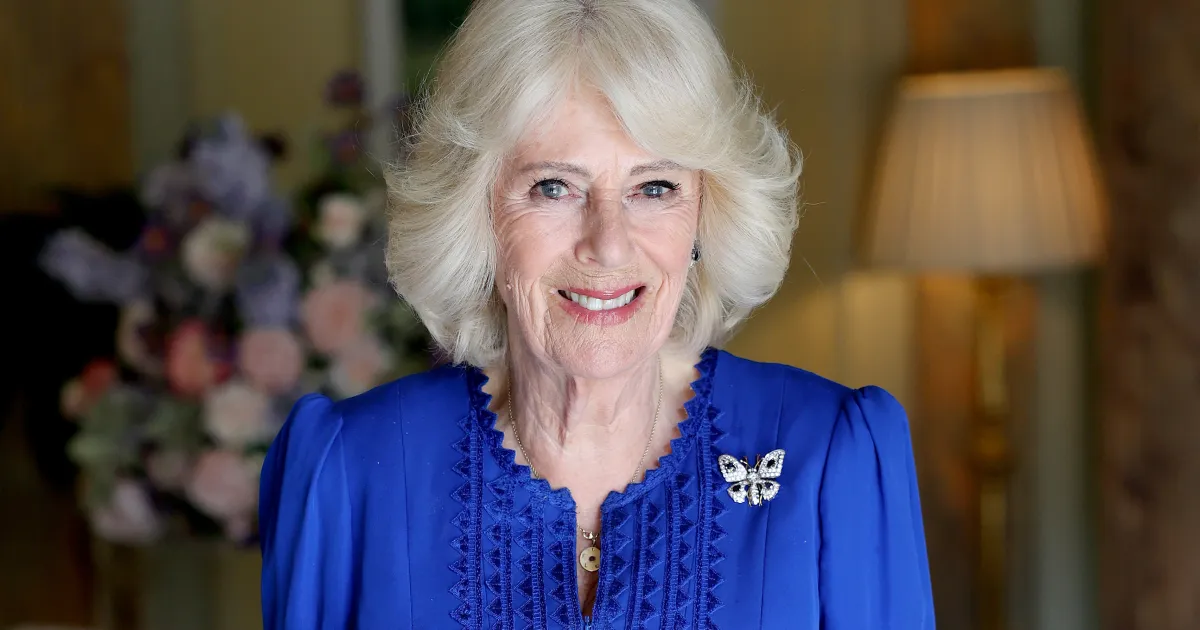
On 17 July, Buckingham Palace announced that every Year 6 child in England, Wales and Northern Ireland, every P6 child in Scotland and every home-schooled child of the same age will receive a copy of Katherine Rundell's Impossible Creatures this Christmas - the Queen's Christmas Present, delivered with the National Literacy Trust to crown the National Year of Reading.

The first wave of criticism has already broken. Claire Linney, writing in The Bookseller, made the case from choice and agency: one title cannot fit 800,000 children, and everything the literacy sector itself publishes says so. Mark Williams at The New Publishing Standard followed the money and found Disney at the end of it. Both make points worth having. I want to make a different one - about what this gift reveals about how we think literacy works, and about the world in which any book now has to compete.
Katherine Rundell's Impossible Creatures
First, credit where it is due, and more of it than some critics have allowed. Rundell is a writer children actually read rather than a writer adults think they should. Year 6 is precisely where the Trust's own survey shows enjoyment falling off a cliff - from nearly half of eight to eleven-year-olds reading for pleasure to a third beyond that age. The audiobook will be free to every child, family and school, which partly answers the objection about dyslexic and struggling readers. Resources for schools are promised for the autumn term, and the outreach reaches into hospitals, refuges and food banks. This is not a thoughtless project. If you were going to give one book at one moment, this is a defensible book and exactly the right moment.
But the gift still reveals, in miniature, how we have come to think literacy works: as something bestowed. A single title, chosen at the Palace, posted down to every eleven-year-old in the land - the strong readers, the reluctant ones, the children reading three years behind for whom a dense 368-page fantasy is a wall rather than a door.

Children Read When they Choose What they Read
Linney's piece gathered the alternatives from the teachers and librarians in her comments: book tokens; a class set of thirty varied titles for children to swap, argue over and finally keep; a free version of the touring book fair. Every one of these puts the choosing in the child's hands, and every one of them is what the evidence supports. The finding that reappears in every serious study of reading for pleasure, repeated until hoarse, is that children read when they choose what they read.
We do not have to imagine what that looks like at national scale, because France has run the experiment. The pass Culture, launched in 2021, gave teenagers a cultural budget to spend as they pleased - concerts, cinema, art supplies, anything. What did they buy? Books, overwhelmingly - books were the largest category of spending in every quarter measured, however the books they chose horrified the cultural establishment: manga, in enormous quantities, prompting politicians to demand comics be struck from the scheme. Then something interesting happened, left alone, the readers moved on. With each successive cohort the share of manga fell and the share of novels rose, until novels overtook, nobody campaigned for that or prescribed it. Interest, given room to choose, developed on its own - which is what taste does, and what no posted hardback, however fine, can do for a child.
Brazil
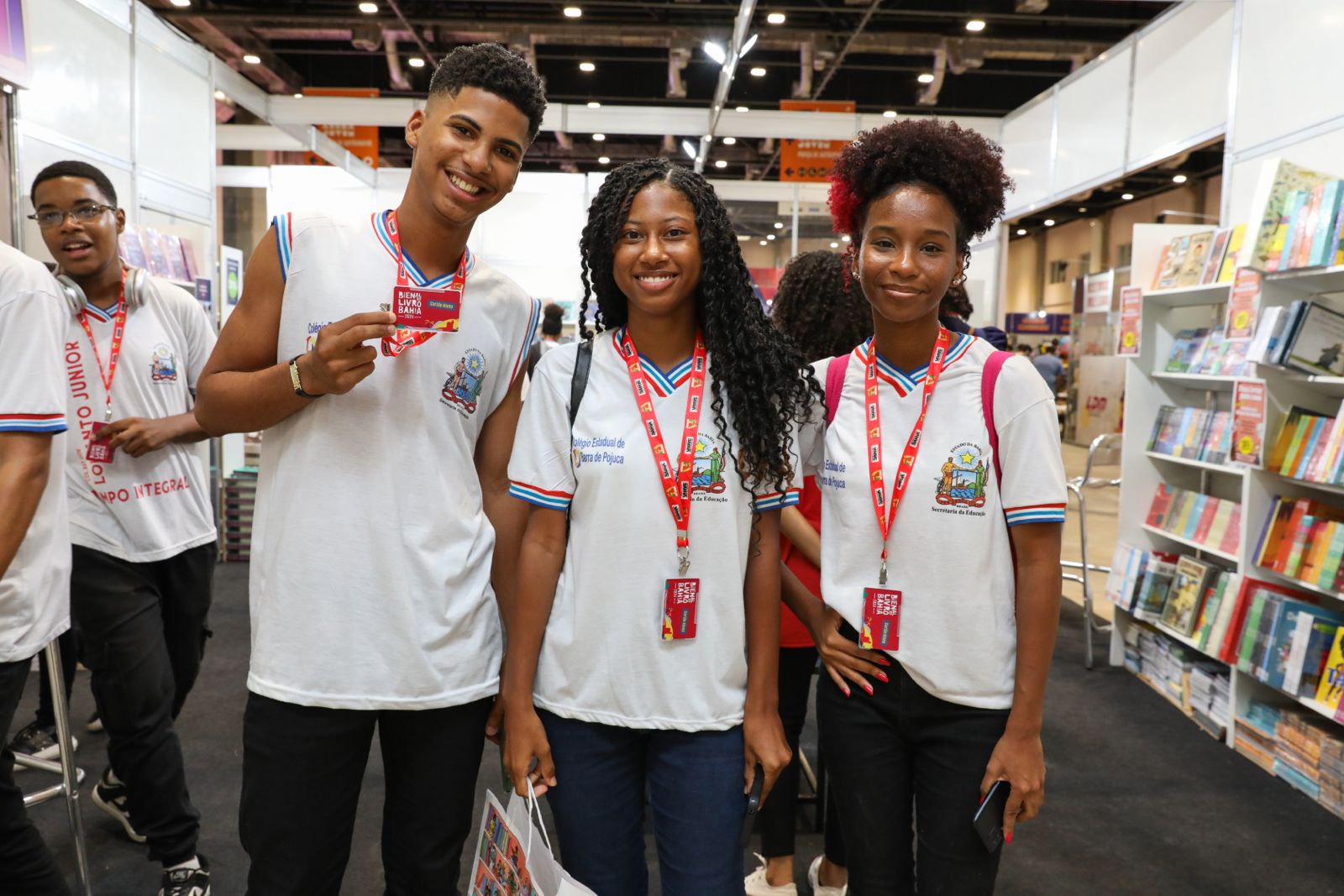
Brazil, meanwhile, has already built the thing Linney's librarians were imagining. At the Bienal do Livro Rio - the country's biggest book fair - the education secretariats have run a school visitation programme since the 2000s: pupils are brought in by the tens of thousands and handed a vale-livro, a book voucher, to spend on any title in the halls. Municipal children get R$50, state-school students R$100, and the stated principle is that no child leaves the fair without a book. In 2023 more than 100,000 public-school pupils attended on a record £2 million-odd of education-department money; in 2025, with Rio holding UNESCO's World Book Capital title, the fair had its largest edition ever - some 740,000 visitors and nearly seven million books sold. One state-school student told a local radio station he was adding his savings to his voucher to begin his Harry Potter collection. His pocket money, topping up the state's. That is what ownership looks like at the moment it begins - and the free book fair that British teachers and librarians propose as a thought experiment is, in Rio, a programme old enough to have raised its first generation of readers.
Disney
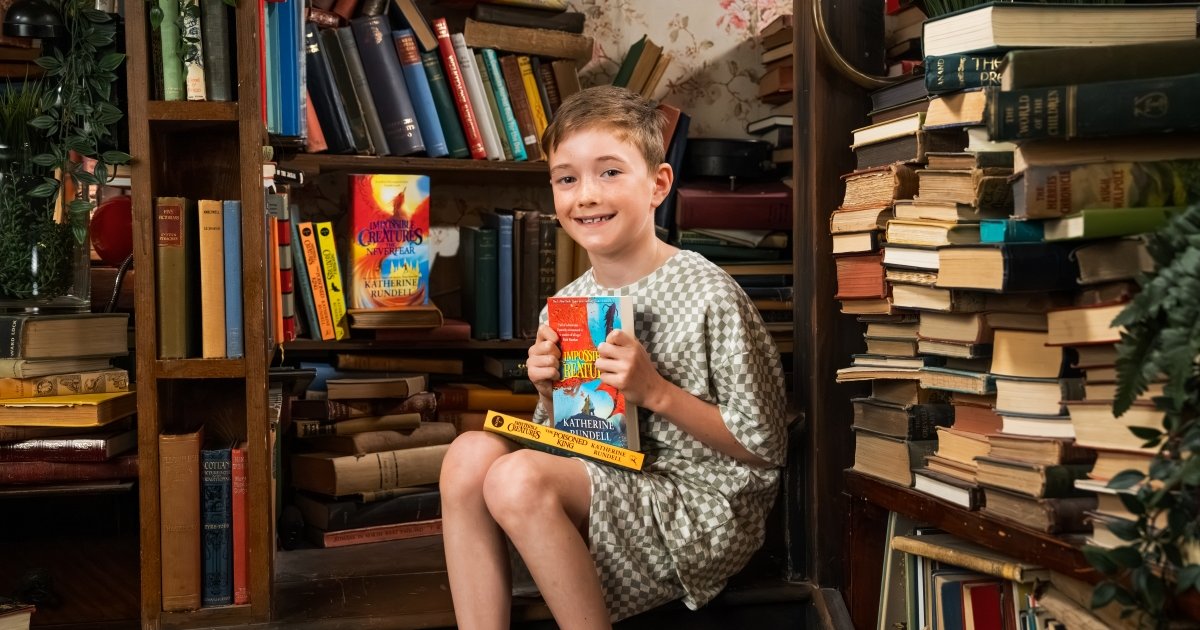
Then there is the question Williams raised, which deserves to be put more carefully than he put it. In October 2025 - nine months before this announcement - Disney acquired theatrical and ancillary rights to Impossible Creatures in a seven-figure deal, with Rundell adapting the first two books herself. The series had already grown from a trilogy to five volumes through further seven-figure deals with Bloomsbury and its American publisher. Bloomsbury stands among the in-kind supporters of the giveaway. None of this makes anyone's motives cynical, and I see no reason to doubt the Queen's sincerity or Rundell's. But it does raise a question of process that nobody involved has answered: when the title was chosen, who raised the film deal, and what would an evidence-led selection - a shortlist, a trial with reluctant readers, a word with practising teachers - have looked like? An intervention reaching 800,000 children ought to be able to show its working. A gift need not. Which of the two is this?
A Larger Misremembering
Beneath all of it sits a larger misremembering - about what we are actually trying to restore. We talk about the historic popularity of reading as though previous generations possessed greater concentration, imagination or moral seriousness. Some certainly read voraciously. But they also lived in a world with far fewer rival forms of private entertainment.
For much of the nineteenth and twentieth centuries the book held an extraordinarily favourable position. It was portable, cheap, private and available on demand. It could supply romance, horror, comedy, gossip and escape, and it was one of the only media over which the reader had real personal control. Before radio, cinema and television became universal, print was almost unrivalled. Even in the television age, broadcasting was rationed by schedules and a handful of channels. A bored child could not summon an endless stream of precisely targeted entertainment from a device in their pocket.
The novel did not defeat TikTok, YouTube, gaming, streaming and algorithmically personalised entertainment. It became culturally dominant before those things existed. That matters. The old claim that children "used to read more" is true but incomplete. The book benefited not only from its intrinsic virtues but from the absence of competition.
It is worth being honest about what reading asks. A book requires a child to decode marks, hold information in working memory, build the world mentally, tolerate stretches in which little appears to happen, and wait for pleasure to accumulate. A game responds instantly. Social media delivers novelty every few seconds. Streaming drama supplies faces, voices, music and atmosphere without asking the viewer to create them. Reading usually asks for solitude before it supplies community.
None of this makes books inferior. In many ways the effort is the benefit - reading develops sustained attention precisely because it demands it. But it does mean that a campaign designed for the old world will not work in the new one. The Year of Reading proceeds as though the book still competes on a level field, and as though the remedy for decline is exhortation - more ambassadors, more assemblies, more messages inside more covers. It barely mentions the attention economy at all, which is rather like a report on coastal erosion that declines to mention the sea.
Reluctant Readers
One more thing is missing from this argument, even among the critics, and I speak here from forty years of making books. When reluctant readers - very often boys - do choose, they reach for fact: dinosaurs, football, machines, the gruesome and the true. Illustrated non-fiction is the great unsung recruiter of readers, and it is quietly disappearing, because its economics are brutal - expensive to originate, short-lived on the shelf, in constant need of updating, and increasingly recycled instead, old material reissued under new dates. A trade that talks so much, and so rightly, about diversity of representation might extend the same principle to diversity of form - and might occasionally check its own practice against its proclamations. Any serious list of books put into children's hands should be heavy with comics and fact books, because that is what the pass Culture data, the Trust's own comics research and every school librarian will tell you children actually take home.
Linney ends by insisting this is not a gesture - that 800,000 books is a programme, and should have been designed like one. She is correct, and the distinction can be put more sharply still: this is a programme designed like a gesture. The schemes that ever shifted the numbers - Bookstart in its funded years, Dolly Parton's Imagination Library, France's pass Culture - worked through repetition, ownership and choice, sustained over years, while the child's home filled slowly with books they had picked themselves. A gift is given in an afternoon. A habit is built over a decade.
National Year of Reading
Which is why a year was always the wrong unit of time, a year produces launches, libraries opened for the cameras, a Christmas book with a royal stamp - and then a survey, twelve months on, measuring the same falling line. What the situation calls for is a National Decade of Attention: funded school libraries, ringfenced book budgets, protected quiet time, serious limits on the devices engineered to make sustained thought impossible, and money that puts the choosing of books into children's own hands, year after year, until choosing becomes a habit and the habit becomes a pleasure.
One book against a decade-long problem. The contrast is not a reason to refuse the gift - some children will get no other book this Christmas, and a few will be caught by Rundell for life. It is the measure of everything the gift cannot do, and of how much remains for the rest of us once the wrapping paper is cleared away.
David Salariya is an author, illustrator and publisher. He founded The Salariya Book Company in Brighton in 1989, where he created, designed and published every kind of book for children - from board books for babies to fiction and non-fiction for young adults - across more than fifty series, including You Wouldn't Want to Be..., published in over thirty-five languages.

Comments