


The Golden Age of Children's Book Clubs: How Red House, BCA and the Puffin Club Shaped a Generation of Readers

Updated: Aug 26
A Book Arrived in the Post
There is a particular memory that a surprising number of British adults carry, not quite nostalgia, not quite grief, but something in between. A catalogue on the doormat, an argument about which book to choose, the careful filling out of an order form - the wait.
And then the parcel
It came addressed to you, or to your child, or - in the staffroom, the school car park, the factory gate.
This is the story of how that happened, how it grew into one of the most significant and least-remembered chapters in British reading culture, and what quietly vanished when it ended.
We live now in a world of frictionless books, more titles are available than at any time in history. Delivery is overnight, sometimes same-day, algorithms tell any reader, child or adult, what they ought to try next, drawing on the purchasing behaviour of millions to narrow the universe of possibility to a personalised shortlist.
It is, by every measurable standard, a more efficient system than anything that existed in 1975, or 1985, or even 2005.
And yet what is missing, something that efficiency, for all its virtues, does not supply.
What the children's book clubs of Britain's postwar decades understood - Kaye Webb at the Puffin Club, David Teale at Red House, Ted Smart at The Book People, the founders of Scholastic, the two women in Hackney who started Letterbox Library from their front room with sixteen titles - was that a child does not fall in love with reading in the abstract, they fall in love with it through a specific book, at a specific moment, within a specific web of relationships, and those relationships need tending.
The clubs tended them, quietly, at scale, for four decades. They did it by making books arrive and making them affordable - genuinely, significantly affordable, not as a charity gesture but as a commercial proposition that reached into homes, schools and workplaces where books were not yet habitual and made them so. By giving children the extraordinary experience of belonging to something whose shared language was stories and information.
Britain's reading culture was built on stranger foundations than most people remember, It was built on postal orders and Sunday supplement advertisements, on plastic scarab beetles stuck to the covers of children's non-fiction and Roman coins cast in China and shipped to Wiltshire. It was built on enamel badges and secret passwords and Yorkshire coastlines bought by nine-year-olds who had pooled their pocket money. It was built on the instinct - held with passion by Kaye Webb and with commercial canniness by everyone who followed her - that every child deserved to be a member of something, and that the something they belonged to was reading.
This history begins before any of those clubs existed, with a holiday camp entrepreneur who understood belonging before anyone in publishing had named what it was, it moves through the golden age of the 1970s and 80s, when children's book clubs were not a niche curiosity but a publishing phenomenon, shifting tens of millions of copies and reaching children whose nearest bookshop might have been twenty miles away. And it ends - though ended is perhaps the wrong word, because the story is still being written - in the fractured, well-intentioned, premium-priced present, where the clubs' functions have been distributed across half a dozen different services, each serving a different constituency, none of them quite serving the same broad, unconverted middle that the original clubs reached.
The question this history keeps returning to is not simply what the clubs were, but what they did that nothing else has yet managed to do again. Whether what was lost is recoverable in an age of screens and algorithms and engineered attention. Whether the golden age of children's reading was genuinely golden, or whether - like most golden ages -it was never quite as universal as memory insists, and never quite as lost as elegy suggests.
The answer, it turns out, is more interesting than either comfort or despair, but it begins, as so many things in British life begin, with something arriving in the post.

...back to 1998...
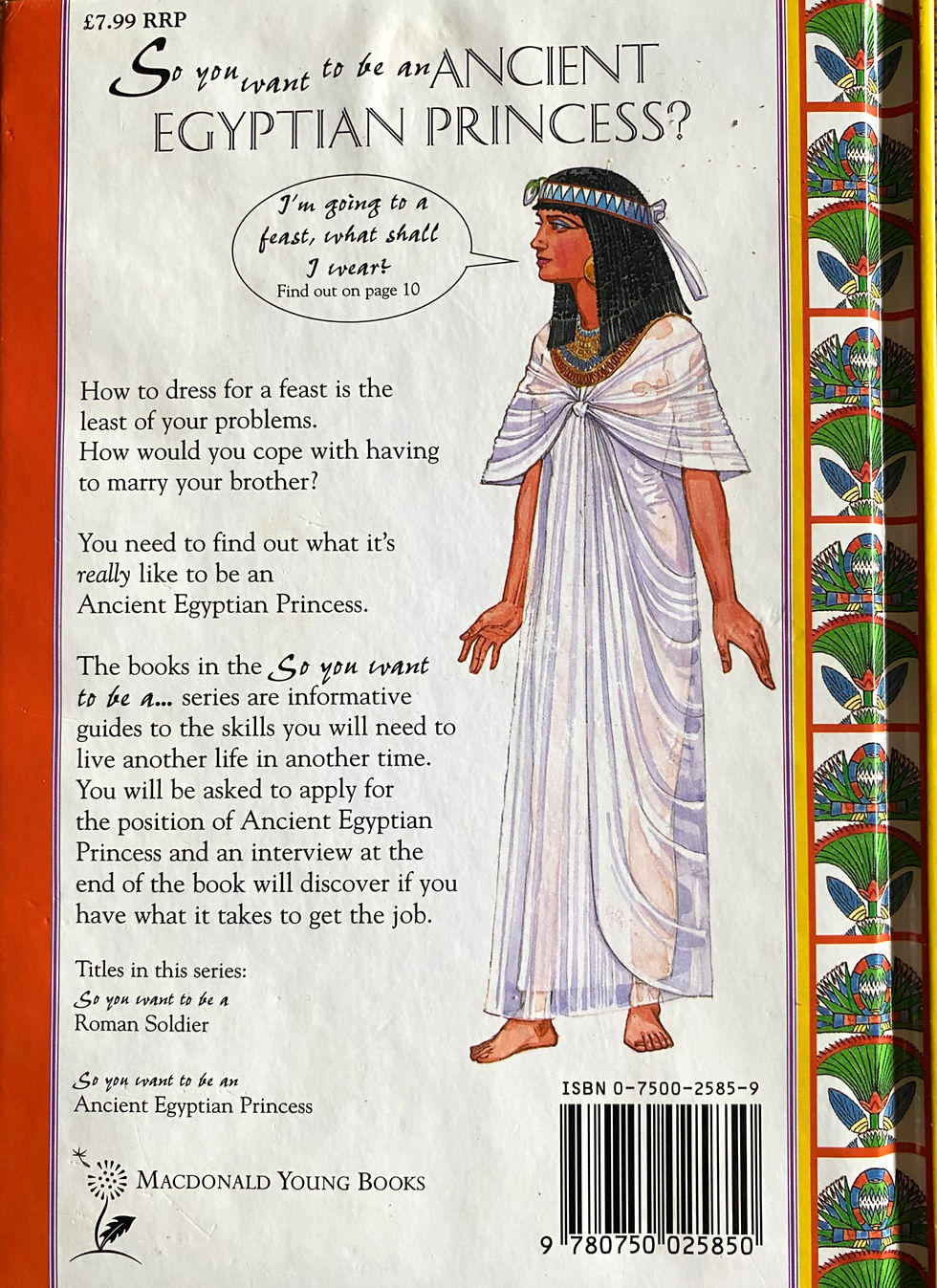
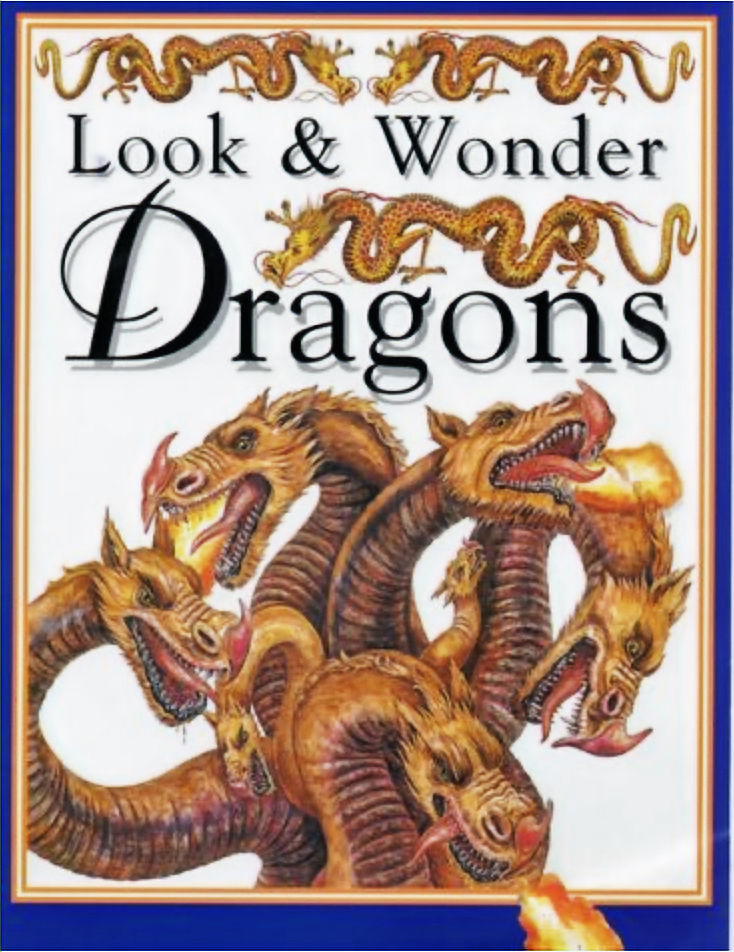
in 1998, I sold 40,000 copies of four children's books on a single sales trip to see David Teale of The Red House book club, no bookshops were involved, no shelf negotiations, no sale-or-return, no slow trickle of sales from a handful of copies dotted around the country. Just a catalogue, a mailing list, and tens of thousands of children opening parcels in the post. Two of those books even came with an add-on - a plastic scarab beetle stuck onto So You Want to be an Egyptian Princess written by Jacqueline Morley and illustrated by Nickolas Hewetson, and an ancient Roman coin on So You Want to be a Roman Soldier written By Fiona MacDonald and illustrated by Nickolas Hewetson. - with cover art for both titles by John James. I didn't really know how to manufacture 10,000 scarab beetles - with a bit of luck I did have a real Egyptian Scarab Beetle - my dad had brought a couple back from Egypt, so that was sent of to the printers in China - the a Roman coin was found too and sent of to China to be cast and stuck on the front of the books. The other titles that were in this order were "Look & Wonder Dragons" and "Look & Wonder Mythical Creatures".
That was the extraordinary, largely forgotten power of the
children's book club.
A Nation of Postal Readers
Before Amazon and long before supermarkets stocked books or the algorithm decided what your child should read next, Britain had something arguably better: a constellation of children's book clubs that delivered carefully chosen books directly to homes, schools and doorsteps across the country.
At their peak in the 1970s, 80s and 90s, these clubs were not a niche curiosity, they were a publishing phenomenon, shifting millions of copies, launching careers, and for countless children growing up in homes without a nearby bookshop or a library within easy reach, providing the primary way that books arrived in their lives.
Their disappearance has left a gap that nobody has properly named, let alone filled.
The Butlin's Beaver Club: Belonging Before Books
Before Kaye Webb launched the Puffin Club, before Red House sent its first catalogue, before Book Club Associates placed its first Sunday supplement advertisement, a holiday camp entrepreneur had shown what children's publishing would spend the next four decades trying to replicate.
Billy Butlin understood children not as a market but as members.
Founded in 1951, the Butlin's Beaver Club was free to join, which immediately gave it a scale that paid clubs could never match. Members received a metal and cloth badge, a personalised membership card, birthday and Christmas cards posted to their home address, dedicated Beaver Club lodges at Butlin's camps, their own radio shows, and most extraordinarily, annual reunions at the Royal Albert Hall, Children didn't just visit Butlin's, they belonged to it.
The Club's publishing ambition was equally striking, in 1961, Cassell published Billy Bunter at Butlin's - one of the final novels written by Frank Richards (Charles Hamilton) - specifically for the Beaver Club audience. Copies carried a special dust jacket featuring a photograph of Gerald Campion, the actor who had played Bunter in the BBC television series since 1953. The usual illustrator, C. H. Chapman, produced a cover as well. Two versions, two audiences, one very deliberate strategy.
This was brand immersion decades before anyone used the phrase.
What Butlin's understood, and what makes the Beaver Club so interesting as a precursor to everything that followed, was that the most powerful children's clubs were never really about the product. They were about the feeling of being known. A birthday card arriving in the post from Butlin's told a child: we remembered you, a badge told them: you are one of us. A book, tucked inside that world of belonging, barely felt like a purchase at all.
The Puffin Club, Red House, and Scholastic would each, in their own way, chase exactly that feeling. None of them had a Royal Albert Hall reunion. But all of them understood what Billy Butlin had proved: that children who feel they belong will read, and
remember, and return.
The Puffin Club: Where It All Began
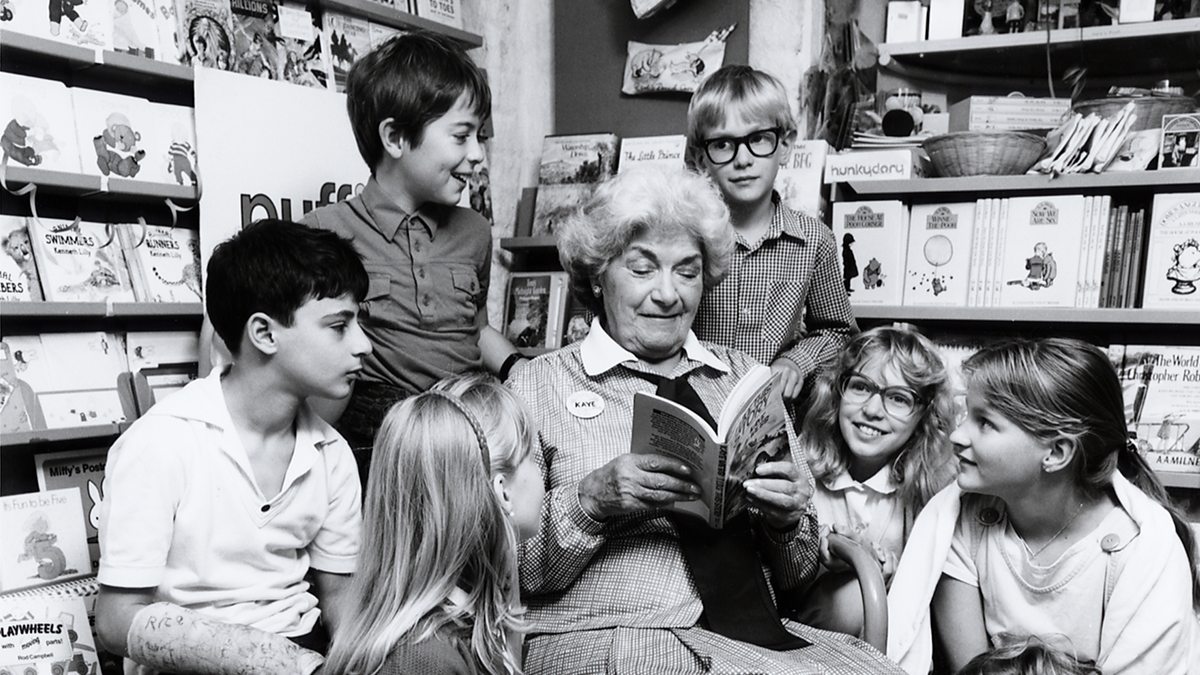
The story of children's book clubs in Britain is inseparable from one extraordinary woman: Kaye Webb, editor of Puffin Books from 1961. Webb not only published children's books - she understood that a child's relationship with reading was emotional, social, and above all, communal. She also understood, with unusual clarity, why it mattered:
If you don't read, you won't get to learn a lot of words, and if you don't have a good vocabulary, you're never going to be able to say what you really think and feel about anything. So as well as all the fun of having adventures by yourself - and it's the only thing you can do by yourself - you will learn to say exactly what you feel and what you want, and that will be very useful when you grow up.
Kaye Webb, talking to Jenni Murray on Woman's Hour, quoted in Valerie Grove's biography So Much to Tell
According to author and illustrator Shirley Hughes, before Kaye,
Children's departments usually meant one woman in a cardigan, in a cubby hole under the stairs
But to understand the Puffin Club, you must first understand Puffin Books - and Puffin itself began with a lunch
and with a man who deserves far more credit than history has given him.
Noel Carrington is one of the unsung heroes of British children's publishing, today he is largely unknown outside a small circle of collectors and enthusiasts, a footnote figure who appears briefly in biographies of the Bloomsbury Group and publishing histories. Yet Carrington was one of the most influential figures of the twentieth century in the commissioning, editing and publishing of children's picture books.
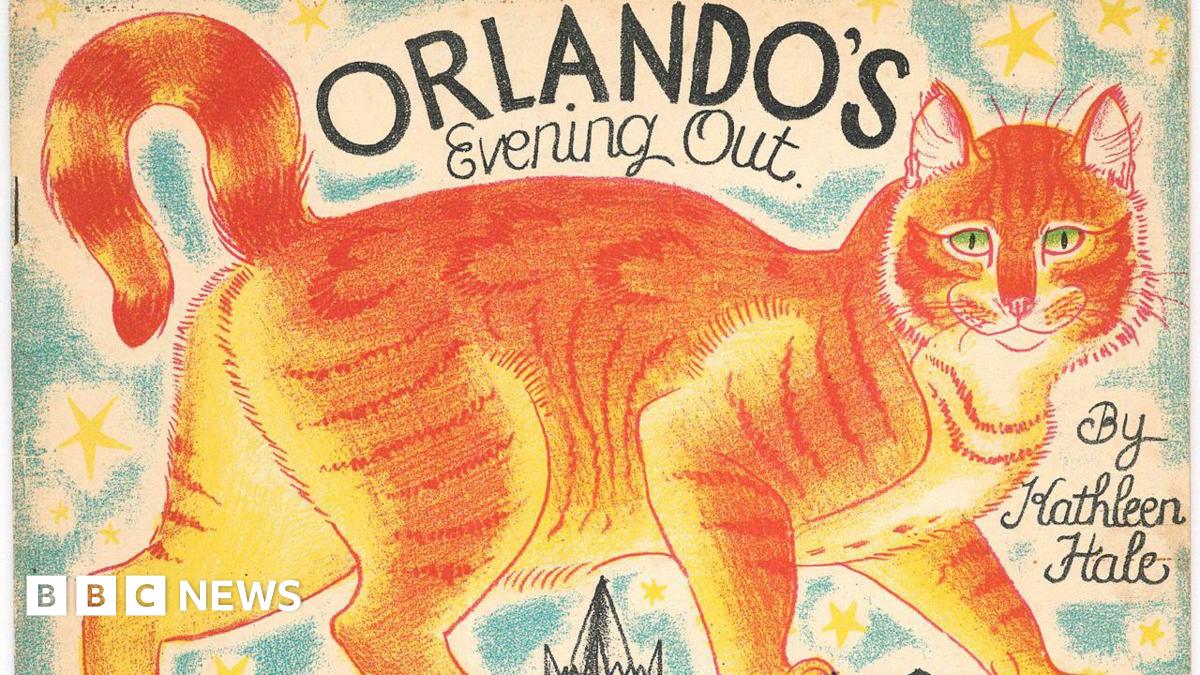
Eric Ravilious's High Street, Kathleen Hale's Orlando books, Mervyn Peake's Captain Slaughterboard - all were commissioned by Carrington. His sister was the painter Dora Carrington; his Oxford friend Ralph Partridge formed part of the famous tragic ménage with Dora and Lytton Strachey, wounded on the Somme, he was a design propagandist of passionate conviction, whose belief that "
nothing need be ugly
drove everything he touched.
In 1939, Carrington met Allen Lane, founder of Penguin Books, and put to him an idea for a series of children's non-fiction picture books. Lane said yes in two minutes. The Puffin Picture Book series that resulted was, in Carrington's own estimation, the work he was proudest of - not only beautifully produced but commercially outselling every rival. The first Puffin picture books appeared in 1940, and in 1941 the first Puffin storybook followed - Worzel Gummidge, featuring a man with broomstick arms. Puffin's first editor, Eleanor Graham, built the list steadily over the following two decades, adding around twelve titles a year and establishing beloved classics including Noel Streatfeild's Ballet Shoes and Norman Hunter's Professor Branestawm adventures.
By the time Graham retired in 1961 and Kaye Webb took over, there were 151 titles in print.
What happened next was extraordinary, Webb threw herself into acquiring the rights to countless famous authors: Dodie Smith, P.L. Travers, Laura Ingalls Wilder, and titles turned down elsewhere, including Stig of the Dump by Clive King, rejected by every other publisher in London before Webb read the manuscript and couldn't believe her luck. She published it as a Puffin original; it is now a modern classic. By 1969, just eight years into her editorship, there were 1,213 Puffin titles in print. A tenfold increase in eight years, driven entirely by editorial vision and force of personality. Before other publishers began competing for paperback rights in the 1980s, Puffin had a virtual monopoly on classic children's fiction in paperback.
In 1967, she launched the Puffin Club, persuading Sir Allen Lane that it would make children into adult readers, the Club was born into this world of abundance. In its first year, 16,058 young readers joined. Within a decade, membership would reach 200,000.
But what made the Puffin Club remarkable wasn't the numbers, it was what membership felt like. The quarterly Puffin Post was, on its own, worth joining for: a wonderland of competitions, games, short stories, author interviews, book reviews written by Puffineers themselves, and work by the finest contemporary illustrators of the day. Every edition featured a collage of new Puffin book jackets on the back cover, authors wrote specially for it and filled out their personal Puffin Passports, Members were not only sold books, they were admitted into this community.
It is worth pausing, though, to acknowledge what kind of community this was. Valerie Grove, in her biography of Kaye Webb, is candid about the social character of the Puffin Club's readership. In the 1970s, she writes, Puffineers were "articulate, well-informed, untainted (as yet) by crass popular culture.
The competitions in Puffin Post had a certain assumptions baked in - one infamous example asked members to draw their cleaning lady.
This was reader "interactivity" before the term was invented, but it was interactivity of a particular kind: confident, bookish, and firmly middle class. Not every child who loved Puffin Post fitted that description, many didn't, they loved being members all the same.
The club had its own vocabulary, members were "Puffineers." The password was Sniffup, to be answered Spotera - reverse and you have " Puffins are Tops". Every month, Puffin hid 50 coded messages inside new books across the country; only members could decode them.
There is a second question worth asking, and one that the sources are curiously silent on: how many of those Puffineers were girls?
The instinct - and it is a strong one - is that the Puffin Club skewed heavily female. Puffin Post was literary, emotional, community-oriented and correspondence-based: everything that mid-century British culture coded as the natural territory of girls. The competitions involved drawing, writing, reviewing books, and expressing feelings about them. The tone was warm and personal rather than competitive and hierarchical, Webb's acquisitions list reflected her own sensibility - Noel Streatfeild, P.L. Travers, Laura Ingalls Wilder, Dodie Smith, authors whose readership was substantially, though not exclusively, female.
Boys of the 1960s and 70s, meanwhile, had a parallel universe available to them: Look and Learn with its cutaway diagrams of jet engines and Roman siege machines; TV21, which brought Thunderbirds and Captain Scarlet to the page in cool comic strips. These were magazines built on spectacle, technology and action - a completely different emotional register from Puffin Post. A boy who read both was not unusual, but he was making a conscious crossing of an assumed cultural boundary.
Keen Puffineers started local branches, not just across Britain but around the world,
joining was an event in itself - new members received a real enamel badge of the Puffin logo, a welcome letter, a membership book, a fresh copy of Puffin Post, and a sheet of eight bookplates - designed by Roland Ferns, to stick inside their books. Founder members eventually received the Gold Puffin Badge, four years of loyalty earned the Black Badge - requiring considerable patience for a nine-year-old.
The visual identity of the club was almost entirely the work of one artist: Jill McDonald, a New Zealand-born illustrator of extraordinary talent, she created the characters that became enduring friends, Fat Puffin, a portly book-loving bird with a weakness for doughnuts; Odway, the philosophical dog who presided over the writing competitions; and TOMCAT, the club computer (Totally Obedient Machine Cannot Actually Think).
In her obituary, Kaye Webb described McDonald's genius precisely:
everyone who knows it has been captivated not only by her brilliant use of colour and unique style, but the way each sure, strong line seems to impose a very individual and secret humour.
Of all the artists who contributed covers to Puffin Post - including Raymond Briggs and Quentin Blake - Jill McDonald did created a strong brand identity with often humourous vibrant illustrations for the covers. The curious, well odd from 2026 perspective, are the authors who were writing articles for the Puffin Magazine: Joyce Grenfell, Malcolm Muggeridge, Yehudi Menuhin, Christopher Fry, C Walter Hodges, Harry Secombe.
These are not niche figures. They are: broadcasters, intellectuals, performers
establishment cultural voices
Why were these people talking directly to children at all?
Today, we segregate audiences ruthlessly:
Children: children’s authors, YouTubers, educators
Adults: commentators, critics, cultural figures.
Children were part of the same cultural conversation as adults just earlier in the pipeline.
Kaye Webb used her position as editor to pull the literary world into the club's orbit. If you were a Puffin author, you could expect to appear in Puffin Post and judge a suitably themed competition. Young members' writing appeared in published books- the Crack-a-Joke Book, and Kaye's personal project I Like This Poem, readers became writers.
The Puffineers were also called upon to be citizens. In 1972 they raised £3,000 to buy a mile of Yorkshire coastline as a puffin sanctuary, fundraising for a specially adapted minibus for children with disabilities. Once a year came the Puffin Exhibition - first held at the National Union of Teachers in London in 1969, where visitors expected to stay an hour and many stayed all day. The exhibitions grew larger and eventually toured the country, always aided by students from St Martin's School of Art. Photographs of authors and children enjoying themselves always appeared inside the back cover of the next Puffin Post.
Kaye Webb was the last editor of Puffin Books to insist her name appear on the front title page of every book - "otherwise, how will children know who to write to?" Her successor as editor was Tony Lacey, followed by Liz Attenborough, Webb herself retired from Puffin Books in 1979 but remained as head of the Club.
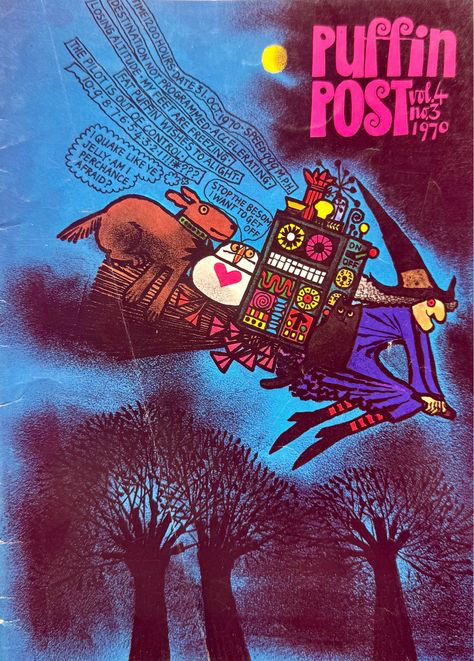
Then the losses began. Jill McDonald died suddenly in January 1982, and with her went much of the Club's distinctive visual soul. Puffin Post changed format in 1984 and, though authors continued to write for it, the old magic was harder to conjure. The last issue was printed in 1989.
By then the Club had been relaunched in more commercial form, its focus shifted to schools, operating on a free-book incentive model based on orders placed - efficient, worthwhile, and continuing to put books into children's hands, but a world away from the secret codes and Yorkshire coastlines and enamel badges of the Kaye Webb years.
As Jane Nissen wrote on Kaye's death:
I do think Kaye was the right person at the right time, and with this she was able to build a truly glorious Puffin Books and Puffin Club.
What she had built was never quite replicated, but its DNA lived on in every children's book club that followed.
Book Club Associates: The Giant in the Room
If the Puffin Club was the soul of children's book clubs, Book Club Associates - BCA - was their commercial engine.
Founded in 1966 as a joint venture between WH Smith and American publisher Doubleday, BCA grew to become one of the most powerful forces in British publishing. By the 1970s and 1980s, it dominated the mail-order book market with over two million active members and a staggering 70% market share. At its peak it was distributing over 25 million books annually - numbers that dwarf almost anything achievable through conventional retail even today.
BCA's genius was its marketing, those ubiquitous advertisements in Sunday newspaper colour supplements - offering four books for a pound, or some similarly irresistible deal - were read by virtually every reading household in Britain. You committed to buying a certain number of books over the year; each month a catalogue arrived; if you didn't order, the "editor's choice" was sent on approval, it was a model that created loyal, habitual readers and guaranteed publishers extraordinary volume.
Payment arrived by postal order, and for younger readers, a word of explanation, because these strange pieces of paper deserve one. Launched in 1881, postal orders were a clever solution to a practical problem: how do you send money safely through the post when you don't have a cheque book? Banknotes were easy to steal; a postal order had a named recipient, making it far more secure. The recipient took it to a post office and exchanged it for cash,. They were born into Victorian Britain and its expanding postal service, a country that enjoyed up to ten deliveries a day, postal orders are still in use today.
For many BCA members and children - the payment by postal order meant a thirteen-year-old with a paper round could study the catalogue, choose his books, walk to the post office, hand over his earnings in the form of a carefully filled-out postal order, and wait for the parcel. Paperboy income spent on books, sent through the Victorian postal system to a mail-order club founded by a high street stationer and an American publisher, Britain's reading culture was built on stranger foundations than people remember.
For children, BCA operated its Books for Children club, sitting alongside specialist clubs for military history enthusiasts, railway lovers, fantasy readers and more. The Net Book Agreement, which fixed book prices until its abolition in 1995, meant BCA could offer genuine discounts through bulk licensing deals with publishers - a competitive advantage that made the clubs genuinely attractive rather than just convenient.
WH Smith sold its stake to Bertelsmann in the late 1980s, and BCA eventually changed hands again- but by the early 2000s the cracks were visible to anyone paying attention. At BCA's 40th anniversary celebrations, its new chief executive George Saul was frank about what he had inherited. "It's not a secret that the business has been declining for some time," he told publishers. Five years earlier, BCA had employed over 1,000 staff. Serious distribution problems in 2004 had forced the outsourcing of customer service; members had fallen further as a result, twenty book clubs had been consolidated into eight, over 60 head office staff had departed.
Saul believed the model still had something irreplaceable to offer: "The key differentiator is that customers can try before they buy. Book clubs launch new authors, customers try them at low prices, and there is no risk." He described the excitement of the business in terms that any veteran of the club era would recognise immediately: "Unless you start on the ground floor and see the orders coming in, you never really get it into your blood. It is about volume and the excitement of seeing 10,000 orders arrive in bags of mail."
It was a vivid description of a world already passing. BCA collapsed into insolvency in 2012. Its disappearance marked the end of an era in British reading culture.
Read about the Net Book Agreement:
Red House: The Specialist That Understood Children Best
While BCA was the industry giant, Red House Books- founded in 1979 by David Teale, carved out something more focused and arguably more loved: a mail-order catalogue dedicated entirely and exclusively to children's books.
Every month, a Red House catalogue arrived in the post. The books were heavily discounted, the curation was excellent - the work of people who genuinely understood what children wanted to read - and the service was built on one simple proposition: parents trusted Red House's judgement, trust was earned, title by title, year by year.
The scale Red House could achieve was remarkable, a single catalogue selection could sell 10,000 copies of a title with an efficiency that no bookshop could match. Books came with extras: gifts, activities, novelties, that transformed the arrival of a parcel into anan experience, not a transaction.
Teale sold Red House to Scholastic in 1998, and the catalogue gradually lost some of its distinctiveness. By 2002 it had become, in the words of The Book People's chairman Ted Smart, "too similar to The Book People's." That year, The Book People acquired Red House and relaunched it with a £250,000 investment, including a landmark sponsorship deal that would define the club's legacy.
Red House committed £25,000 a year for ten years to sponsor the Children's Book Award, the popular prize run by the Federation of Children's Book Groups and judged by 20,000 children across the UK. The deal secured the award's future and renamed it the Red House Children's Book Award. Past winners under that banner include Patrick Ness's A Monster Calls and J.K. Rowling's Harry Potter titles. By putting children themselves in charge of the award, Red House expressed exactly the philosophy that had always driven the best book clubs: trust the reader.
The relaunch brought ambition too. The Book People added 400,000 names from their own database to Red House's existing mailing list of 250,000, a combined reach of 650,000 households. The September 2002 catalogue offered The Gruffalo for £2.99 and Philip Pullman's His Dark Materials trilogy for £8.95. Publishers, according to Ted Smart, "reacted wonderfully to the fact that someone's going to revive Red House."
Red House eventually closed, its passing mourned quietly, too quietly, by a generation of parents who remembered, with real fondness, that monthly catalogue landing on the doormat.
The Book People: Books on Wheels
If Red House understood the power of the monthly catalogue, The Book People, founded in 1988 by Ted Smart and Seni Glaister, understood something slightly different: that books needed to go where people already were.
Their model was built on heavily discounted titles, remaindered stock, overstocked titles, curated sets, sold through mail order catalogues, an early online store launched in 1998, and most distinctively, through pop-up shops and "Book Buses" that drove directly into workplaces and school car parks. A Book People van appearing outside the school gates on a Thursday afternoon was, for many parents, an irresistible proposition: good books, remarkable prices, no need to make a special journey.
The children's list was central to everything they did. Boxed sets, ten books for the price of two, packaged became their signature product. The Book People published editions of Salariya's How to Draw, Spectacular Visual Guides, the You Wouldn't Want To Be... series, and Jane Hissey's beloved Old Bear books, in packs of ten. For parents trying to build a home library on a modest budget, they were transformative. They didn't just sell books; they made the idea of owning books feel accessible to families for whom a full-price bookshop was a luxury.
But it is worth being honest about what this model meant for the people who actually made the books.
The print runs were vast - but the economics of deeply discounted club editions meant that royalty rates were typically a fraction of those on standard trade sales. On a Book People edition, the discount to the retailer was severe, the margin to the publisher tight, and what remained for the author or illustrator was, in many cases, close to negligible. The printer, the sales operation, and The Book People itself were the parties who made the income. For authors and illustrators, although their work was reaching tens of thousands of families, actually being paid - and paid fairly - was extraordinarily difficult. Vast circulation and reasonable earnings were, all too often, two entirely different things.
When The Book People acquired Red House from Scholastic in 2002, it was a logical commercial combination. But the acquisition also concentrated power further up the chain, away from creators and toward distributors, a pattern that would repeat itself across publishing as the digital age arrived. Seni Glaister stepped down as CEO after private equity firm Endless bought the company in 2014. At that time The Book People generated revenues of c.£100m, employed 450 people with 365 self-employed distributors operating nationally.
The Book People went into administration in December 2019, a casualty of the same disruption that reshaped every corner of retail leaving a gap in the school-gate ecosystem that has not been properly filled - a reminder that cheap books delivered with human contact are not the same thing as cheap books delivered by an algorithm. But their story is also a reminder that volume and value are not the same thing, and that a publishing model built on discount can distribute culture widely while distributing its rewards very narrowly indeed.
Scholastic: The School Gate Giant
No account of children's book clubs would be complete without Scholastic, which took a different route entirely - through the school rather than the post box.
Founded in America in 1920 and present in the UK for over 90 years, Scholastic operated through schools, with teachers or parents distributing order forms to children and collecting payment. The books arrived in bulk at the school and were distributed - often on a dedicated "Book Day" that children remembered for decades. For every pound spent, schools earned rewards redeemable for free books and resources, aligning the interests of teachers, parents and children in a single elegant mechanism.
Marketing books is our predominant business, but we also happen to be a publisher.
Dick Robinson
Scholastic's model meant it reached children whose parents might never have sought out a mail-order catalogue. When the form came home from school, buying a book felt like a normal part of childhood - as unremarkable and necessary as paying for a school trip.
Scholastic is the only one of the major clubs still fully operational today, and remains a significant force in UK schools. Its longevity is a testament to the genius of its distribution model.
Letterbox Library: The Principled Outlier
Alongside the commercial giants, one club stood apart for entirely different reasons.
In 1983, two single mothers in Hackney, frustrated by the absence of books reflecting the diverse inner-city world their daughters actually lived in, set up a book club from their front room. The first Letterbox Library catalogue had just 16 titles.
Their mission was to find and distribute children's books that were anti-sexist, multicultural and genuinely representative — books in which all children could see themselves. The selection process was famously rigorous: publishers' submissions were reviewed by teachers, librarians, parents and children, with roughly 75% rejected at each stage.
Letterbox Library still operates today as a workers' cooperative and not-for-profit social enterprise. It never shifted 10,000 copies of a single title in a single catalogue run. But its influence on British children's publishing — on the very question of who gets to be the protagonist of a story — has been profound.
What the Clubs Actually Did
It is easy to romanticise the book club era, the numbers speak for themselves.
A conventional first print run for a children's non-fiction title in the early 2000s might have been 3,000 to 5,000 copies, and returns from bookshops could eat significantly into that. A single Red House or BCA catalogue selection, by contrast, could sell 10,000 copies instantly, with no returns, no shelf negotiations, and no middlemen beyond the postal service.
For publishers, this was transformative, for authors, it could be career-defining, and for the books themselves, particularly illustrated non-fiction, the club model allowed for production values that the economics of retail often couldn't support. A book with a plastic Roman coin or a plastic scarab was something a child would keep, treasure and remember.
The clubs also worked on a principle that the digital age has partially forgotten: curation matters, every book in a Red House catalogue had been chosen by people who thought carefully about what children would enjoy. Every Puffin Post had been edited by people who loved children's literature passionately. The reader trusted the judgement behind the selection in a way that no algorithm has yet replicated.
The Gap They Left Behind
The collapse of BCA in 2012, the closure of Red House, and the slow fading of the original Puffin Club left a peculiar vacuum in British children's publishing.
Amazon filled the logistics gap efficiently, it did not fill the curation gap at all. The school gate and the high street could not easily replace the particular magic of something arriving addressed personally to a child, chosen specifically for them, sometimes with a small gift tucked inside.
There have been attempts to revive the spirit of the club era, subscription boxes, curated services, the Scholastic model continues, but nothing has quite replicated the scale and cultural weight of the golden age.
That idea is still worth building around, memory is not just nostalgia, it is evidence that the book club did something which mattered - something that the publishing industry has not yet found a way to do again.
Children's Book Clubs Today
A Directory of Current Types and Services
A supplement to The Golden Age of Children's Book Clubs
Children's book clubs have changed beyond recognition since the golden age of BCA, Red House and the Puffin Club. What was once a relatively unified commercial and cultural model: curated books, genuine discounts, membership identity, delivered by post has fragmented into at least five distinct types, each serving a different constituency and operating on a different commercial or charitable logic.
This directory maps those types, with links to current services in each category, it is intended not as an endorsement of any individual service, but as a record of what the original model has become and what it has left behind.
Type 1: Premium Subscription Boxes
The dominant commercial model. These are gift and lifestyle products - beautifully packaged, premium-priced, and designed for families who already read. borowing the 'book club' language but operate as curated retail rather than membership communities. |
What they kept from the original model: curation, home delivery, the excitement of a parcel arriving.
What they lost: the genuine discount, the membership identity, and the broad social reach.
UK Services
The Willoughby Book Club - Age-matched subscriptions from 0–12, curated by specialists, with activity kits. £45–£160 per quarter.
Wee Bookworms - Family-run premium subscription for ages 0-12. Award-winning; independent ethos.
Bookabees - Monthly box of handpicked books and activities. Also offers audiobooks.
The Children's Book Club (iSubscribe) - Hand-picked selections as gift subscriptions. Classic subscription box model.
Twinkl Kids Book Club - New books every 6 weeks with accompanying digital resources for engagement.
Note: Price point is the key differentiator here, most of these services cost significantly more than the original book clubs, which were built on genuine discounts from RRP. They serve a different market entirely.
Type 2: School and Institutional Distribution
The closest surviving descendant of the original model. These services distribute books through schools and institutions, using the teacher as trusted intermediary - preserving the communal, relational dimension that subscription boxes have abandoned. |
What they kept: institutional reach, teacher endorsement, accessible pricing, the sense that reading is a shared school community activity.
What they lost: the home delivery excitement, the personal membership identity, and - in most cases - the depth of curation.
UK Services
Scholastic Book Clubs - The only major club from the golden age still fully operational. Distributes through schools; every order earns free books for the school. Approaching 100 years in the UK.
The Book People - Pop-up sales in school car parks and workplaces; heavily discounted boxed sets, went into administration in 2019 but continues in reduced form online.
Letterbox Library - Workers' cooperative founded in 1983. Rigorous curation for diversity, inclusion and representation. Supplies schools, libraries and individuals.
Scholastic remains the most important active institution in this category — the only one still replicating something close to the original school-distribution mechanics at national scale.
Type 3: Charity and Social Mission Clubs
These initiatives have taken the social mission of the original clubs - putting books into the hands of children who might not otherwise have them — and pursued it with greater explicit purpose and public funding than any commercial predecessor. |
What they kept: the democratising instinct, the belief that every child deserves access to books.
What they added: targeted intervention for disadvantaged or marginalised children; charity funding to compensate for the absence of a viable commercial model at low price points.
UK Services
Marcus Rashford Book Club - Partnership with the National Literacy Trust providing free books to children in disadvantaged areas, draws on Rashford's personal experience of food and cultural poverty.
Letterbox Club (BookTrust) - BookTrust programme specifically designed for children in care. Parcels of books and activities sent directly to children looked after by local authorities.
Chatterbooks (The Reading Agency) - Flexible book club model for ages 4–12, run through libraries and schools. Structured discussion guides available free. Supported by public library funding.
BookTrust - The UK's largest children's reading charity. Gifting programmes, resources for parents and teachers, and the Letterbox Club.
These clubs are doing the most work of addressing structural inequality in reading culture - but they are dependent on charitable funding rather than sustainable commercial models, which limits their scale.
Type 4: Online Interactive Clubs
A genuinely new category, made possible by digital technology. These clubs use screens — the very technology most often blamed for declining reading — to recreate the discussion, community and relational dimensions that subscription boxes have abandoned. They are particularly interesting as an attempt to rebuild the social infrastructure of reading in digital form. |
What they kept: the communal reading experience, discussion, and the sense of shared literary life.
What they added: teacher-led sessions, comprehension and vocabulary focus, accessibility regardless of geography.
What they changed: the medium from physical to digital; the model from self-directed to facilitated.
UK Services
Book Club Buddies - Online interactive book club for primary school children (7–12), guided by qualified teachers. Small groups; structured discussion. Designed to ignite passion for reading.
Bright Light Education - Live online sessions for ages 7–12 focusing on reading comprehension, vocabulary and critical thinking. Supports 11+ preparation alongside reading pleasure.
Story Room - Online reading clubs for primary and secondary children. Discussion and debate about books; wider age range than most.
The paradox of this category is intentional and worth noting: it uses the screen-based technology that competes with books in order to build reading communities, whether this represents a genuine solution or a temporary bridge remains to be seen.
Type 5: Publisher Brand Engagement
Publishers have repurposed the 'book club' name as free marketing and reader engagement - extracts, activities, character content, reading challenges. There is no membership fee, no purchase commitment, and no real community. These are brand loyalty tools that use the language and warmth of the club model to build reader relationships with specific imprints or authors. |
What they kept: the feeling of belonging to something; author relationships; the Puffin name.
What they lost: everything that made the original clubs commercially and culturally distinctive.
UK Services
Puffin's Big Book Club (Penguin) - Monthly book reveals with free extracts, activities and new characters. The Puffin name carried forward as digital brand engagement rather than membership community.
World Book Day - Annual national event with £1 book tokens distributed through schools. Not a club in any traditional sense, but the closest thing to a shared national children's reading moment that currently exists.
Lovereading4Kids - Free extracts and recommendations service, hybrid between publisher marketing and independent curation.
World Book Day deserves particular note: it is the one moment in the year when something approaching the original communal reading culture of the book club era is briefly recreated - in schools, in families, and across the country simultaneously.
Type 6: Pre-School and Early Years Gifting The Dolly Parton
Imagination Library
A category that stands apart from all others - and deserves to. These programmes reach children before they can read, working on the earliest possible foundations of reading culture: the book as a familiar, loved domestic object; the parent-child reading bond; the idea that stories belong in every home from the very beginning. The Imagination Library is the defining - and effectively sole - example of this model operating at scale in the UK. |
What they kept from the original model: home delivery, the personal address to the child, curation by experts, and the democratic instinct that every child deserves books regardless of household income.
What they added: a focus on the pre-reading years; a cost-sharing model involving local authorities and community partners; and rigorous evidence of impact on communication, language development and school readiness.
What makes this category unique: it is the only model currently operating in the UK that intervenes before reading habits are formed - or lost - and that treats the parent-child reading relationship, not just the child alone, as the unit of change.
UK Service
Dolly Parton's Imagination Library - Free monthly book gifting from birth to age five, personally addressed to the child. Operates across over 350 communities in the UK, reaching more than 60,000 children every month. Funded jointly by The Dollywood Foundation and local partners including local authorities, charities and housing associations. In Scotland, delivered nationally to all care-experienced and adopted children through a Scottish Government grant. Books selected by an independent panel of early childhood development and literacy experts; all titles published by Penguin Random House UK.
The Imagination Library's origin is worth remembering. Dolly Parton founded it in 1995 in her home county of Tennessee, inspired by her father's inability to read or write. It is not a commercial operation with a charitable dimension - it is a charitable operation rooted in a very specific and personal understanding of what it means to grow up in a home without books. That distinction matters. It is the only initiative in this directory that began not with a market opportunity but with a memory.
How to Register or Become a Local Partner
Availability varies by community, families can check whether the programme operates in their area and register their child at imaginationlibrary.com/uk.
Organisations wishing to bring the programme to their community - including local authorities, nurseries, libraries, housing associations and charities - can apply to become a Local Partner through The Dollywood Foundation's
regional directors.
What the Classification Based on Types or Categories Reveals
Laid out together, these five categories make visible something that is easy to miss when looking at any one service in isolation: the original children's book club model has not been replaced. It has been broken down - its different functions distributed across different types of service, each serving a different constituency, and none of them serving the same broad middle that the original clubs reached.
The premium subscription box serves the already-reading readers, with the charity club serving the most disadvantaged. The school distribution model reaches widely but depends on teacher bandwidth. The online club rebuilds community in digital form. The publisher engagement tool maintains brand identity without commercial commitment.
What is missing is the institution that served the unconverted middle - the family for whom books were not yet habitual, but might become so with the right prompt, at the right price, delivered with the right warmth. That is the gap the original clubs filled, it is the gap that remains.
Links correct at time of compilation 6 May 2026 All services are independent of this website.
A note on scope
The history of book clubs in Britain stretches back further than this blog reaches, reading circles pooled resources to share expensive books as far back as the 18th century. The mutual improvement societies of the industrial 19th century used collective reading as a route out of disadvantage. The Book Society, founded in 1929 with Hugh Walpole and J.B. Priestley on its selection committee, was pushing Rebecca and Brideshead Revisited toward bestseller status decades before BCA placed its first Sunday supplement advertisement. Victor Gollancz's Left Book Club, with 57,000 members at its peak, used the club model to shift political opinion on a national scale that Richard and Judy would later do something similar for literary fiction on daytime television.
The old book-club ecology did not merely sell books cheaply. It helped formats become familiar. A child might meet a series not as a lone object on a crowded shelf, but as part of a set, a catalogue, a promise. That mattered. Recognisable formats flourished because there were routes through which parents, teachers and children could discover them repeatedly. The disappearance of those routes has made the small, well-designed children’s book harder to sustain, just when children may need it most.
That is a different article.
This one is about something more specific: the children's book clubs, and the adult mail-order clubs that ran alongside them, that made books a normal part of family life in postwar Britain - arriving in the post, appearing in school car parks, circulating in office staffrooms - and what their disappearance has quietly cost.
Do you remember a childhood book club? Were you a Puffin Club member, a Red House devotee, or one of those children who lived for Scholastic Book Day at school? Share your memories in the comments below.
David Salariya is an author, illustrator, designer with more than forty years’ experience in creating books for young readers. As founder of The Salariya Book Company, he developed and published internationally successful series including You Wouldn’t Want to Be…, A Very Peculiar History, Spectacular Visual Guides and How to Draw.
His work has been sold through bookshops, schools, libraries, international rights fairs and the great children’s book club channels, including Red House, Book Club Associates, Scholastic and The Book People. This gives him a rare insider’s view of how children’s books once reached homes at scale - through catalogues, clubs, school forms and parcels in the post.
David writes about children’s publishing, illustration, reading culture, book history and the changing ways children discover books. His essays combine personal experience with publishing history, asking what has been lost - and what might still be rebuilt - in the age of algorithms, declining reading for pleasure and the disappearance of
shared book communities.


Comments