


Could Micro-Publishing Become a Golden Age - or Just Another Landfill of AI Slop?

The Gate Is Open. That Doesn't Mean the Road Is Easy.
There has probably never been an easier time to enter publishing. That sentence should be exciting, it should also be alarming.
A writer can now publish without waiting for an agent, an illustrator can build a visual world without asking permission from a commissioning editor and a historian, teacher, artist, researcher, poet or cartoonist can assemble a book, test an audience, sell directly, print on demand, distribute digitally, and reach readers without first passing through the mahogany doors of a corporate publishing house.
The drawbridge has come down, but the moat is still there, research by publishing consultant George Walkley in 2025, who used Companies House data to map the UK publishing landscape by SIC code, found more than 11,000 active UK publishing businesses, far more than trade association membership would suggest, with a dramatic skew towards micro-entities and small companies.
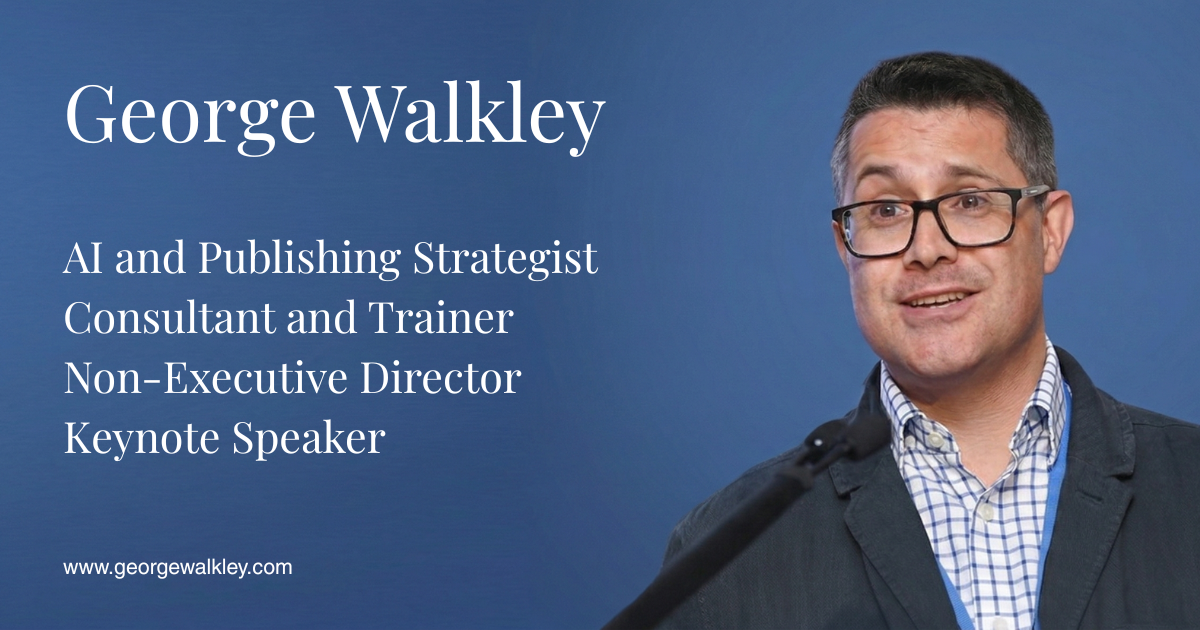
In 2024 alone, more than 1,500 publishing businesses were incorporated, at first glance, this sounds like a renaissance but look again, and it becomes more complicated. While UK publishing industry revenue rose to £7.2 billion in 2024, up from £4.4 billion in 1999, the industry has actually contracted by around 12% in real terms over that period. So we have more publishers, more routes to market, more tools, more platforms, but not necessarily more money, more readers, more attention, or more cultural space. That is the paradox of the new publishing age, the gate is open, the road is crowded.
The rise of the micro-publisher
The new micro-publisher may not look like a publisher at all, they may be a self-published novelist with a limited company, a historian producing short beautifully designed books in a narrow subject area, a poet with a Substack, a cartoonist producing limited-edition zines, or a former publishing professional starting again after redundancy.
The tools are now astonishingly accessible: a writer can draft, design, distribute and sell direct - through print-on-demand services, ebook platforms, Shopify or a mailing list, without once involving a corporate intermediary.This is not trivia, for the first time, publishing is not wholly dependent on warehouse stock, large print runs, sales reps, bookshop chains, or the blessing of a corporate acquisitions meeting.
Not Every Book Suits This Publishing Model
The opportunity lies not in making more books, but in making more particular books, not every book suits this model, though. Print-on-demand works well for text-led non-fiction, essays, genre fiction, memoir, poetry, teaching resources and specialist illustrated work designed with its production constraints in mind. It works far less well when a book's appeal depends on very high production values at a low retail price.
A full-colour picture book with heavy paper, foil embossing, die-cuts, sprayed edges or complex binding is not impossible to produce at small scale - but the economics change instantly. You can produce a beautiful limited edition and price it honestly as such. What you cannot do is make something with gold foil and cloth binding and then pretend it is a £9.99 mass-market paperback. This is where many new publishers trip up, the smarter question is not whether you can make your book look like a corporate publisher's product. It is what kind of book only you can make, and what production method actually suits it.
Digital First does Not Mean Design Last
There is a danger in digital-first publishing: it can make books feel weightless. Too many self-published books look as if they have been poured into a template and abandoned there. The cover shouts in the wrong voice. The typography is timid, the back-cover copy reads like a committee trapped in a lift, with metadata is an afterthought.
That is not publishing, that is uploading. A good micro-publisher has to think about the book as a built object even when the first edition is digital. A digital-first book still needs a clear central promise, a recognisable audience, a cover that works as a thumbnail and as a printed object, thorough editing, professional proofreading and a coherent launch plan.
Be Your Own Publishing Acquisitions Meeting
The mistake is to think that because the gatekeeper has gone or going, the standards have gone too. They have not, they have moved, you are now the gatekeeper, be your own acquisitions meeting.
The old corporate publishing model had many flaws: conservative, slow, risk-averse and maddeningly trend-driven, sot ask useful questions. Who is this for? Why now? What makes this different? Can the author reach readers? What format suits the idea? Can it become a series? The micro-publisher must ask the same questions and then go further, because a corporate publisher can absorb failure across a list.
A micro-publisher often cannot, a large publisher can print too many copies, pulp them, and move on. A micro-publisher has to be more precise and more honest, the question is not just whether this is a good idea, but if it is a publishable idea in this form, at this length, for this audience, at this price, through this channel, with this production method. That is a much harder question. It is also the question that separates publishing from wishful thinking.
The Collapse of the Middle in Publishing
One of the most revealing points in Walkley's analysis is the apparent weakness of the medium-sized publishing sector. The data shows thousands of micro and small companies, but fewer than 150 publishers in the largest size bracket, that has enormous implications.
The independent middle once mattered because it was where invention happened. Medium-sized publishers could take risks that large corporations avoided, build series, train staff, discover illustrators, commission formats, develop backlists and incubate ideas until they became valuable. If that middle thins out, the industry becomes oddly polarised: corporate giants with visibility, distribution and acquisition budgets at one end; thousands of micro-publishers with energy, ideas and tools but limited capital and discoverability at the other. What gets lost in between is the originating studio- the place where books are not merely acquired, but invented. This is why the old packager and independent originator model deserves to be better understood, book packagers were not just suppliers. At their best, they were laboratories: creating formats, structures, series, visual systems and educational architecture. They understood that a book was not only a manuscript but a designed experience. Modern publishing talks constantly about intellectual property while often being poor at recognising where that intellectual property actually begins - not always with a famous name, but with a format, a page architecture, a visual system, a way of making complex information exciting. That is cultural invention, it is not the same as changing the font on aquired IP.
POD Solves Production. It Does Not Solve Discovery.
POD solves production, it does not solve discovery.Print-on-demand has removed the terror of books on pallets gathering charges in the warehouse. No more betting the an arm and a leg on 5,000 copies. No more pallets of unsold stock. For the micro-publisher, this is genuinely liberating, but it solves only one problem. A book can be available everywhere and noticed nowhere.The corporate houses still dominate visibility through publicity departments, sales teams, bookshop relationships, review channels, prize submissions and backlist leverage. A micro-publisher has to build visibility differently - through newsletters, talks, direct sales, specialist communities, schools, libraries, social media and personal authority. This is where the micro-publisher may actually have an advantage, a corporation can buy reach, but it often struggles to sound human.
A small publisher can have a voice, that voice may be the most valuable asset of all.

Beyond AI slop
The phrase "AI slop" has become useful because it names something real: the flood of low-effort, synthetic, derivative material created because production has become almost frictionless. But it would be a mistake to define the new age only by its worst output. The existence of slop does not invalidate the tool. It raises the standard for human judgement and the risks are not uniform across publishing, they fall differently depending on where you look.
In academic publishing, the problem is overproduction: a system that already rewards publication volume may now generate more submissions, more peer-review strain and more polished mediocrity. This is not hypothetical, there have already been documented cases of AI-generated fake citations appearing in published work, including fabricated references in an AI ethics volume from Springer Nature, a detail that would be darkly comic if the consequences for research integrity were not serious.
In self-publishing and algorithmic genre markets, where the business model rewards frequency and rapid release, AI may produce more books but not better ones. That is where "AI slop" becomes commercially relevant, not just culturally insulting, at the other extreme, literary and experimental publishing faces a quieter risk: not flooding, but underproduction, AI will not kill the bestseller, but it may squeeze the strange, slow, difficult book - the one that takes ten years and never earns back its advance - out of a market that has even less tolerance for economic risk than before.
Children's publishing faces a more specific danger, the threat is not that AI-assisted children's books will be terrible. The threat is that many will be inoffensive, and in children's publishing, inoffensive is often fatal. Children do not fall in love with averaged content, they fall in love with voice, mischief, rhythm, absurdity, surprise and illustrations that feel alive. A book assembled from market signals and optimised for safety will not do that, it will simply exist.
For illustrated non-fiction, the risk is subtler still: invisible extraction, a series format, page architecture, visual grammar or recurring structural device can be immensely valuable - but it may not be protected or credited in the same way as a named author's text. AI can learn from formats as well as words, that makes provenance not just a cultural virtue but a practical necessity.
In a flooded market, taste becomes more important, not less. The micro-publisher of the future will need to become a curator, editor, designer and provenance-keeper, someone who can say with confidence: this book came from somewhere. It was shaped by a person. It has sources, craft and a reason to exist. It is not an anonymous extrusion of the internet.
In the AI era, readers will increasingly want to know not only what a book says but where it came from. Who wrote it? Who illustrated it? Who edited it? What sources shaped it? A book without provenance may soon feel suspect, not because every book needs a pompous apparatus of footnotes, but because trust is becoming a design feature. Credits matter, Imprint history and editorial standards matter along with human taste. The future independent publisher should not hide these things.
They should make them part of there DNA.
The new golden age if we earn it
Could this become a golden age of micro-publishing? Yes, but not automatically. It will not become golden simply because tools are cheaper or because AI can generate text, covers and marketing copy or even a website with a few prompts.
That may produce volume, but volume is not humour, language, design, art. A golden age would require publishers, even tiny ones to recover the seriousness of making:, choosing subjects with care, designing formats that suit the economics, investing in editing, respecting illustration, understanding typography, building direct relationships with readers and thinking in series.

The New Golden Age of Micro-Publishing - If We Earn It
The publishing industry may not be entering a simple golden age, it may be entering something more unstable and more interesting: a turning point. The old gatekeepers have not disappeared, the coprortatemachines that yse the fracking of creatives to build imprints, but they no longer control every gate. The tools of production have escaped the building. The author can become a publisher, the illustrator can become an imprint. The designer can become a cultural producer.
The danger is obvious: a swamp of synthetic books, fake expertise, template covers and AI-flavoured sludge. The opportunity is better, a new generation of small, sharp, beautifully focused publishing ventures, each with its own voice, taste, standards and sense of purpose.
A micro-publisher cannot out-corporate the corporations, but it should not try. Its advantage is specificity, It can be stranger, sharper, more personal, more beautiful, more opinionated, more nimble and more deeply rooted in a subject than a large house trying to please every sales channel at once.
That is where the gold is, not in scale, in distinction, the gate is open. Now the question is not whether we can publish It is whether we can make books worth finding.

David Salariya is the founder of The Salariya Book Company and the originator of some of the most successful illustrated non-fiction series in children's publishing. Over a career spanning more than four decades, he has originated, designed, packaged and published books for young readers that has sold internationally and helped shape the sector.
His publishing work produced some of the most recognised series in children's illustrated non-fiction - among them You Wouldn't Want To Be…, How Would You Survive?, Inside Story, X-Ray Picture Books, Timelines and A Very Peculiar History - combining rigorous research, bold visual design, humour and narrative immediacy to make complex subjects accessible to children of all ages. Across his career he created and designed more than fifty series, with books translated into over thirty-five languages.
His output was wide-ranging across every area of children's publishing - from books for babies, picture books and novelty formats through to YA novels - reflecting a deep understanding of young readers at every age and stage. He also pioneered the use of new technology in children's books, creating one of the first children's books with augmented reality, and working extensively on apps and CD-ROMs at a time when the industry was only beginning to explore digital possibilities.
Trained in book design, illustration and printmaking, Salariya brought a designer's eye to every stage of the publishing process - from initial concept and format development through editorial structure, typography, image-led storytelling and international co-edition rights. This hands-on understanding of books as built objects, not just texts, gave his work a visual intelligence and commercial durability that few in publishing have matched.
Over thirty years, The Salariya Book Company built a wide-ranging backlist, establishing a strong reputation for inventive, curriculum-adjacent publishing with genuine global reach.
Alongside his publishing legacy, David continues to work creatively - currently focused on painting, drawing and writing. A selection of his titles are being republished by Hatch Press, an imprint of Bonnier UK.


Comments