


AI and Authorship

Updated: Apr 25
Books can now be produced quicker than
it takes to recognise who made them.

AI Authorship: When Creation Becomes Frictionless
There was a time - not so very long ago - when the idea that a book might write itself, prompted into existence by a few lines of instruction would have sounded absurd.
Books did not just appear.
They were published after months, sometimes years of research, editing, design::
a name on the cover, a title page, an imprint logo on the spine and title page - these were not decorative details but signals. They pointed, quietly, to a process somewhere, people had made this. Even when authorship was shared, shaped, or partially concealed, it still implied something fundamentally human behind the work.
Authorship did not need to be proven. It was assumed.
And that assumption rested on a story.
Publishing has long behaved as though a book were a kind of birth: the author or someone like me would conceive the idea, the writer writes, the editor shapes, the designer gives form, and the printer delivers the finished work into the world. Not immaculate, certainly - but traceable. Each stage leaves its mark. Each participant, however discreetly, can be accounted for.
The midwives were known.
What AI introduces is something altogether stranger: a book that appears fully formed, with no visible gestation. No drafts, no false starts, no labour in the traditional sense. Conception, development, and delivery collapse into a single act of generation.
It is tempting - only half in jest - to call this a kind of immaculate conception.
But the problem with immaculate conceptions is not that they are miraculous. It is that they are unverifiable.
If a book can exist without a visible process, then the roles that once anchored it begin to blur. What, in such a system, is an editor? What, exactly, is being delivered by a printer? And who - or what - is the author?
The language of publishing has not yet caught up with this shift. The old metaphors still hold - but only just. And the quiet assumption that every book has a knowable origin - that it has been conceived, shaped, and brought into the world by identifiable hands - is no longer as secure as it once seemed.
The “Shy Girl” Moment
The recent withdrawal of Shy Girl - acquired, edited and published before being pulled amid allegations of AI-generated content (allegations the author has denied), has made news in a way that far exceeds the modest scale of the title itself. It is not the book that matters so much as the moment: that a text can pass through the full editing process of a major publishing house without anyone being entirely certain how it came into being.
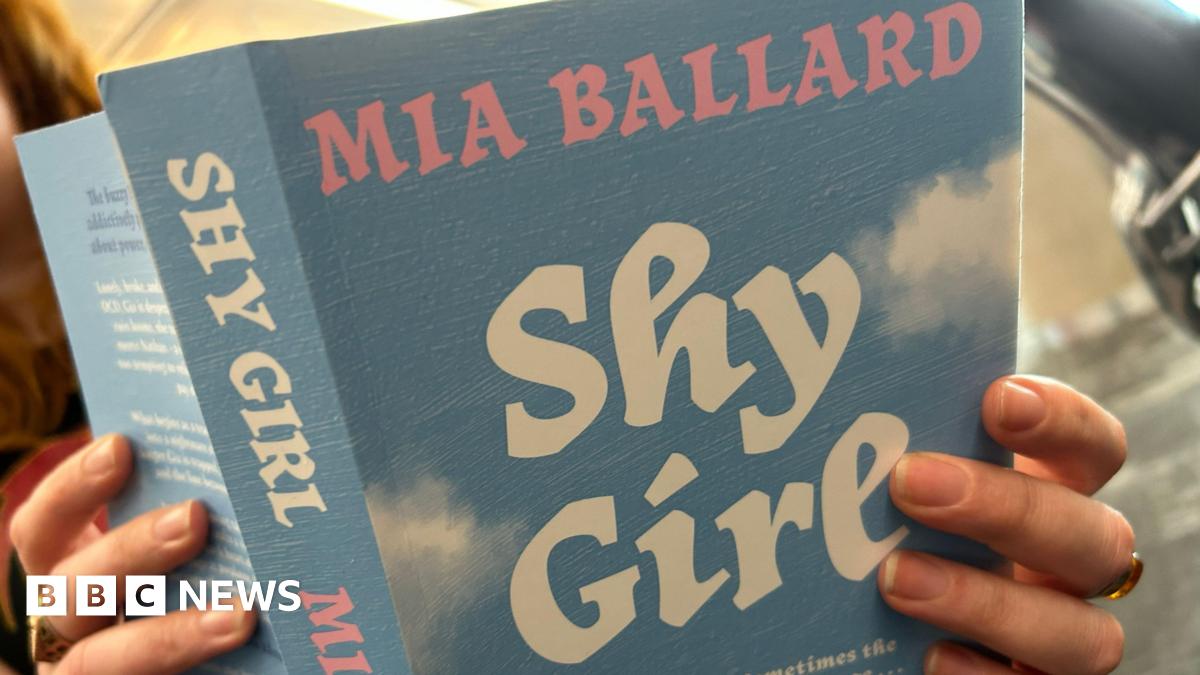
Shy Girl
In March 2026, Hachette Book Group cancelled the US release of Shy Girl by Mia Ballard and discontinued its UK edition.
The reason given was careful, almost antiseptic:a commitment to “protecting original creative expression.”
No confirmation of AI use. No definitive evidence presented. The author denied writing with AI, claiming instead that an editor she had hired had used it without her knowledge. I am puzzled that an author did not question editorial changes - writers I have worked with can become incandescent over a comma.
That detail is the fault line.
Because it means the problem was not simply what the book was, but how it came into being. The chain of authorship had become unclear. And once that happens, a book ceases to be a creative work and becomes something else entirely:
A liability.
The novel had sold modestly - fewer than 2,000 copies in the UK. Not enough to defend. Not enough to risk reputational damage. In such cases, publishers do not arbitrate truth.
They manage exposure.
This is what makes the decision revealing.
Writers with controversial pasts continue to be published. Disputed memoirs remain in circulation. Behaviour can be absorbed. Reputation can be negotiated.
But authorship itself is different.
If a publisher cannot confidently say who made a book - or how - it cannot stand behind it. And if it cannot stand behind it, it cannot sell it.
The withdrawal of Shy Girl is not, in the end, about AI.
It is about uncertainty.
And the quiet, uncomfortable realisation that publishing no longer has a reliable way of resolving it.
When Every Tool Can Do Everything
That is not a glitch. It is a warning.
There is a further complication. As AI systems evolve, they are not diverging but converging - each acquiring the ability to produce text, images, designs and analysis with increasing fluency. When every tool can do everything, the outputs begin, inevitably, to resemble one another. In such a landscape, distinction becomes harder to sustain. The question is no longer simply what has been made, but who made it - and whether that can be established with any confidence.

Labels Are Not Proof
As we can see above and below, publishing had already begun to prepare itself. Even before "Shy Girl" episode, labels were being proposed, debated and quietly rolled out: “Human Created,” “AI-Free,” “Not by AI.” The Society of Authors has introduced its own badge, a principled attempt to defend human creativity in an automated age.

The Hidden Trail of Creative Work
But a label, however well designed, is still a declaration rather than a demonstration.
It tells us what we are meant to believe. It does not tell us what actually happened.
And what is now at issue is not simply AI, but trust. Publishing has always depended on a set of tacit understandings: that writers write, editors edit, illustrators illustrate - and that these acts, if not always perfectly credited, are at least broadly acknowledged.
In practice, creative work has always left a trail.

Artists and designers, painters and film makers rarely move from idea to finished artwork in a single leap. There are almost always sketches, false starts, revisions - a visible sequence of decisions that gradually resolves into something complete.

There are, of course, exceptions...Jack Kerouac
But of course not everyone works like Jack Kerouac, who is said to have written his 1957 novel On the Road on a continuous 120-foot scroll of tracing paper, painstakingly taped together to avoid the interruption of changing pages. In April 1951, fuelled by coffee, Benzedrine, and a determination to sustain what he called “spontaneous prose,” he produced the manuscript in a three-week burst. The result - famously lacking paragraphs or conventional structure - became known simply as “the scroll,” selling in 1971 for over $2 million.
Legend also has it that the ending was incomplete, eaten by Lucien Carr’s cocker spaniel - an anecdote that feels almost too neat, "the dog ate my ending" as if the myth were finishing the work itself.
Not everyone was convinced. Truman Capote’s response, characteristically dry: “That’s not writing, that’s typing.”
Even so, Kerouac’s method stands out precisely because it is so unusual. For most creators, the process leaves traces. And it is those traces - messy, human, and incremental-that quietly underpin our sense of authorship.
There are pencil roughs, rejected layouts, margin notes, tracing paper overlays - a sequence of decisions made visible. Even the most polished illustration digital or hand created carries, behind it, a small archaeology of making.

The Evidence We Ignored
Writers are no different. Drafts accumulate. Paragraphs shift. Notebooks fill with fragments. Ideas are captured on scraps - the proverbial back of the fag packet - before finding their way into something more considered. It would be unusual, even faintly suspicious, for a substantial work to emerge without some trace of this process.
And yet, as publishing digitised, these traces became easier to overlook.
Who Gets Cancelled and Why?
The withdrawal of Shy Girl raises an uncomfortable question:
Why this book?
Publishers have never been consistent in how they respond to controversy.
Writers with criminal pasts continue to be published. Authors accused of fabrication remain in print. Public figures can survive reputational damage - provided they continue to sell.
Jeffrey Archer’s past has not prevented continued publication. David Walliams has faced distancing and scrutiny, but his books remain widely available. Raynor Winn has endured sustained questions around her work, yet remains in circulation.
So why was Shy Girl treated differently?
Because this is not a question of behaviour.
It is a question of authorship.
Controversy can be managed. Reputation can be negotiated. Readers can decide what they are willing to overlook.
But authorship is structural.
If a publisher cannot say - clearly and defensibly - who made a book, how it was made, and where human input begins and ends, then the object itself becomes unstable.
AI accelerates this instability.
It introduces a new category of risk:
Not that a book is offensive. Not that a writer is controversial. But that the work itself may not be what it claims to be.
In that context, cancellation becomes less a moral judgement and more a form of risk control.
Shy Girl was not removed because it was the worst offender.
It was removed because it was the least defensible.
And that may be the clearest sign yet that publishing is no longer policing behaviour.
It is trying - uneasily, and without clear tools - to police authorship.
From Signature to Audit Trail
When desktop publishing emerged, fonts themselves carried their makers within them - names, foundries, histories embedded in code. In technical terms, provenance had already been solved. The work carried its author inside it.
And yet, over time, those authors receded from view. Readers encountered the typeface, not the typographer. The system recorded the maker; the culture forgot them.
Writers, too, have been quietly documenting their process. Open a working document in Google Docs or Microsoft Word, and you can trace the entire act of composition: the false starts, the revisions, the slow accumulation of sentences. A time-lapse of authorship, preserved almost by accident.
The evidence, in other words, has been there all along.
But like typographic metadata, it has remained largely invisible - internal, unstandardised, and rarely treated as proof. Publishing has never asked to see it, and so it has never quite counted.

A Passport for the Imagination
It is only now, faced with the possibility that a book may have no such history at all, that we begin to notice its absence.
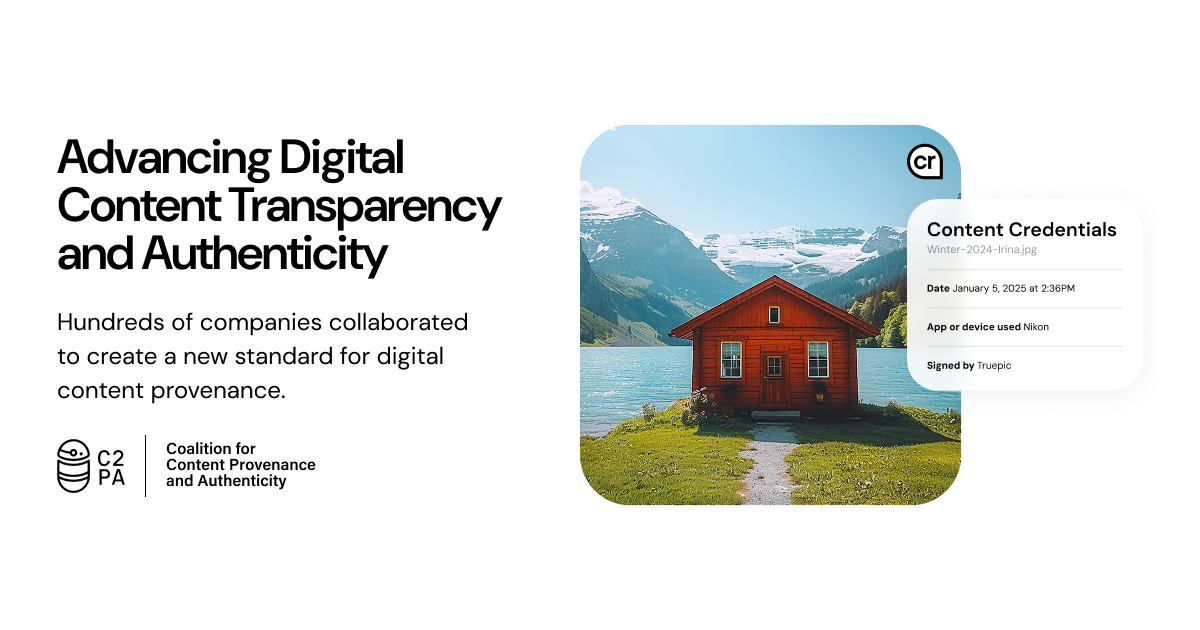
Against this backdrop, the work of the Coalition for Content Provenance and Authenticity begins to look less like technical housekeeping and more like a structural intervention. Its proposal is disarmingly simple: a cryptographically signed record of how content is created, what tools are used, and how it evolves over time.
Not a sticker, but a history.
This is a shift worth pausing over. Publishing has traditionally relied on signatures - literal and metaphorical. C2PA proposes an audit trail. It does not ask us to trust authorship; it invites us to inspect it. In doing so, it introduces something that publishing has long lacked: a consistent way of documenting the act of making.
It is not, of course, a cure-all. It cannot record what happens outside its system. It cannot prevent bad faith. It cannot resolve the increasingly elastic definition of what constitutes “human” work in a world of assistive tools.
But it does something quietly subversive.
It makes creative labour visible.
That matters - particularly for those whose contributions have historically been treated as secondary: illustrators, designers, visual thinkers whose work is integral but often reduced to metadata or omitted altogether. In a system that records processes, rather than merely proclaiming authorship, such contributions become harder to ignore.
Whether publishing will embrace this is another question - it’s never been especially fond of standards that complicate its habits. There is also the risk of fragmentation - a proliferation of stickers and badges, competing definitions, partial adoption - resulting in more noise than clarity.
Making Creative Labour Visible
But the alternative is not especially reassuring. If authorship cannot be established with confidence, if trust continues to erode, then the foundations of the trade begin to look less like bedrock and more like stage scenery.
In that context, the current enthusiasm for “Human Created” labels feels less like a solution than a symptom - a visible sign of an industry searching for firmer ground.
The Risk of Doing Nothing
Perhaps what is required is not another declaration of humanity, but a record of it.
Where did this come from? Who made it? And how?
Publishing has, for centuries, answered these questions implicitly. It may now have to learn to answer them explicitly.
Artists have always left a trail. Writers have always left a trail. The tools have recorded it.
I suspect we may not have the luxury of pretending otherwise any longer.
David Salariya is an author, illustrator, and publisher, best known as the founder of The Salariya Book Company and the creator and designer of internationally bestselling series including the You Wouldn’t Want To Be… series. Over a career spanning more than more than four decades, he has written and designed children’s books published in over 35 languages, combining visual storytelling with innovative formats to engage young readers. A Fellow of the Royal Society of Arts and a member of the Society of Authors, he now writes and speaks about publishing, creativity, and authorship in the age of artificial intelligence.


Comments