


A Guide to Prize-Winning Information Books: Why the Best Books Start with Readers, Not Awards

Updated: Jun 19
What Makes a Prize-Winning Information Book?
There is a kind of speech made at publishing events that deserves its own small glass case in the Museum of Polite Enthusiasm.
It usually begins with a microphone that does not quite work, ziiiiiinnnngggggs, a room full of people holding drinks they cannot put down, and someone senior stepping forward to remind everyone that books are not merely products, units, formats, rights opportunities, list-fillers, intellectual property or beautifully jacketed acts of commercial optimism. Books are how we make sense of this confusing world... they are, we are told, about imagination, curiosity, connection, bravery, discovery, the human spirit...and don't mention AI - we only use that to to make us faster, more efficient, more effective. Occasionally, if the evening is running long, “storytelling” is mentioned twice and a reasurance that only humans can make us cry.
At prize-givings, this language reaches its most fragrant form, every shortlisted book is “important”, every author is “extraordinary”, every illustrator has “expanded the visual language of childhood”. Every publisher is “thrilled”, “delighted”, “honoured” or - in extreme cases - “humbled”, though rarely humbled enough to avoid mentioning the win on every available social media platform by breakfast.
None of this is entirely false, that is the awkward thing, prizes do matter, they can transform a book’s fortunes, brighten an author’s or illustrator's career, reassure a publisher, impress rights buyers and give teachers, librarians and parents a valuable signpost through the thicket of new titles. A sticker on a cover may be small, but it can behave like a lighthouse.
Yet prize culture also encourages a strange question to creep into publishing conversations:
what makes a prize-winning book?
It is a seductive question, it sounds practical, professional, even strategic. But it is also slightly dangerous, because if a book is designed to impress a judging panel rather than engage a reader, something vital begins to leak out of it.
Children, particularly, have a brutally efficient sense of fraud. They know when a book is trying to improve them. They know when it has arrived wearing sensible shoes and carrying a learning objective. They know when wonder has been replaced by worthiness.
So perhaps the better question is not: what wins prizes?
The better question is: what makes a child want to turn the page?
That is where prize-winning information books really begin
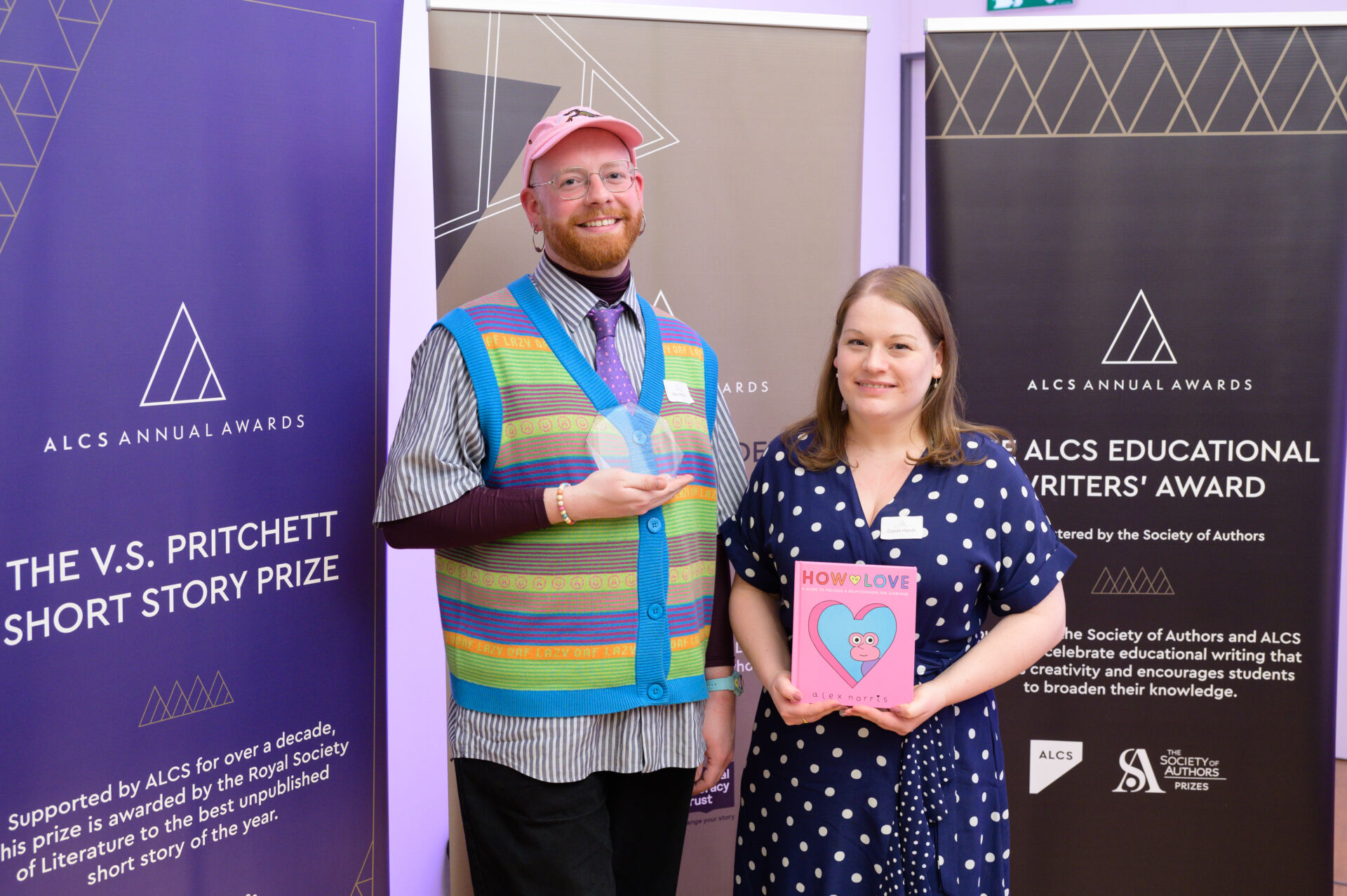
For writers, illustrators and publishers of children's information books, the question carries particular weight. Educational publishing has become increasingly competitive, and awards can offer valuable recognition in a crowded marketplace. Yet after more than three decades creating children's non-fiction, studying award winners, and seeing books from my own imprints shortlisted for the ALCS Educational Writers' Award, I have reached a conclusion that may seem contradictory but turns out to be obvious.
The best way to create a prize-winning information book is usually to stop thinking about prizes.
The books that endure are written for readers first.

Looking Beyond the Myth of the Formula for Prize-winning Books
Publishing has always loved formulas.
There are formulas for writing bestsellers, formulas for storytelling, formulas for marketing books, and formulas for building an author brand. It would be comforting if there were also a reliable formula for winning awards.
Yet when you look closely at the information books that have won the major UK prizes over the last two decades - the School Library Association's Information Book Award, the Royal Society Young People's Book Prize, and, until it ended in 2022, the Blue Peter Best Book with Facts - a different picture emerges.
Some are humorous, some are serious, and some are lavishly illustrated, while others rely heavily on photography. Some tackle science and technology; others explore history, geography, social issues, art, mathematics, or philosophy.
Mike Barfield's A Day in the Life of a Poo, a Gnu and You took the Blue Peter award in 2021 on comic strips and first-person diaries; his The Wild Life of Dinosaurs and Other Prehistoric Animals, illustrated by Paula Bossio, won the Royal Society prize in 2025. Richard Platt's Pirate Diary, illustrated by Chris Riddell, did it years earlier by telling history as a single boy's journal.
The styles differ dramatically, but certain qualities appear again and again.
Curiosity Is the Starting Point
The strongest information books begin not with a curriculum target or an educational objective, but with curiosity.
They begin with a question that readers genuinely want answered.
Why is snot green?
How do bees communicate?
What was life really like for a Roman soldier?
Why do onions make us cry?
What happens inside a pyramid?
These questions create an immediate connection between the reader and the subject. The desire to know more becomes the engine that drives the reading experience.
If readers do not care about the question, they are unlikely to care about the answer.
Information Alone Is Never Enough
One of the biggest misconceptions about non-fiction is the belief that information itself is the product.
It is not.
Information has never been more accessible than it is now. Within minutes, a child can find thousands of facts online. The challenge today is not access to information but capturing attention.
The most successful information books understand this. They do not simply present facts. They create experiences.
Readers remember how a book made them feel. They remember moments of wonder, surprise, amusement, shock, empathy, or excitement. The facts become memorable because they are attached to emotions.
The information travels inside the experience.
Every Great Information Book Tells a Story
Many people draw a sharp distinction between fiction and non-fiction. One tells stories; the other presents facts.
In reality, the best information books do both.
Whether the subject is ancient Egypt, the solar system, climate change, or engineering, the strongest books are built around narrative. They tell the story of a civilisation, a scientific breakthrough, an invention, or a person who changed the world.
Stories give facts a structure. They provide context, meaning, and momentum. Without narrative, facts can feel disconnected. With narrative, they become part of a journey.
The story gives the information somewhere to live.
Why Design Matters More Than Many People Realise
Throughout my career, I have often encountered the assumption that design is something added after the writing is finished.
The opposite is true.
In the finest information books, design is communication.
Maps explain relationships, timelines explain sequence, cutaway illustrations explain structure. Infographics explain complexity and visual storytelling often communicates ideas more effectively than pages of text ever could.
Typography is part of that communication, not decoration laid over it. The structure of a page should guide the reader rather than obstruct them. A dropped capital at the start of the text on a double-page spread is a quiet signal that this is where the reading begins - a pointer that matters most where text and illustration are fully integrated on the page. The cap and headings can also give character to a page where typographically the body text can be conservative to give the reader a feeling of fun.

When judges praise a book's design, they are rarely commenting on decoration. They are recognising how successfully the book communicates knowledge.
The page itself becomes a teacher.
Make Readers Feel Clever
If there is one principle that unites many successful information books, it is this:
Make readers feel clever.
The best books reward curiosity. They offer discoveries, surprises, and moments of insight. Readers feel as though they are uncovering secrets rather than completing assignments.
Every spread should contain something worth finding. Every chapter should contain something unexpected. The experience should feel closer to exploration than instruction.
The moment a book starts to feel like homework, much of its power disappears.
The Importance of a Fresh Perspective
Award-winning information books rarely take the obvious route.
A chemistry book may become a journey through explosions, smells, and strange reactions. A history book may become a survival guide. A mathematics book may become a collection of puzzles and mysteries.
The facts remain accurate, but the presentation becomes irresistible. This is why Brilliant Black British History by Atinuke, illustrated by Kingsley Nebechi: winner of The British Book Awards Children’s Non-Fiction Book of the Year, the English 4–11 Picture Book Awards 7–11 Non-Fiction category, and the UKLA Information Book of the Year Award 2025 - succeeds so powerfully. It takes an important subject and approaches it from an angle readers had not been offered before. Judges often respond to originality because readers do too. The world rarely needs another straightforward summary of facts; it needs fresh ways of looking at subjects.
Every Subject Is Ultimately About People
Even highly technical subjects become more engaging when connected to human stories.
Readers want to know who discovered something, who invented it, who challenged accepted ideas, who overcame obstacles, who changed history.
Science is people. History is people. Medicine is people. Engineering is people.
Human stories provide the emotional connection that makes information memorable. This is one reason biographies, diaries, eyewitness accounts, and personal narratives continue to resonate so strongly with readers.
The Ingredient That Cannot Be Manufactured
There is one quality that no award criteria can fully define and no publishing strategy can reliably create.
Enthusiasm.
Readers instinctively recognise genuine passion. When an author truly loves a subject, that enthusiasm finds its way onto the page. Curiosity becomes infectious. Excitement becomes contagious.
Books created simply to fill a gap in the market often feel different from books created out of genuine fascination.
Readers notice, judges do too.
Why Chasing Prizes Can Be a Mistake
This brings us back to the original question.
What are judges looking for?
The honest answer is that no one fully knows, it is worth remembering that several of the most respected UK non-fiction prizes are decided not by panels at all but by children: the SLA Information Book Award is voted on through a schools book club, and the Royal Society Young People's Book Prize is judged by young readers across the country. The books that win them are, quite literally, the books readers chose.
Publishing history is also filled with extraordinary books that never won anything. Some appeared in exceptionally competitive years. Others addressed subjects that happened to fall outside current trends. Some simply failed to catch the attention of a judging panel.
That does not diminish their value.
Awards are snapshots taken at a particular moment in time.
Readers are the long game.
The goal should never be to create an award-winning book.
The goal should be to create a book that deserves readers.
If enough readers connect with it, awards may follow. If they do not, the book can still succeed in the most important way: by informing, inspiring, and delighting the people it was created for.
A Simple Three-Question Test
Before submitting any information book for an award, try asking three questions.
Would someone choose to read this voluntarily?
Would they still be engaged after the first few pages?
Would they recommend it to someone else afterwards?
If the answer to all three questions is yes, the book is already doing something remarkable.
And that is often where award-winning books begin.
Final Thoughts
The finest information books do far more than transfer knowledge.
Search engines can provide facts. Artificial intelligence can generate summaries. Information itself has never been more abundant. What remains rare is the ability to spark curiosity, inspire wonder, and help readers see the world differently.
That is what truly memorable information books achieve.
It is also why some books remain on shelves for decades while others quietly disappear.
Awards are wonderful recognition. They deserve to be celebrated.
But readers are the real prize.
Write for them first.
Everything else is a bonus.
Children's Non-Fiction Book Awards
Entry rules, age categories, prize values and deadlines change from year to year. The official pages linked below are the place to confirm current details before entering.
A Directory of UK Children's Non-Fiction Book Awards
SLA Information Book Award
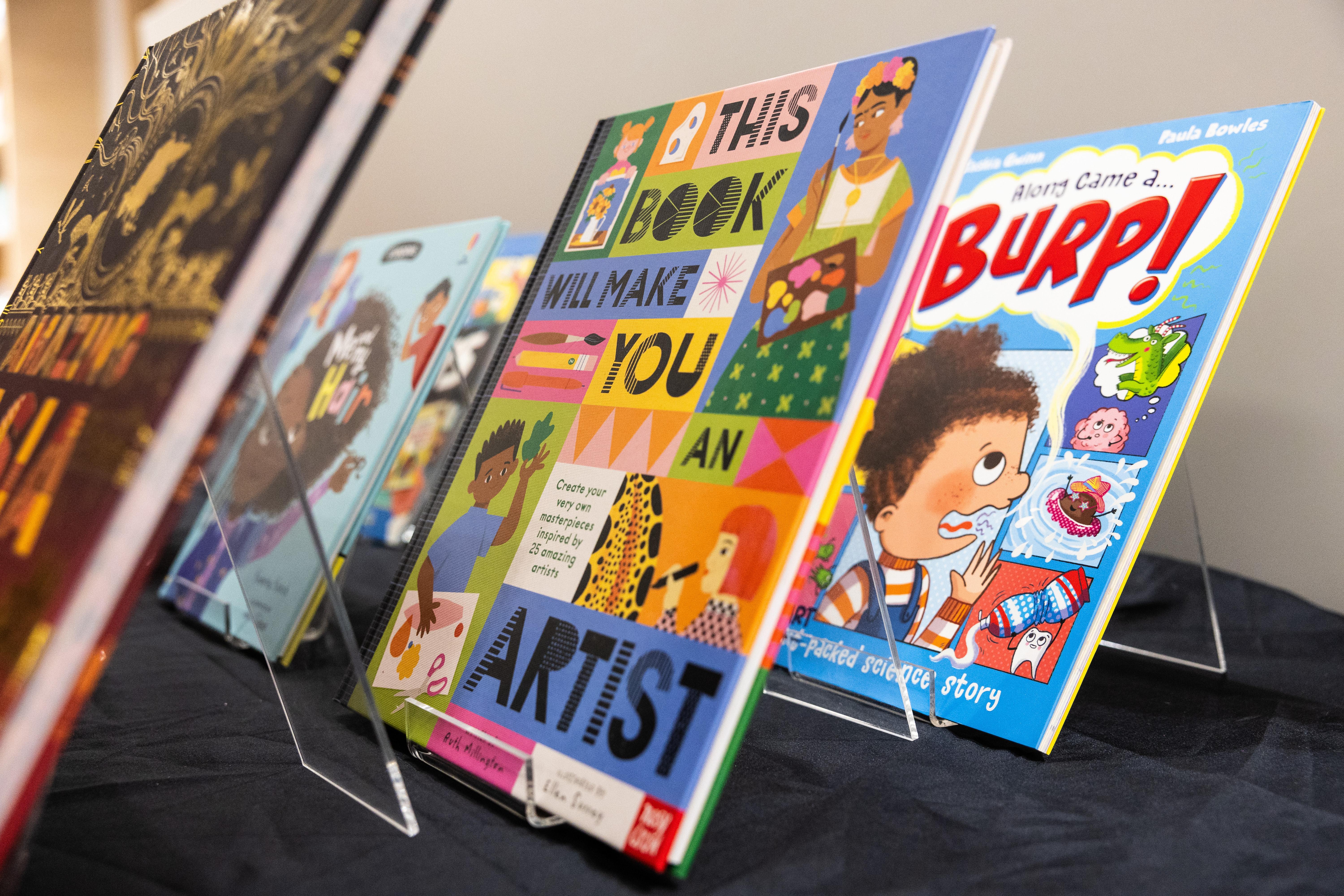
Royal Society Young People's Book Prize
The leading prize for children's science books, for readers aged 5 to 14, judged by panels of young people drawn from schools, science centres and community groups across the UK. For 2026 the prize fund runs to a total of up to £22,500, with £10,000 to the winning author and £2,500 to each shortlisted title. Publishers submit eligible books published in the relevant calendar year.

ALCS Educational Writers' Award

UKLA Book Awards

English 4–11 Best Children's Illustrated Books Awards
British Book Awards (the Nibbies) — Children's Non-Fiction Book of the Year
Blue Peter Book Awards — Best Book with Facts (historical)
For more than two decades the Blue Peter Book Awards carried a Best Book with Facts category, voted on by children, and were among the best-known children's prizes in the country. They were discontinued in 2022 and are no longer open for entry. They remain a useful reference point for what reader-judged non-fiction recognition looked like at its most visible.
CCBC Choices (United States, for reference)
Not a competitive prize but an annual recommended-books list compiled by the Cooperative Children's Book Center at the School of Education, University of Wisconsin–Madison. Selection is a respected and selective honour with American school and library buyers. Publishers supply review copies to the CCBC for consideration. Where to find it:
A note on the wider landscape
Several broader children's book awards admit non-fiction even though they are not non-fiction prizes as such, including the Yoto Carnegie Medals and the Jhalak Children's & YA Prize. The Federation of Children's Book Groups runs National Non-Fiction November each year, which is a celebration rather than an award but is the best annual focal point for children's information books in the UK.
Awards and Recognition David Salariya and The Salariya Book Company
David Salariya is a Scottish author, illustrator, designer and publisher, founder of The Salariya Book Company (1989) and its imprints Book House, Scribblers and Scribo. He is the creator and designer of the You Wouldn't Want To Be… series and more than sixty other series, and writes under the names David Stewart and Max Marlborough.
The record below distinguishes outright wins from short-listings, runners-up and selections.
A note on imprints and dates: Book House was created as a Salariya imprint in 2002, Scribblers in 2007 and Scribo in 2009. The earliest award-winning titles predate the imprints, dating from the years when Salariya operated as a book packager and titles carried the names of partner publishers such as Franklin Watts, Simon & Schuster, Random House and Hachette.
A note on a byline: Carolyn Franklin and Carolyn Scrace are the same illustrator.
Titles such as Gorilla Journal and the WOW (World of Wonder) series carried the Carolyn Franklin byline. Daisy Kerr is a non-de plume of Fiona Macdonald
Wins
The Salariya Book Company won IPG Children's Publisher of the Year in 2010, awarded by the Independent Publishers Guild, ahead of Top That! Publishing and Walker Books.
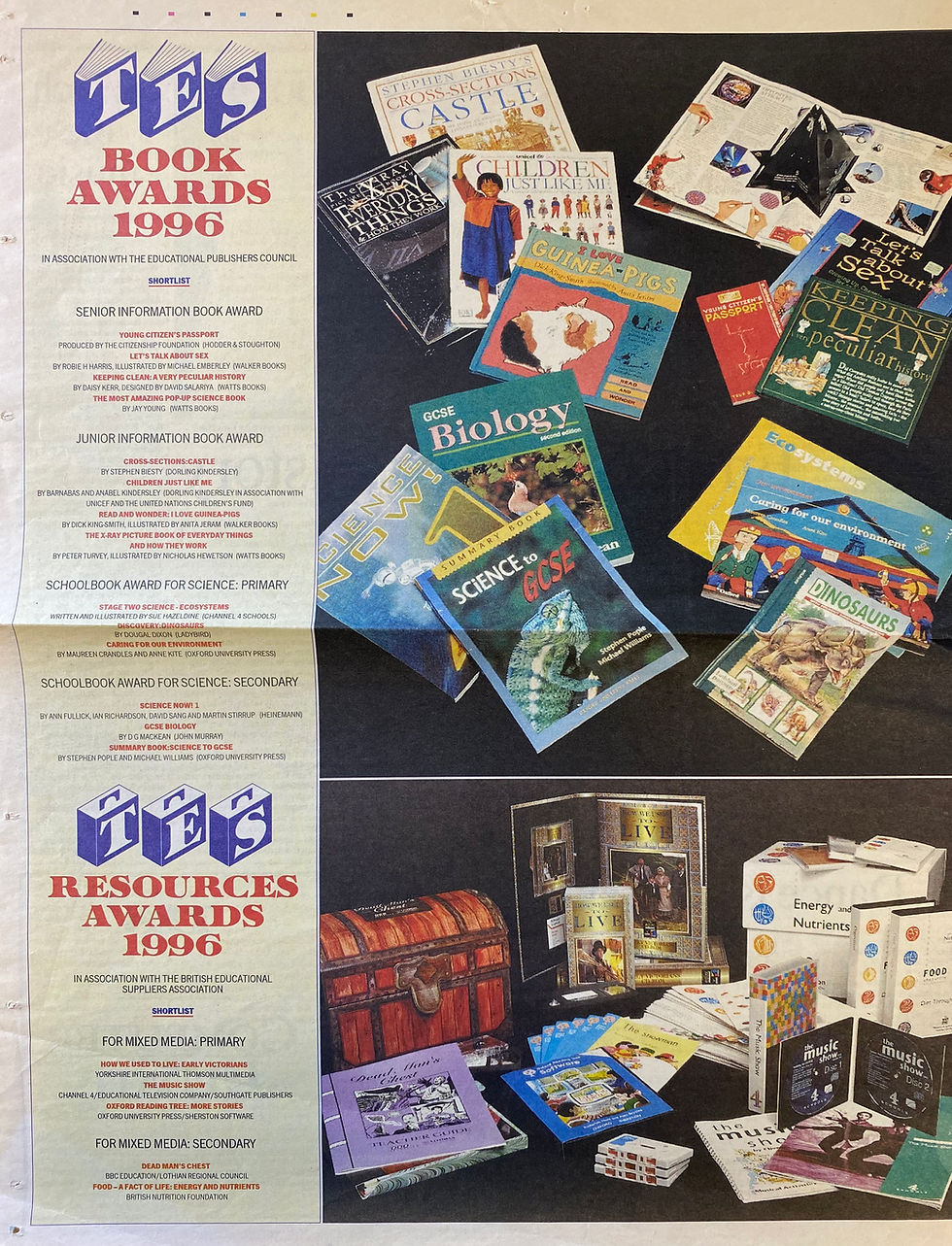
David Salariya holds three Times Educational Supplement Information Book Awards. Two are confirmed to a title:
Keeping Clean, created and designed by David Salariya and written by Fiona Macdonald, was joint winner with Dorling Kindersley of the 2000 TES Award for Senior Information Book of the Year.


The Egyptian Pyramid in the Inside Story series, written by Jacqueline Morley and illustrated by John James and Mark Bergin, was a TES Award winner. It was later redesigned by David Salariya and republished as a Spectacular Visual Guide under his Book House imprint, and following the 2022 sale of The Salariya Book Company to Bonnier Books UK it is now published under Bonnier's Hatch imprint.


Winning, Shortlistings and Runners-up
The Salariya Book Company was shortlisted for IPG Children's Publisher of the Year in 2009, the year before its win, alongside Top That! Publishing, with Piccadilly Press taking the award that year.

WOW (World of Wonder) Rainforest — created and designed by David Salariya, written and illustrated by Carolyn Franklin, published by Book House — was a runner-up in the 2007 English 4–11 Best Children's Illustrated Books Awards (English Association).

The Secret Journal of Victor Frankenstein: On the Workings of the Human Body — created, designed and written by David Salariya — was a runner-up in the 2009 English 4–11 Best Children's Illustrated Books Awards (English Association).
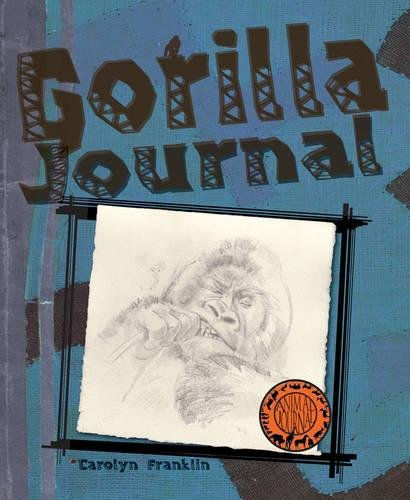
Three titles created and designed by David Salariya were shortlisted for the ALCS Educational Writers' Award:
Gorilla Journal (The Salariya Book Company), written and illustrated by Carolyn Franklin — shortlisted in 2011 (5–11 age group).
The Danger Zone: Avoid Working on a Medieval Cathedral! (Book House), written by Fiona Macdonald and illustrated by David Antram — shortlisted in 2013 (5–11 age group).

The Danger Zone: Avoid Being Sir Isaac Newton! (Book House), written by Ian Graham and illustrated by David Antram — shortlisted in 2014 (11–18 age group).

The Danger Zone titles were the UK editions of the You Wouldn't Want To Be… series, published by Salariya's Book House imprint and later issued under the You Wouldn't Want To Be… title. The series is now published by Bonnier UK's Hatch imprint following the 2022 acquisition of The Salariya Book Co IP.
Selections and listings
All About Me!: A Baby's Guide to Babies, created and designed by David Salariya and published in the United States by Random House Books for Young Readers (and in the UK under the Scribblers Brighter Baby line), was selected for CCBC Choices 2009, the annual recommended-books list of the Cooperative Children's Book Center at the University of Wisconsin–Madison.

Times Educational Supplement Information Book Award: Keeping Clean (2000) and The Egyptian Pyramid,, Fast Forward, RainForest.
British Book Design and Production Awards: The X Ray Picture Book of the Body
Spark! School Book Awards 2020–21 (7–9 Fiction category) — The Long-Lost Secret Diary of the World's Worst Samurai!, created and designed by David Salariya, written by Tim Collins and illustrated by Isobel Lundie: win or shortlist status to confirm.
SME National Business Awards 2021, Children's Publisher of the Year


Comments